How to Prepare Your Business for ChatGPT Ads
TL;DR
Prepare for ChatGPT ads by calculating your allowable cost per lead and sale, then build ads with a hook, value proposition, credibility, and a clear call to action. Test several next steps, including human consultations, specialized AI experiences, and in-app purchases, while strengthening the personal brand that distinguishes your lived experience from generic AI assistance.
Transcript
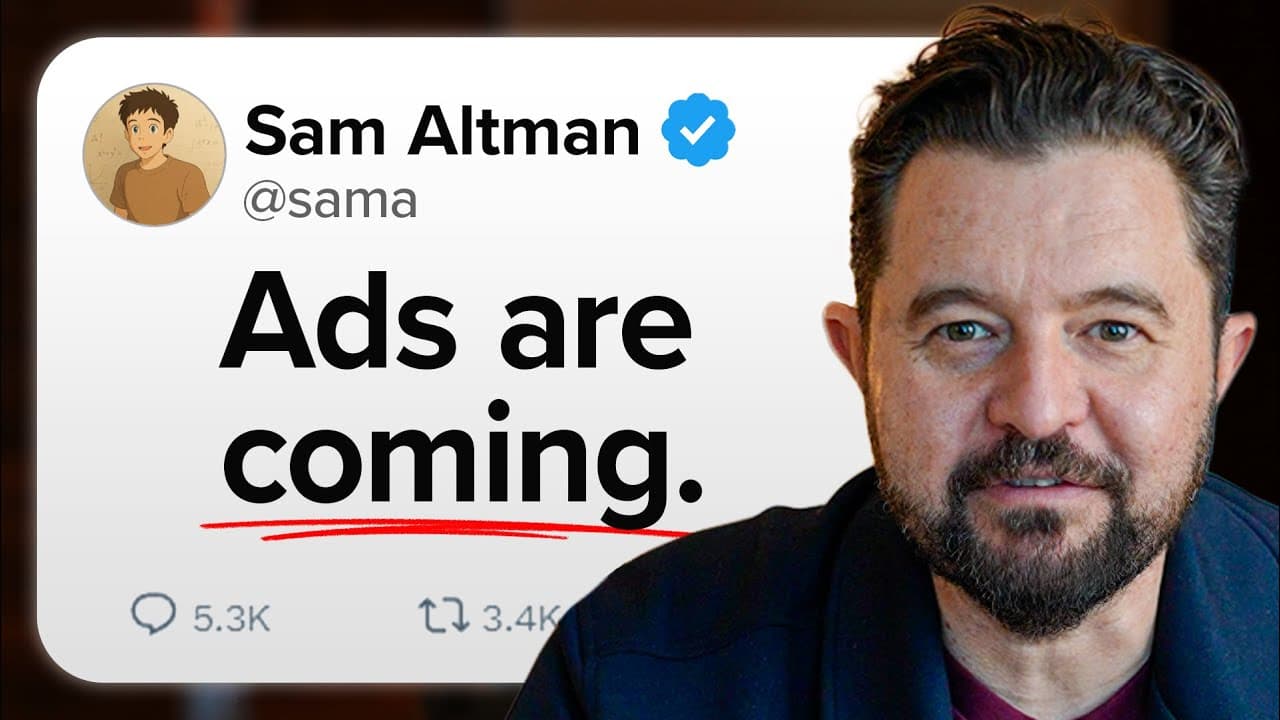
Stop what you're doing because something massive is happening that will impact your business and your life like nothing else. There is a huge opportunity unfolding and I need to tell you about it. ChatGpt is experimenting with ads in their free subscription tier. I'm old enough to remember when Google launched their ad platform and for about 2 year... Read More
Key Insights
- ChatGPT advertising is presented as a potentially significant early-stage opportunity because the platform combines conversational data, memory, and intelligence. The speaker argues that these capabilities could reveal user needs and timing more precisely than earlier advertising platforms could.
- An allowable cost per sale is the maximum amount a business is comfortable spending to acquire one customer. Unlike a fixed annual budget, this model allows spending to scale as long as each new customer costs less than the predetermined acquisition limit.
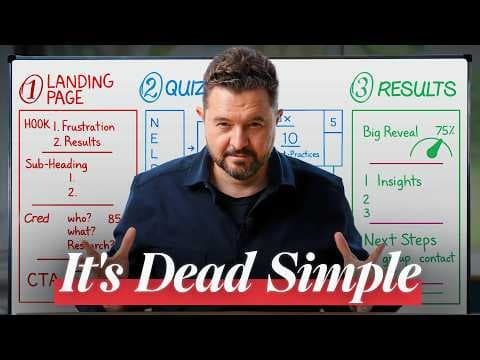
- A complete advertisement has four fundamental components: a hook, a value proposition, credibility, and a call to action. The speaker says this structure has remained effective across newspaper, Google, Facebook, and more recent advertising formats.
- An evergreen hook focuses on pain, prize, or process. It can identify a frustration the audience currently experiences, describe a result they want, or introduce the path they should follow to reach that desired result.
- A value proposition states what customers receive by continuing to engage with a business. Useful propositions describe the outcome and the specific services involved, such as recruiting a sales team or researching, scripting, and booking guests for a podcast.
- Credibility can come from business results, operating history, client numbers, cumulative work value, awards, qualifications, or independent certifications. New businesses can instead reference relevant academic research, expert testimonials, quotations, or recommendations from credible third parties.
- A strong ChatGPT ad call to action should feel like a progression from the user's existing conversation. Suggested options include speaking with an experienced human, entering a specialized AI experience, or purchasing a consultation, event ticket, product, or service inside the platform.
- A personal brand is presented as a durable source of differentiation because AI lacks lived experience. The speaker reports that personal-brand advertisements repeatedly outperform faceless business-brand advertisements and recommends using personal history, stories, expertise, and thought leadership in advertising.
Install to Summarize YouTube Videos and Get Transcripts
Explore YouTube Video Summarizer or Get YouTube Transcript Extractor
Questions & Answers
Q: How should a business prepare for ChatGPT ads?
A business should first calculate its allowable cost per lead and allowable cost per sale instead of relying only on a fixed annual marketing budget. It should then prepare advertisements containing a hook, value proposition, credibility, and call to action. Multiple calls to action should be ready for testing, while personal stories and lived experience should be developed into branded content that distinguishes the business from generic AI assistance.
Q: What is an allowable cost per sale in advertising?
An allowable cost per sale is the maximum amount a business is comfortable spending on advertising and sales activity to gain one customer. The transcript gives an example of a typical sale worth $25,000, with $400 available for advertising and sales commission. If customers continue to be acquired for less than that limit, the business can increase spending without being constrained by a fixed annual marketing budget.
Q: What four elements should every advertisement contain?
The four elements are a hook, a value proposition, credibility, and a call to action. The hook earns attention, while the value proposition explains what the audience will receive. Credibility supplies a reason to trust the offer, and the call to action asks the person to take a specific next step. The speaker presents this formula as applicable across newspaper, Google, Facebook, and ChatGPT advertising.
Q: How do you write an effective advertising hook?
An effective hook can focus on pain, prize, or process. A pain-based hook names a frustration the audience already experiences. A prize-based hook describes a desired outcome, while a process-based hook points toward the steps needed to achieve it. The transcript illustrates this with fitness questions about failing to lose weight despite regular gym visits and getting into excellent shape while becoming busier at work.
Q: How can a new business establish credibility in an ad?
A new business can establish credibility without a long operating history by citing academic research related to its work, using expert testimonials or quotations, and providing third-party references that recommend its approach. Established companies can additionally use measurable results, years in business, client counts, cumulative work value, awards, qualifications, and independent certifications. The goal is to explain why the audience should trust and listen to the advertiser.
Q: What calls to action could work with ChatGPT ads?
The transcript proposes three broad calls to action. First, invite the user to speak with a human who has lived through the relevant challenge. Second, direct the user to a customized AI experience designed for one use case, such as planning and publishing a book. Third, enable an in-platform purchase for an event ticket, consultation, product, or service so the user can act without leaving ChatGPT.
Q: Why could personal brands matter in AI advertising?
Personal brands could matter because ChatGPT is powerful but does not possess human lived experience. A person's history, background, stories, and direct experience can therefore differentiate an offer from generic AI assistance and faceless business messaging. The speaker says repeated tests showed personal-brand ads substantially outperforming business-brand ads, and recommends becoming a visible thought leader or key person of influence within an industry.
Q: Why does the speaker consider ChatGPT ads a large opportunity?
The speaker says 800 million people use ChatGPT each week, with 95% on the free subscription, equal to 760 million weekly users. The transcript also claims the platform handles 2.5 billion messages daily and that 80% of conversations concern education, advice, research, or drafting communications. The argument is that these conversations reveal what users are trying to accomplish, potentially creating highly relevant advertising opportunities.
Summary & Key Takeaways
-
The opportunity presented is based on ChatGPT combining extensive conversational data, memory, and intelligence. These capabilities could help advertisers identify a user's current goals, persistent challenges, and relevant buying needs. The speaker compares this potential opening with the early stages of Google and Facebook advertising, when limited competition made customer acquisition unusually inexpensive.
-
Businesses should replace fixed annual marketing budgets with allowable acquisition costs calculated for each lead or sale. If a typical sale is worth $25,000 and the company can comfortably spend $400 on advertising and sales commissions, it can continue scaling while its actual acquisition cost remains below that predetermined limit.
-
Effective ads should combine an attention-grabbing hook, a clear value proposition, evidence of credibility, and a call to action that improves upon the user's current ChatGPT experience. Businesses should prepare several calls to action, test their performance, and use personal stories and lived experience to differentiate themselves from generic AI and faceless business brands.
Read in Other Languages (beta)
Share This Summary 📚
Summarize YouTube Videos and Get Video Transcripts with 1-Click
Try YouTube Summary with ChatGPT & Claude or YouTube Transcript Generator
Explore More Summaries from Daniel Priestley 📚
Summarize YouTube Videos and Get Video Transcripts with 1-Click
Try YouTube Summary with ChatGPT & Claude or YouTube Transcript Generator