How to Turn Podcast Appearances Into Revenue
TL;DR
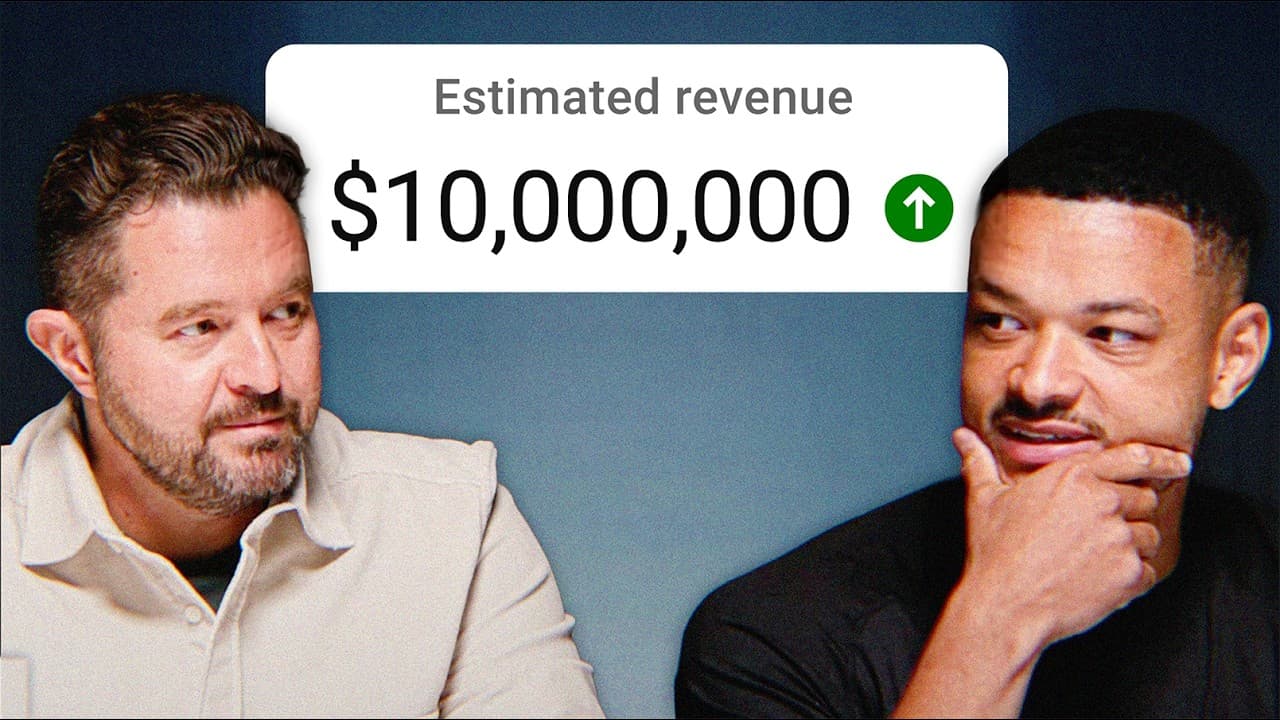
Prepare a concise opening pitch and a product ecosystem before appearing on a major podcast, so audience attention has clear places to go. Daniel Priestley says his first Diary of a CEO appearance generated 9,000 free ScoreApp registrations, $3 million in new Dent business, stronger book sales, speaking opportunities, recruits, and further engagement across his companies.
Transcript
Everyone would like to be on Dire of a CEO. In fact, I would have paid $6 million to sponsor the show if I could have and be on there just once. Fast forward to today. I've been selected to be on the show six times, making me the most repeated guest to come back onto the show. Now, I want to share with you behind the scenes how does Diary of a CEO ... Read More
Key Insights
- • The first 30 seconds of a podcast appearance are critical because the guest must quickly give listeners a reason to continue. Priestley recommends preparing the opening in advance so the host receives several clear ideas that can become directions for the conversation.
- • The name, same, fame, pain, aim, and game framework structures a guest introduction. It identifies the person and business, establishes a familiar category, presents distinguishing credentials, defines a problem, states an immediate objective, and connects that work to a larger vision.
- • A claim to fame is evidence that makes a guest distinctive and interesting. Priestley suggests mentioning achievements such as books, speaking appearances, awards, recognizable clients, or other relevant accomplishments that give the podcast host a compelling subject to explore.
- • A product ecosystem is the commercial infrastructure that captures attention after a podcast airs. Without accessible resources, offers, or communities, interested listeners have nowhere to continue engaging and may simply move on to another podcast and forget the guest.
- • The product ecosystem has four levels: gifts, products for prospects, core offerings, and products for clients. These levels range from immediately available free material to registered experiences, paid transformational services, and recurring subscription products for established customers.
- • Priestley's free and registered resources included YouTube videos, online scorecards, downloadable PDF reports, 90-minute webinars, a Facebook discussion group, extensive 48-question assessments, books, and live events. About 8,000 people joined the discussion group after the podcast exposure.
- • Priestley's paid ecosystem included Dent accelerators, August Recognition, Rethink Press, ScoreApp, and Book Magic. ScoreApp is described as serving about 85,000 businesses paying approximately $50 per month, while Book Magic helps guide users through writing a book.
- • The first Diary of a CEO appearance produced results across several parts of Priestley's business ecosystem. He reports more than 3 million viewers, 9,000 free ScoreApp registrations, $3 million in new Dent business, 50,000 book sales, speaking engagements, and newly recruited talent.
Install to Summarize YouTube Videos and Get Transcripts
Explore YouTube Video Summarizer or Get YouTube Transcript Extractor
Questions & Answers
Q: How can a podcast guest make the first 30 seconds effective?
A podcast guest can make the opening effective by preparing a concise hook before entering the studio. Priestley recommends covering name, same, fame, pain, aim, and game in roughly 30 to 40 seconds. This establishes identity, familiar context, credibility, the audience's problem, the guest's immediate mission, and the larger vision, giving the host several useful ideas to pursue.
Q: What is the name, same, fame, pain, aim, and game pitch?
The framework is a structured introduction for podcast interviews. Name identifies the guest and business. Same places the guest in a familiar category such as entrepreneur, author, coach, agency owner, or software founder. Fame presents distinguishing achievements. Pain defines a widespread struggle, aim states how the guest addresses it, and game describes the larger vision behind the work.
Q: Why does a podcast guest need a product ecosystem?
A product ecosystem gives interested listeners clear ways to continue after an episode ends. Priestley compares attention without follow-up options to rain falling in a desert and immediately evaporating. Free resources, registration-based experiences, paid core offerings, and subscriptions can capture different levels of interest. Without them, listeners may enjoy the conversation but soon shift their attention elsewhere.
Q: What are the four parts of a product ecosystem?
The four parts are a gift, a product for prospects, a core offering, and a product for clients. A gift is free and immediately accessible. A prospect product is also free but requires registration. The core offering is a paid transformational product or service. The client product provides continuing value, typically through subscription revenue or another ongoing relationship.
Q: What free resources did Daniel Priestley offer podcast listeners?
Priestley had several free resources available when his first Diary of a CEO episode aired. These included long YouTube videos about entrepreneurship, online assessments such as the Key Person of Influence and 24 Assets scorecards, and downloadable PDF reports. These resources gave newly interested listeners immediate ways to explore his ideas without first paying for a product or service.
Q: What registration-based offers supported the podcast appearance?
Priestley's products for prospects included 90-minute webinars, an online Facebook discussion group, more extensive scorecards, assessments containing 48 questions, books, and live events in selected cities. About 8,000 people joined the discussion group. These offers required more commitment than immediately accessible gifts and helped move interested listeners into deeper engagement with his business ecosystem.
Q: What business results followed the first Diary of a CEO appearance?
Priestley says more than 3 million people watched the episode over the following months. The exposure produced speaking opportunities around the world, 9,000 free ScoreApp registrations, and $3 million in new Dent business. His publisher reported 50,000 book sales, exceeding expectations, while his other companies gained attention and talented people discovered him through the interview.
Q: How did Daniel Priestley get invited onto Diary of a CEO?
Priestley says Steven Bartlett contacted him through a social media account after seeing him on YouTube. Priestley initially suspected the message was a scam, but later recognized that it came from Bartlett's real account. When offered filming on the following Monday or three months later, he chose the short-notice option, returned from Switzerland, and arrived prepared with his pitch and content.
Summary & Key Takeaways
-
Daniel Priestley received a message from Steven Bartlett after being discovered on YouTube and accepted a filming opportunity scheduled for the following Monday. Although the invitation initially looked suspicious, Priestley verified the account, returned from Switzerland, entered the studio feeling nervous, and relied on a prepared pitch and mapped-out content.
-
The first episode attracted more than 3 million viewers and produced measurable business results. Priestley reports 9,000 free ScoreApp registrations, $3 million in new Dent business, global speaking engagements, talented recruits, and 50,000 book sales. He describes the appearance as valuable across several companies rather than as a single promotional event.
-
Priestley recommends preparing three business foundations, although the provided transcript details two: a strong opening pitch and a product ecosystem. His pitch framework covers name, same, fame, pain, aim, and game. His ecosystem moves listeners from immediately accessible gifts toward registered resources, core transformations, and subscription-based client products.
Read in Other Languages (beta)
Share This Summary 📚
Summarize YouTube Videos and Get Video Transcripts with 1-Click
Try YouTube Summary with ChatGPT & Claude or YouTube Transcript Generator
Explore More Summaries from Daniel Priestley 📚


Summarize YouTube Videos and Get Video Transcripts with 1-Click
Try YouTube Summary with ChatGPT & Claude or YouTube Transcript Generator