How to Choose Between Lifestyle and Performance Business
TL;DR
Choosing between a lifestyle and performance business depends on your goals. A lifestyle business offers flexibility, freedom, and a steady income with minimal staff, while a performance business aims for larger scale and potential sale profits. Both have unique challenges and rewards, and understanding these can guide your entrepreneurial journey effectively.
Transcript
If you were to talk to my grandparents or great-grandparents, there's no such thing as a lifestyle business. This is the first time ever where a small business can punch well above its weight thanks to social media and software and all of those things. This is the first time you can run a business from anywhere, have customers anywhere, have techno... Read More
Key Insights
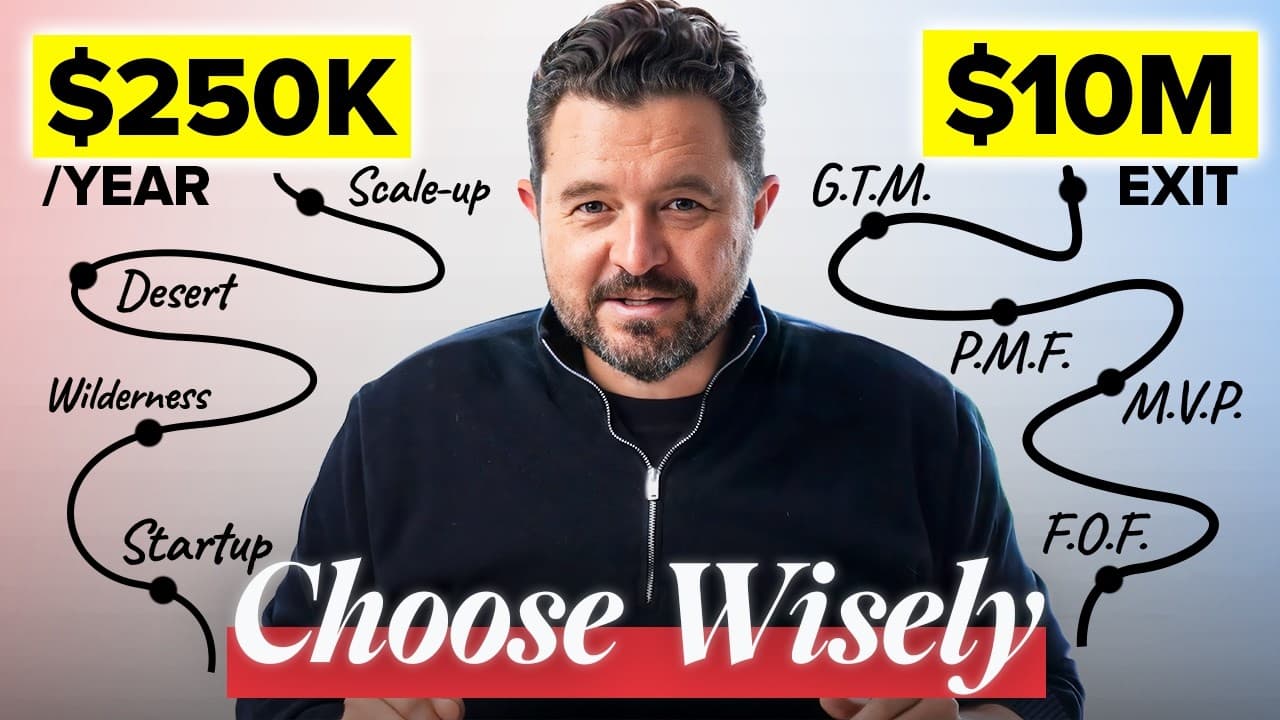
- A lifestyle business offers flexibility and freedom, typically with 4 to 12 people, leveraging online tools for profitability.
- Performance businesses are larger, with 30+ people, focusing on scalability, profitability, and potential for acquisition.
- Founder opportunity fit is crucial in the startup phase, aligning personal goals with business opportunities.
- The wilderness phase tests business ideas against reality, requiring adjustments and MVP testing for success.
- Product market fit involves refining offerings based on feedback to create a winning product that meets customer needs.
- The desert phase occurs when a business is too large to be small but too small to be large, requiring strategic scaling decisions.
- A lifestyle business is founder-dependent, making it less attractive for acquisition without long-term earnout agreements.
- Exiting a performance business involves a structured process, requiring a dedicated campaign team and strategic planning.
Install to Summarize YouTube Videos and Get Transcripts
Explore YouTube Video Summarizer or Get YouTube Transcript Extractor
Questions & Answers
Q: How can a lifestyle business be profitable?
A lifestyle business can be profitable by leveraging online tools and platforms for marketing and delivery, keeping overheads low, and focusing on niche markets. With a small team, typically 4 to 12 people, it allows for flexibility and freedom. The key is building a strong personal brand and utilizing social media to attract and retain customers.
Q: What is the wilderness phase in entrepreneurship?
The wilderness phase is where entrepreneurial ideas meet reality, often presenting unexpected challenges. During this phase, businesses test their ideas through MVP (Minimum Viable Product) testing to identify customer needs, pricing strategies, and potential obstacles. This phase is crucial for refining business models and aligning them with market demands for long-term success.
Q: What defines a performance business?
A performance business is defined by its focus on scalability, profitability, and the potential for acquisition. It typically involves a larger team of 30+ people, strategic planning, and the development of unique intellectual property. Performance businesses aim for high growth and often attract the interest of larger companies looking to acquire innovative and profitable ventures.
Q: How does a lifestyle business differ from a performance business?
A lifestyle business prioritizes flexibility, freedom, and steady income with a small team, often leveraging online tools. In contrast, a performance business focuses on scalability and profitability, aiming for acquisition with a larger team. Lifestyle businesses are founder-dependent, while performance businesses are structured for growth and potential sale.
Q: Why might someone choose a lifestyle business over a performance business?
Someone might choose a lifestyle business for the flexibility, freedom, and lower stress it offers. It allows for a steady income without the complexities of scaling a larger organization. This type of business suits individuals who value work-life balance and autonomy, and who enjoy engaging directly with customers and managing a small team.
Q: What challenges arise when scaling from a lifestyle to a performance business?
Scaling from a lifestyle to a performance business presents challenges such as increased complexity, management of a larger team, and the need for strategic planning. The transition involves navigating the 'desert' phase, where the business is too large to be small but too small to be large, requiring careful resource allocation and leadership to reach a sustainable scale.
Q: Can a lifestyle business be acquired?
Yes, a lifestyle business can be acquired, but it typically involves a long-term earnout due to its founder-dependent nature. The business's reliance on the founder's personal brand makes it less attractive for traditional acquisition deals. However, with strategic planning and gradual reduction of founder dependency, it can be positioned for acquisition under specific terms.
Q: What is the exit process for a performance business?
The exit process for a performance business involves a structured campaign, similar to a marketing campaign, to attract potential buyers. It requires a dedicated team to prepare marketing materials, financial documents, and negotiate terms. This process can take 12 to 18 months and involves engaging with experienced advisors to ensure a successful and profitable sale.
Summary & Key Takeaways
-
A lifestyle business is ideal for those seeking flexibility and freedom, operating with a small team and leveraging online tools for profitability. It offers a steady income without the complexities of scaling, but is often founder-dependent, making it less attractive for acquisition.
-
Performance businesses focus on scalability and profitability, with the potential for acquisition. They require larger teams and strategic planning, offering a bigger payday but with higher stress and complexity. Exiting involves a structured campaign to attract buyers.
-
Entrepreneurs must decide between the steady, flexible income of a lifestyle business and the potential high rewards of a performance business. Understanding the trade-offs and aligning personal goals with business opportunities is key to making the right choice.
Read in Other Languages (beta)
Share This Summary 📚
Summarize YouTube Videos and Get Video Transcripts with 1-Click
Try YouTube Summary with ChatGPT & Claude or YouTube Transcript Generator
Explore More Summaries from Daniel Priestley 📚
Summarize YouTube Videos and Get Video Transcripts with 1-Click
Try YouTube Summary with ChatGPT & Claude or YouTube Transcript Generator