How to Achieve Product Market Fit Before Scaling
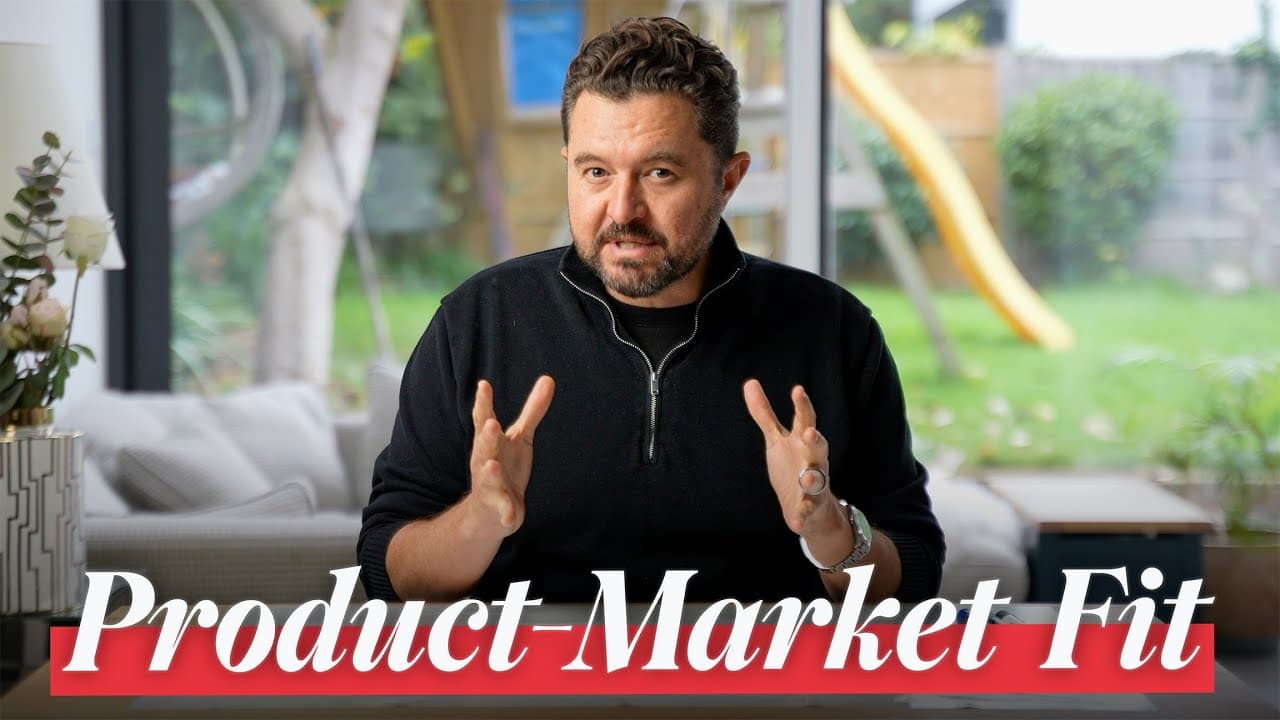
TL;DR
Achieve product market fit before investing heavily in scaling, hiring, systems, or capital. Identify the customers who value your offer most, investigate their desired outcomes and frustrations through surveys and conversations, then shape the offer around their needs. Early delivery may feel demanding and unscalable, but scalability belongs to a later stage of the entrepreneurial journey.
Transcript
This video is going to challenge you and you're going to have to keep an open mind because there is something that your customers want from you and there's what you want to deliver to your customers and those things are currently miles apart. And the reason you need to keep an open mind is because until we bring those closer together, you are alway... Read More
Key Insights
- Product market fit is the stage where the ideal customer persona and the business's intellectual property, packaged as an offer, come together. The offer combines knowledge, stories, examples, processes, principles, and multiple ingredients intended to produce an outcome that customers genuinely desire.
- The entrepreneurial journey is presented as a sequence of founder opportunity fit, minimum viable product testing, product market fit, go to market, scaling, and exit. Each stage prepares the business for the next, making product market fit a prerequisite for systematic sales and expansion.
- Customer and business expectations are naturally misaligned. Customers imagine broad, fast, affordable, and emotionally rewarding improvements, while entrepreneurs often want a simple, low-stress product that runs automatically. Product market fit requires narrowing the distance between these competing expectations.
- Strong product market fit is indicated when customers are delighted to have found the business and would be disappointed if it disappeared. The entrepreneur may simultaneously feel significant delivery pressure and uncertainty about scalability because the offer is meeting demanding customer expectations before operations have been optimized.
- Scalability is a later-stage concern than product market fit. Early founders may need to perform labor-intensive work that cannot scale in order to understand customer needs and create a valuable experience. The framework recommends prioritizing customer value first, then solving operational and scalability problems afterward.
- A waiting list campaign is a method for testing demand and gathering customer data before launching an approach. Prospective customers express interest and answer questions about their present situation, desired outcome, main obstacle, budget or preferred solution type, and any additional information they consider relevant.
- Direct customer conversations are a useful extension of waiting list research. After reviewing survey responses, the founder can identify people with strong interest and speak with them over Zoom to better understand their circumstances, language, needs, frustrations, and expectations before defining the ideal customer persona.
- A product market fit survey is designed for a business that already has customers. Its central question asks how customers would feel if they lost access to the product or service, with the very disappointed group providing the clearest evidence about the offer's most committed users.
Install to Summarize YouTube Videos and Get Transcripts
Explore YouTube Video Summarizer or Get YouTube Transcript Extractor
Questions & Answers
Q: What is product market fit?
Product market fit is the alignment between an ideal customer persona and the business's intellectual property packaged as an offer. The ideal customer is the person who perceives the greatest value in what the business does. The offer combines knowledge, stories, examples, processes, principles, and other ingredients to deliver an outcome that this customer strongly desires.
Q: Why should product market fit come before scaling?
Product market fit should come before scaling because systems, hiring, capital raising, expansion, and high-volume selling depend on customers genuinely valuing the offer. Scaling an offer before establishing that alignment does not resolve the underlying gap between customer expectations and business delivery. The framework therefore places product market fit before go to market, new products, new markets, and new territories.
Q: How can a founder identify an ideal customer persona?
A founder can identify an ideal customer persona by gathering structured information about prospective or existing customers and examining who values the offer most. Useful research covers their current situation, desired outcome, primary frustration, available budget, and preferred type of solution. Conversations with highly interested respondents can then provide a deeper understanding of their circumstances, motivations, and expectations.
Q: How does a waiting list campaign test product demand?
A waiting list campaign announces a new approach to achieving a defined outcome and asks interested people to register for more information. Registration should collect more than a name and email address. It should ask about the respondent's current situation, desired result, obstacles, budget or preferred solution, and any additional context, producing data that can guide the offer.
Q: What questions should a waiting list survey ask?
A waiting list survey should ask which description best matches the respondent's current situation, what outcome they want during the next 90 days, and which frustration or obstacle stands in their way. It should also ask about their budget or preferred solution type, followed by an open response inviting anything else they want the business to know.
Q: How can an existing business measure product market fit?
An existing business can survey customers by asking how they would feel if they could no longer access its product or service. Suggested responses include very disappointed, somewhat disappointed, and comfortable with losing access. The business should closely examine the very disappointed group, learning who they are, what they use the offer to achieve, and which features they rely upon most.
Q: What does strong product market fit feel like?
Strong product market fit feels valuable to customers and demanding to the entrepreneur. Customers are excited that they found the business and would be disappointed if it stopped operating. Meanwhile, the founder may feel substantial pressure to deliver the promised result and may doubt whether the current service can scale. The framework treats that tension as acceptable at this stage.
Q: What is the correct order of the entrepreneurial journey?
The entrepreneurial journey begins with founder opportunity fit, where the founder selects an appropriate opportunity. Minimum viable product testing follows, using concepts, forms, surveys, or waiting lists to test audience interest. Next come product market fit, go to market, scaling through products, markets, or territories, and finally an exit in which the business is sold.
Summary & Key Takeaways
-
Product market fit occurs when an ideal customer persona connects strongly with intellectual property packaged as a compelling offer. The customer becomes excited to find the business and would be very disappointed if it disappeared. Reaching this alignment should take priority over systems, hiring, fundraising, expansion, and other efforts associated with scaling.
-
The framework begins with customer research. A waiting list campaign tests interest while collecting information about current situations, desired outcomes, obstacles, budgets, and preferred solutions. Founders can analyze these responses, identify promising customer personas, and conduct Zoom conversations with highly interested people to understand their circumstances, motivations, frustrations, and purchasing expectations more deeply.
-
Existing businesses can survey customers by asking how they would feel if access to the product or service disappeared. The customers who answer that they would be very disappointed deserve close study because their characteristics, goals, and reliance on the offer can reveal the strongest ideal customer persona and guide future product development.
Read in Other Languages (beta)
Share This Summary 📚
Summarize YouTube Videos and Get Video Transcripts with 1-Click
Try YouTube Summary with ChatGPT & Claude or YouTube Transcript Generator
Explore More Summaries from Daniel Priestley 📚


Summarize YouTube Videos and Get Video Transcripts with 1-Click
Try YouTube Summary with ChatGPT & Claude or YouTube Transcript Generator