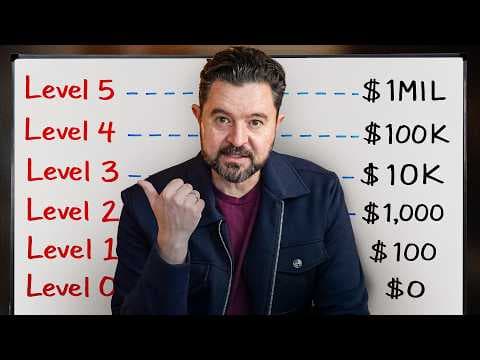
How to Build a $1 Million Business in 5 Steps
TL;DR
Building a $1 million business involves a five-step framework: apprenticeship, side hustle, testing concepts, forming a team, and creating a repeatable process. Start by gaining experience and resources, then test ideas with minimal investment. Gradually scale by refining your product and sales approach, leading to a sustainable and profitable business.
Transcript
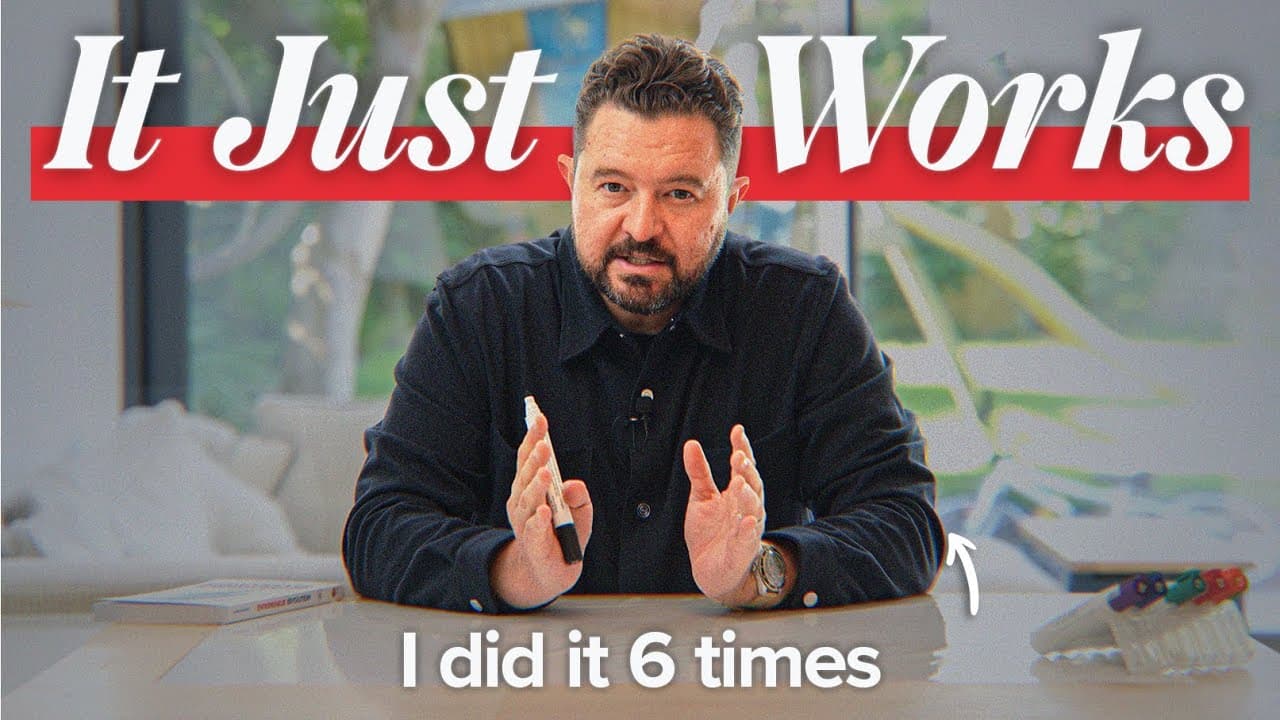
Hi, I'm Daniel Priestley. In my early 20s, I developed my first multi-million dollar business before the age of 25. Since then, I've had six businesses go 0 to a million. I've built three companies north of 10 million in valuation. The good news, no experience or investment is required to make this work. Give me the next 20 30 minutes and we're goi... Read More
Key Insights
- An apprenticeship provides commercial awareness, self-awareness, and access to resources.
- The side hustle stage involves testing entrepreneurial skills with 90-day projects.
- The CAOS method stands for concept, audience, offer, and sales, focusing on refining business ideas.
- Forming a two-person 'scout team' aids in improving business concepts and processes.
- Minimum Viable Products (MVPs) are crucial for testing market reactions before full-scale launches.
- A perfect repeatable week helps establish a consistent revenue stream and operational rhythm.
- A four-person team structure supports growth with roles in sales, operations, and customer success.
- Promoting a 'product for prospects' is more effective than directly selling the core offering.
Install to Summarize YouTube Videos and Get Transcripts
Explore YouTube Video Summarizer or Get YouTube Transcript Extractor
Questions & Answers
Q: How can an apprenticeship benefit aspiring entrepreneurs?
An apprenticeship benefits aspiring entrepreneurs by providing them with commercial awareness, self-awareness, and access to resources. It involves working under an experienced entrepreneur to learn how businesses operate, understand personal strengths and weaknesses, and gain insights into resource management, such as finance and marketing.
Q: What is the purpose of a 90-day side hustle?
A 90-day side hustle serves as a practical test of entrepreneurial skills without long-term commitment. It allows individuals to experiment with business ideas, build confidence, and gain experience in launching and managing small projects. The goal is not immediate profit but rather skill development and market understanding.
Q: What does the CAOS method entail?
The CAOS method involves testing and refining four key business elements: concept, audience, offer, and sales. Entrepreneurs act like scientists, running fast and cheap experiments to determine if their ideas are viable, if they have the right audience, if the offer is appealing, and if the sales process is effective.
Q: How does a two-person 'scout team' function in a startup?
A two-person 'scout team' functions by collaboratively refining business ideas and processes. This team, consisting of a founder and a co-founder or early employee, focuses on improving the concept, audience targeting, offer, and sales strategy. The partnership allows for shared insights and more dynamic problem-solving.
Q: Why are MVPs important in the business development process?
MVPs, or Minimum Viable Products, are important because they allow entrepreneurs to test market reactions to their ideas with minimal investment. By presenting basic versions of their products, such as landing pages or waitlists, businesses can gather valuable feedback and data to refine their offerings before full-scale launches.
Q: What is a 'perfect repeatable week' in business operations?
A 'perfect repeatable week' is a structured plan outlining daily activities that consistently generate revenue and support business growth. It involves setting high-value tasks for the team, conducting sales meetings, running marketing campaigns, and engaging with customers. This routine helps maintain operational efficiency and financial stability.
Q: How does promoting a 'product for prospects' differ from selling a core offering?
Promoting a 'product for prospects' involves offering low-commitment, introductory products that lead potential customers to the core offering. This approach reduces the barrier to entry, making it easier for prospects to engage with the business. It contrasts with directly selling the core offering, which can be a higher-risk decision for customers.
Q: What role does a four-person team play in scaling a business?
A four-person team plays a crucial role in scaling by covering key business functions: sales and marketing, customer success, operations, and leveraging the brand of an associate key person of influence. This structure supports growth by ensuring effective sales processes, customer satisfaction, and operational efficiency, while enhancing the business's market presence.
Summary & Key Takeaways
-
The journey to a $1 million business starts with an apprenticeship to gain essential skills and resources. Following this, entrepreneurs should engage in short-term side hustles to test and develop their business acumen. This foundational work is crucial for understanding market dynamics and personal strengths.
-
The CAOS method helps refine business ideas by focusing on concept, audience, offer, and sales. Entrepreneurs should work in small teams to test these elements using Minimum Viable Products (MVPs). This stage is about learning and adapting rather than immediate profitability.
-
Scaling involves forming a structured team and creating a perfect repeatable week to drive consistent revenue. Businesses should focus on promoting introductory products to prospects, leading them to core offerings. This strategy, combined with spotlight campaigns and a strong annual message, supports sustainable growth.
Read in Other Languages (beta)
Share This Summary 📚
Summarize YouTube Videos and Get Video Transcripts with 1-Click
Try YouTube Summary with ChatGPT & Claude or YouTube Transcript Generator
Explore More Summaries from Daniel Priestley 📚


Summarize YouTube Videos and Get Video Transcripts with 1-Click
Try YouTube Summary with ChatGPT & Claude or YouTube Transcript Generator