How Does Trauma Affect the Nervous System?
TL;DR
Trauma can persist as recurring bodily responses controlled by the autonomic nervous system, not only as thoughts or memories in the brain. Healing may therefore benefit from addressing patterns of startle, stress, shutdown, breathing, digestion, and thwarted movement through body-based approaches alongside appropriate psychological therapy.
Transcript
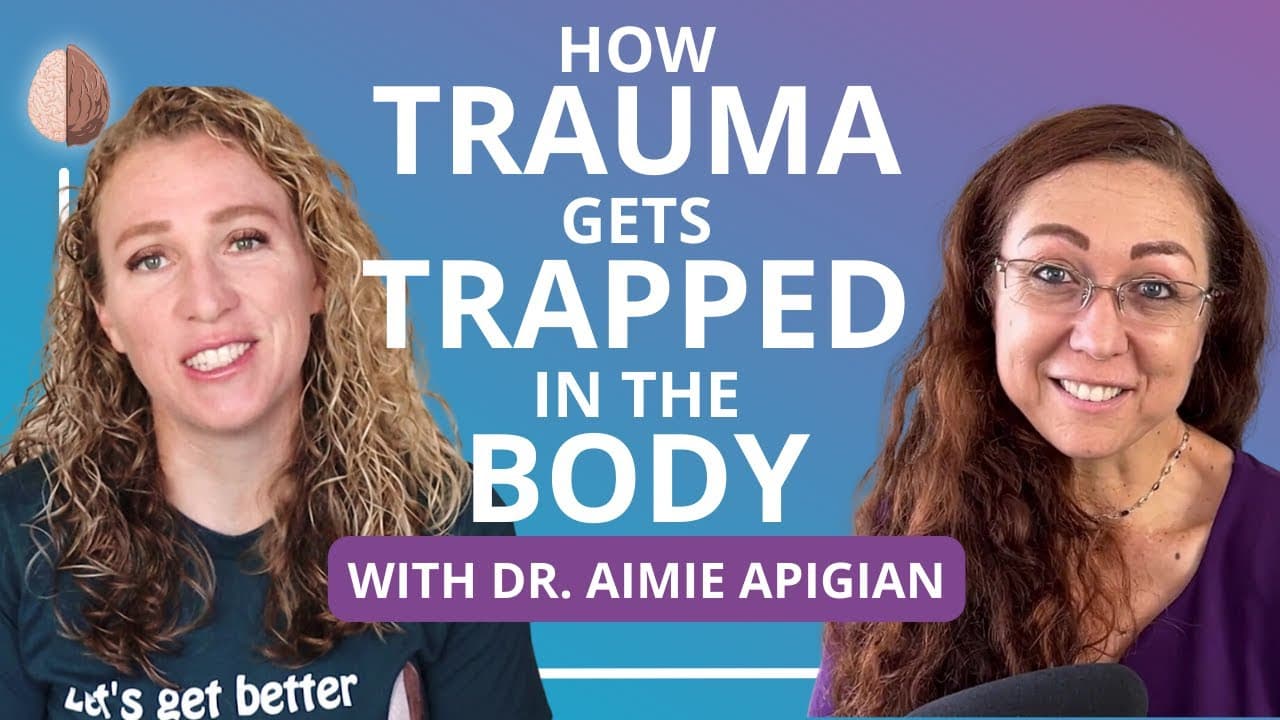
Okay, I am really excited about today's guest. We're talking with Dr. Aimie Apigian. She is a leading medical expert on how life experiences get stored in the body and how to restore the body to its best state of health through her method, the biology of trauma. So she's a double board-certified medical physician in preventative medicine and ... Read More
Key Insights
- Trauma is described as a recurring biological response, not merely a past event stored as a thought or memory. The central question is whether the body continues entering a trauma response regularly in the present, creating persistent patterns that can shape symptoms and health conditions.
- The autonomic nervous system is responsible for functions that happen without conscious control. It keeps the body alive while also adjusting how it operates, including heart rate, breathing speed, and digestive activity, based on what the system appears to perceive as necessary for survival.
- The vagus nerve is presented as an important pathway connecting the brain stem with the body. It helps control the heart, lungs, diaphragm, breathing, and digestive system, demonstrating how nervous system activity can create widespread physical changes without requiring deliberate thought.
- The trauma response begins with a startle response that directs attention toward a possible threat. Like an animal suddenly noticing a sound, the body becomes alert and concentrates on the potential danger before determining whether a stronger stress response is necessary.
- The stress response is designed to produce action. An initial surge of adrenaline prepares the body to move, solve a problem, escape danger, or perform unusually demanding actions, while cortisol follows a few minutes later according to the sequence described in the conversation.
- Thwarted movement occurs when a person stops taking action even though adrenaline is preparing the body to move. Dr. Apigian identifies this interruption as the moment when the body can shift from a stress response into a trauma response.
- Overwhelm can stop action when an experience feels like too much happening too quickly. The body may also stop acting after receiving too little of something for too long, reaching a point where it responds as though it cannot continue.
- Body-based trauma work is presented as a complement to psychological therapy. Somatic work and internal family systems are mentioned as approaches that engage how trauma appears in the body, while addressing biological patterns may help facilitate progress across different therapeutic modalities.
Install to Summarize YouTube Videos and Get Transcripts
Explore YouTube Video Summarizer or Get YouTube Transcript Extractor
Questions & Answers
Q: How does trauma get stored in the body?
Trauma is described as becoming stored through repeated patterns in the body’s autonomic nervous system. Instead of treating trauma only as a past event held in the brain, Dr. Aimie Apigian looks for whether the body continues entering a trauma response during present-day life. Those recurring responses can become biological patterns associated with symptoms, health conditions, and diagnoses.
Q: What does the autonomic nervous system do during trauma?
The autonomic nervous system automatically manages essential bodily processes and determines how the body should operate under current conditions. It can change heart rate, breathing, and digestive activity without conscious direction. During a perceived threat, it helps shift the body from ordinary functioning toward heightened attention, mobilization, or shutdown, depending on how the defensive sequence develops.
Q: What role does the vagus nerve play in the body?
The vagus nerve comes from the brain stem and extends into multiple areas of the body. According to the discussion, it helps control the heart, lungs, diaphragm, breathing, and digestive system. Its broad reach illustrates how the nervous system can automatically alter several physical functions at once and why trauma cannot be understood solely as a cognitive or psychological process.
Q: What is the first stage of the trauma response?
The described sequence starts with a startle response. A sound, sight, or other signal brings attention toward a possible danger, causing the person to focus closely enough to assess it. The example given is an animal suddenly perking up after hearing a noise. If the signal is judged dangerous, the body then proceeds into the stress response.
Q: How does the stress response prepare the body for action?
The stress response begins with a rush of adrenaline, followed by cortisol a few minutes later. Adrenaline mobilizes the body to act, whether that means solving a problem, escaping danger, completing a rescue, or confronting a demanding situation. The essential point is that this state is organized around movement and action, rather than passive reflection about the threat.
Q: What is thwarted movement in a trauma response?
Thwarted movement is the interruption of action while the body remains chemically and physically prepared to move. Adrenaline is signaling the person to respond, solve the problem, or escape, but action stops. Dr. Apigian identifies this interruption as the transition point at which an ordinary stress response can become a trauma response within the body.
Q: Why can overwhelming experiences produce a trauma response?
An experience can interrupt action when it feels like too much is happening too quickly. A similar interruption may occur when the body has received too little of something for too long and reaches a point of exhaustion or resignation. In either situation, the person stops acting even though the stress response has mobilized energy, creating the conditions described as thwarted movement.
Q: Why might trauma treatment include body-based therapy?
Trauma treatment may include body-based therapy because recurring autonomic patterns involve physical functions, not just thoughts about an experience. Somatic work and internal family systems are mentioned as ways of addressing how trauma appears in the body. Dr. Apigian argues that working with trauma-related biological changes can support and potentially accelerate progress alongside whatever therapeutic modality a person uses.
Summary & Key Takeaways
-
Trauma is presented as a biological pattern in which the body repeatedly enters defensive states in the present. Rather than focusing exclusively on a past event or a person’s thoughts, Dr. Aimie Apigian looks for recurring trauma responses that may influence symptoms, health conditions, behavior, and a person’s capacity to act.
-
The autonomic nervous system automatically regulates essential functions and adjusts how the body operates according to perceived conditions. Through pathways including the vagus nerve, it influences the heart, lungs, diaphragm, breathing, and digestion. These automatic changes help explain how experiences can become persistent patterns throughout the body rather than remaining purely cognitive.
-
The described defensive sequence begins with startle and heightened attention, followed by a stress response if danger is detected. Adrenaline prepares the body to move and solve the problem. When action stops despite that mobilization, a process called thwarted movement can precede a trauma response, especially under overwhelming or prolonged conditions.
Read in Other Languages (beta)
Share This Summary 📚
Summarize YouTube Videos and Get Video Transcripts with 1-Click
Try YouTube Summary with ChatGPT & Claude or YouTube Transcript Generator
Explore More Summaries from Therapy in a Nutshell 📚






Summarize YouTube Videos and Get Video Transcripts with 1-Click
Try YouTube Summary with ChatGPT & Claude or YouTube Transcript Generator