How to Use Candle 3 Closure in Trading
TL;DR
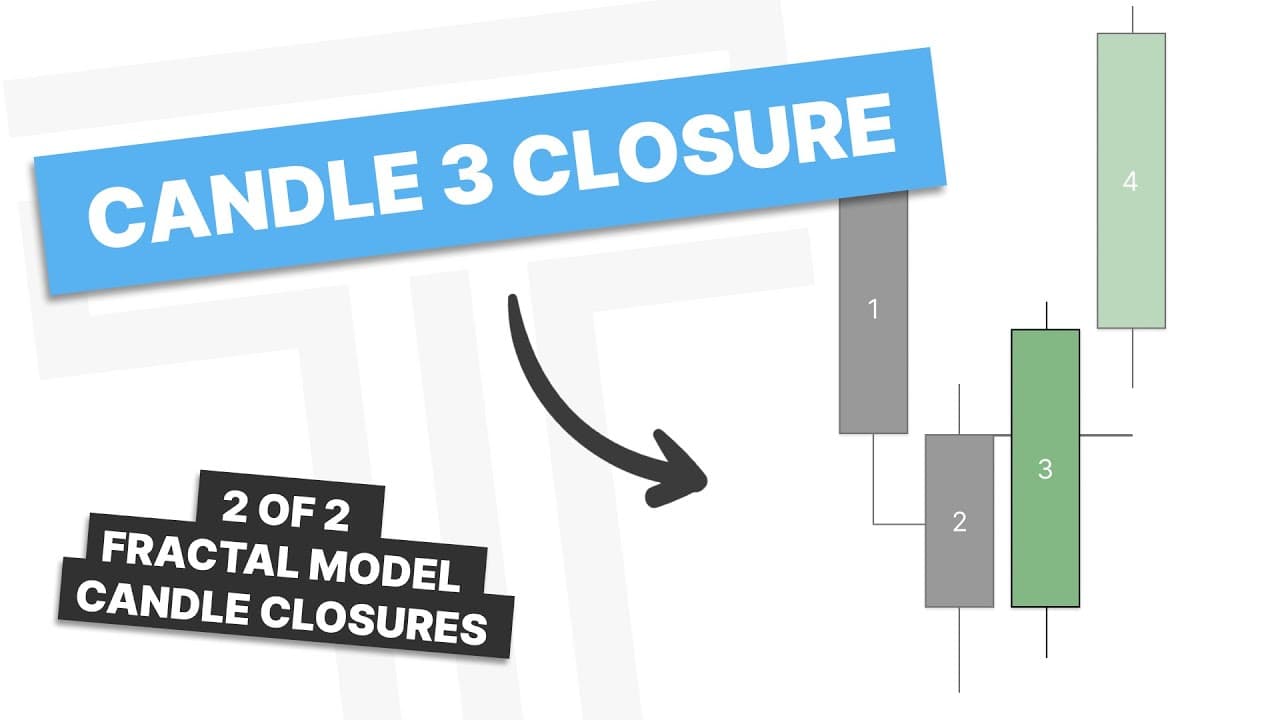
Candle 3 closure is a key concept in TTrades Fractal Model, differentiating between continuation and reversal closures. It involves analyzing candle patterns to predict future price movements. Understanding candle 3 closure alongside candle 2 closure, equilibrium, and state of delivery helps traders make informed decisions about market trends and potential reversals.
Transcript
How's it going everyone and welcome back to another video. In this video, we will be talking about candle 3 closure. Now, within my fractal model, there is a candle 2 and a candle 3 closure. If you haven't already seen my candle 2 closure video, please check the link in the description below to check that out. But with that said, let's get into the... Read More
Key Insights
- Candle 3 closure is a part of the TTrades Fractal Model, focusing on predicting market movements.
- Continuation closure occurs when a candle closes below the previous low, indicating a trend continuation.
- Reversal closure happens when a candle closes above the previous low, suggesting a potential price reversal.
- Candle 2 closure involves price reversal in candle 2, allowing trading opportunities in subsequent candles.
- Candle 3 closure occurs without a candle 2 closure, where price closes over the body of candle 2.
- In bearish scenarios, candle 3 closure can indicate a continuation lower if it closes below the body of candle 2.
- Equilibrium is used to determine where wicks should form for expected price movement.
- Combining candle closures with equilibrium and delivery state change forms the complete trading model.
Install to Summarize YouTube Videos and Get Transcripts
Explore YouTube Video Summarizer or Get YouTube Transcript Extractor
Questions & Answers
Q: What is a candle 3 closure in trading?
A candle 3 closure is a trading concept within the TTrades Fractal Model where the price does not sweep out the high or low of the previous candle but closes over the body of candle 2. This closure type helps traders anticipate future price movements, especially when paired with equilibrium and state of delivery analysis.
Q: How does a continuation closure differ from a reversal closure?
A continuation closure occurs when a candle closes below the previous low, suggesting the trend will continue in the same direction. In contrast, a reversal closure happens when a candle sweeps out the previous low but closes above it, indicating a potential reversal in price movement.
Q: When should traders expect a candle 3 closure?
Traders should expect a candle 3 closure when there is no candle 2 closure, meaning the price does not sweep out the previous high or low but closes over the body of candle 2. This scenario suggests potential continuation in the price direction, allowing traders to anticipate future trends.
Q: Why is equilibrium important in candle 3 closure analysis?
Equilibrium is crucial in candle 3 closure analysis as it helps determine where the wicks of higher time frame candles should form. By understanding equilibrium, traders can better predict whether the price will continue or reverse, enhancing their decision-making process in trading strategies.
Q: How do candle 2 and candle 3 closures work together?
Candle 2 and candle 3 closures work together by providing different insights into market conditions. Candle 2 closure involves a price reversal, allowing for trading in subsequent candles, while candle 3 closure indicates potential continuation without a reversal, offering different opportunities for traders to capitalize on market trends.
Q: What role does state of delivery play in the TTrades model?
The state of delivery in the TTrades model helps traders identify changes in market conditions. By analyzing how the market delivers price movements, traders can anticipate shifts in trends or continuations, allowing them to align their strategies with the prevailing market dynamics effectively.
Q: How can traders use candle closures to filter swing points?
Traders can use candle closures to filter swing points by identifying valid closures with context or a point of interest. By recognizing candle 2 and candle 3 closures, traders can determine which swing points are significant and align their trades with these validated points, avoiding arbitrary or less meaningful swings.
Q: What is the significance of combining candle closures with other model components?
Combining candle closures with other model components like equilibrium and state of delivery provides a comprehensive trading strategy. This integration allows traders to have a clearer understanding of market conditions, enhancing their ability to predict price movements and make informed trading decisions based on a holistic view of the market.
Summary & Key Takeaways
-
Candle 3 closure is a technique used in TTrades Fractal Model to analyze and predict market trends. It involves understanding continuation and reversal closures by observing how candles close relative to previous highs or lows. The model is enhanced by using equilibrium and state of delivery to refine trading decisions.
-
The difference between candle 2 and candle 3 closures is crucial. Candle 2 closure involves a price reversal, allowing trades in subsequent candles, while candle 3 closure happens when no reversal occurs, but the price closes over the body of candle 2, indicating potential continuation.
-
Traders use candle 3 closure alongside equilibrium to identify potential market movements. By analyzing the entire candle range and observing where price wicks form, traders can anticipate future trends. This strategy, combined with other model components, helps in making informed trading decisions.
Read in Other Languages (beta)
Share This Summary 📚
Summarize YouTube Videos and Get Video Transcripts with 1-Click
Try YouTube Summary with ChatGPT & Claude or YouTube Transcript Generator
Explore More Summaries from TTrades 📚
Summarize YouTube Videos and Get Video Transcripts with 1-Click
Try YouTube Summary with ChatGPT & Claude or YouTube Transcript Generator