How to Trade Price Retracements Effectively
TL;DR
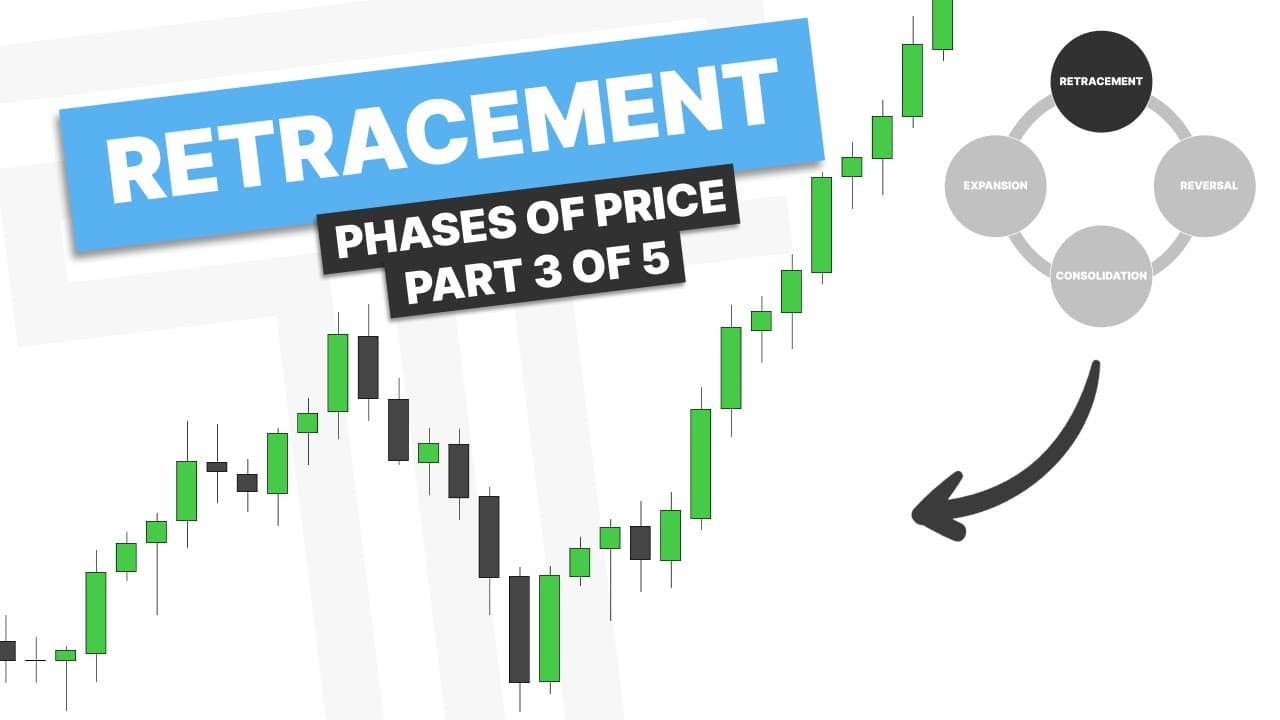
A retracement is a slow, shallow price movement opposing the trend, occurring after an expansion. Traders can identify retracements by looking for failure swings and fair value gaps. Successful trading involves recognizing these patterns and anticipating subsequent expansions, using retracements as entry points for further trades.
Transcript
[Applause] How's it going everyone and welcome back to another video. This is going to be part three in my phases of price series. So, if you haven't seen part one or two, make sure to check those out and specifically the expansion video because if you haven't seen that, this video won't make sense. Let's go ahead and get into the PDF. So the first... Read More
Key Insights
- A retracement is a slow, shallow move opposing the trend.
- An expansion is a strong, fast directional move in one direction.
- Failure swings are a key signature of retracements.
- Retracements often form in fair value gaps.
- A protected swing indicates a potential trend continuation.
- Expansions follow retracements if the trend continues.
- Consolidation can precede a retracement or expansion.
- Understanding phases of price helps anticipate market movements.
Install to Summarize YouTube Videos and Get Transcripts
Explore YouTube Video Summarizer or Get YouTube Transcript Extractor
Questions & Answers
Q: How to identify a retracement in price action?
A retracement is identified as a slow, shallow price movement opposing the trend, often forming after an expansion. Key indicators of a retracement include failure swings at highs and lows and the presence of fair value gaps where prices tend to form lows. Recognizing these patterns helps traders anticipate subsequent market movements.
Q: What is the significance of failure swings in trading?
Failure swings are significant as they indicate potential retracement areas. They occur when price fails to reach new highs or lows and are common during retracements. Traders look for these swings to identify entry points for trades, targeting the reversal of these swings in anticipation of a new expansion phase.
Q: Why are fair value gaps important in identifying retracements?
Fair value gaps are important as they often serve as areas where retracements form. They represent price imbalances where the market seeks to fill, providing a potential entry point for traders. By marking these gaps, traders can anticipate where retracements might occur and prepare for subsequent expansions.
Q: How does understanding phases of price help in trading?
Understanding phases of price, such as expansions, retracements, and consolidations, helps traders anticipate market movements and make informed decisions. Recognizing these phases allows traders to identify entry and exit points, manage risk, and align their strategies with the prevailing market trend, increasing the likelihood of successful trades.
Q: What role do protected swings play in trading strategies?
Protected swings play a crucial role as they indicate potential trend continuations. When a protected swing forms, it suggests that the trend is likely to continue in the same direction. Traders use these swings to set stop-loss levels and as confirmation for entering trades, aligning with the anticipated market direction.
Q: How do traders use retracements to anticipate expansions?
Traders use retracements to anticipate expansions by identifying slow, shallow moves against the trend, often forming in fair value gaps. By recognizing these retracements, traders can position themselves for the subsequent expansion phase, entering trades at favorable points and capitalizing on the continuation of the trend.
Q: What is the difference between a retracement and a consolidation?
A retracement is a slow, shallow move opposing the trend, whereas a consolidation is a period of sideways movement with no clear trend direction. Retracements often occur after expansions and indicate a temporary pause in the trend, while consolidations suggest indecision in the market, potentially leading to a breakout.
Q: Why is it important to blend phases of price in trading?
Blending phases of price, such as expansions, retracements, and consolidations, is important as it provides a comprehensive view of market behavior. This understanding allows traders to anticipate potential market movements, identify entry and exit points, and develop strategies that align with the current market phase, enhancing trading effectiveness.
Summary & Key Takeaways
-
Retracements are slow, shallow moves against the trend, occurring after expansions. They are identified by failure swings and often form in fair value gaps. Traders use them to anticipate further expansions.
-
Expansions are fast, strong directional moves. Successful trading involves recognizing retracements and expansions, using retracements as opportunities for entry in the direction of the trend.
-
Consolidations can occur before retracements or expansions. Understanding the phases of price, including expansions, retracements, and consolidations, is crucial for anticipating market movements and making informed trading decisions.
Read in Other Languages (beta)
Share This Summary 📚
Summarize YouTube Videos and Get Video Transcripts with 1-Click
Try YouTube Summary with ChatGPT & Claude or YouTube Transcript Generator
Explore More Summaries from TTrades 📚

Summarize YouTube Videos and Get Video Transcripts with 1-Click
Try YouTube Summary with ChatGPT & Claude or YouTube Transcript Generator