What Is the Relationship Between Internal and External Liquidity?
TL;DR
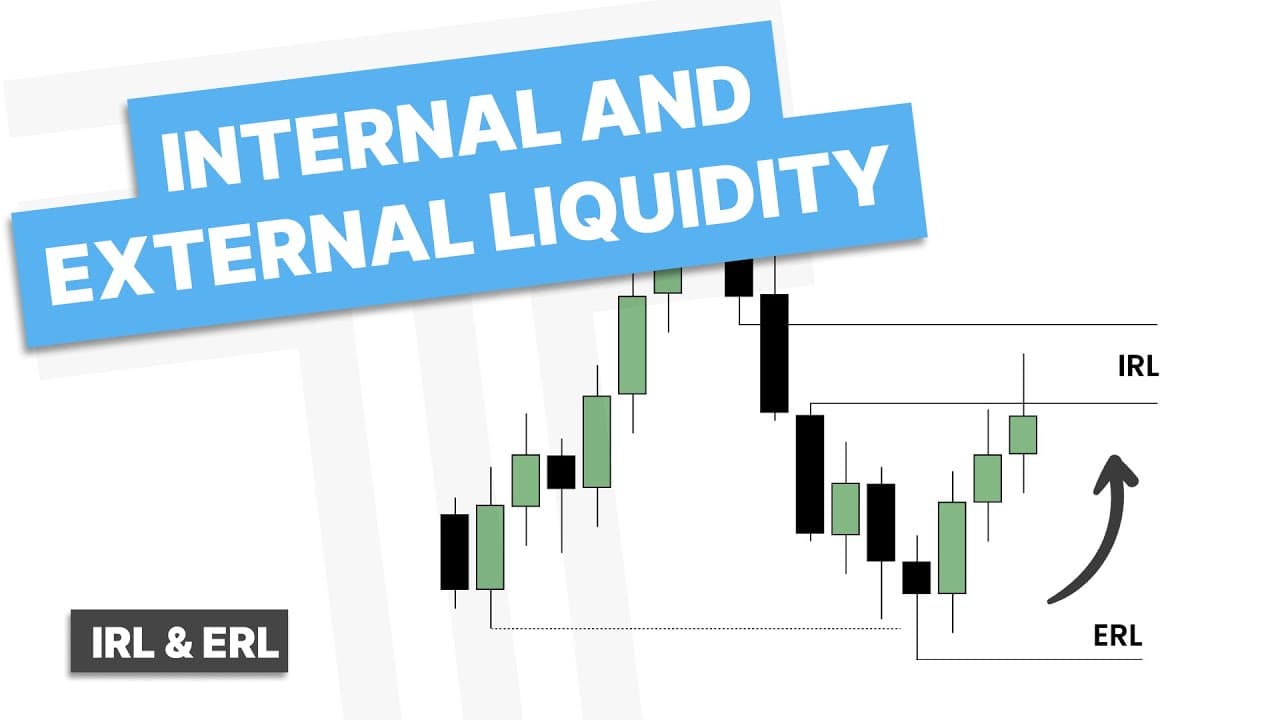
The relationship between internal and external liquidity is crucial for understanding market movements. Internal liquidity refers to fair value gaps, while external liquidity involves swing highs or lows. Traders can anticipate price transitions between these liquidity types to establish directional bias and refine their trading strategies.
Transcript
Read and summarize the transcript of this video on Glasp Reader (beta).
Key Insights
- Internal range liquidity refers to fair value gaps, while external range liquidity involves swing highs or lows, representing buy or sell side liquidity.
- The market behavior alternates between reaching for old highs/lows and rebalancing fair value gaps, illustrating the interplay between internal and external liquidity.
- Understanding the transition between internal and external liquidity helps traders anticipate price movements and establish a directional bias.
- Examples using S&P futures and gold illustrate how price moves between internal and external liquidity across different time frames.
- The video emphasizes the importance of analyzing charts to identify fair value gaps and liquidity points for strategic trading decisions.
- The concept of internal and external liquidity is applicable across various time frames, enhancing traders' ability to adapt strategies.
- Analyzing liquidity transitions helps in framing market maker models, allowing traders to better predict market movements.
- The video encourages traders to use multiple time frames to refine entry points and maximize potential returns by understanding liquidity dynamics.
Install to Summarize YouTube Videos and Get Transcripts
Explore YouTube Video Summarizer or Get YouTube Transcript Extractor
Questions & Answers
Q: What is the relationship between internal and external liquidity?
Internal liquidity involves fair value gaps, while external liquidity pertains to swing highs or lows. The market alternates between reaching for these liquidity points, helping traders anticipate price movements and establish a directional bias. Understanding this relationship is crucial for strategic trading decisions.
Q: How does the video illustrate the concept of liquidity transitions?
The video uses examples from S&P futures and gold to illustrate how price moves between internal and external liquidity across different time frames. These examples demonstrate the practical application of liquidity concepts, aiding traders in refining their strategies and improving market predictions.
Q: Why is understanding liquidity important for traders?
Understanding liquidity transitions between internal and external points helps traders anticipate price movements, establish a directional bias, and make informed trading decisions. This knowledge is crucial for optimizing entry points and maximizing potential returns in various market conditions.
Q: How can traders use multiple time frames to refine their strategies?
By analyzing charts across different time frames, traders can identify fair value gaps and liquidity points more accurately. This multi-time frame analysis allows traders to refine entry points, adapt strategies to changing market conditions, and enhance their overall trading performance.
Q: What role do fair value gaps play in trading strategies?
Fair value gaps represent internal liquidity, providing key areas where price may retrace or continue its trend. Identifying these gaps helps traders anticipate potential price movements and make strategic decisions, enhancing their ability to capitalize on market opportunities.
Q: How does the video suggest using liquidity concepts in market maker models?
The video explains that understanding liquidity transitions helps frame market maker models, which predict market movements. By analyzing these transitions, traders can better anticipate price changes, adapt their strategies, and optimize their trading performance in various market conditions.
Q: What is the significance of swing highs and lows in liquidity analysis?
Swing highs and lows represent external liquidity points, indicating potential areas where price may reverse or continue its trend. Understanding these points helps traders anticipate market movements, establish a directional bias, and make informed trading decisions based on liquidity dynamics.
Q: How does the video emphasize the adaptability of liquidity concepts?
The video highlights that liquidity concepts apply across various time frames, enhancing traders' adaptability. By understanding liquidity transitions, traders can refine their strategies to suit different market conditions, improving their ability to predict price movements and optimize trading outcomes.
Summary & Key Takeaways
-
The video delves into the relationship between internal and external liquidity, crucial for understanding market movements. It defines internal liquidity as fair value gaps and external liquidity as swing highs or lows, providing a framework for anticipating price changes.
-
Through examples using S&P futures and gold, the video demonstrates how price transitions between internal and external liquidity across different time frames. This understanding aids traders in establishing a directional bias and refining trading strategies.
-
The concept is applicable across various time frames, enhancing traders' adaptability. Analyzing liquidity transitions helps frame market maker models, allowing traders to predict market movements and optimize entry points for better returns.
Read in Other Languages (beta)
Share This Summary 📚
Summarize YouTube Videos and Get Video Transcripts with 1-Click
Try YouTube Summary with ChatGPT & Claude or YouTube Transcript Generator
Explore More Summaries from TTrades 📚

Summarize YouTube Videos and Get Video Transcripts with 1-Click
Try YouTube Summary with ChatGPT & Claude or YouTube Transcript Generator