How to Trade 4-Hour Candle Patterns Effectively
TL;DR
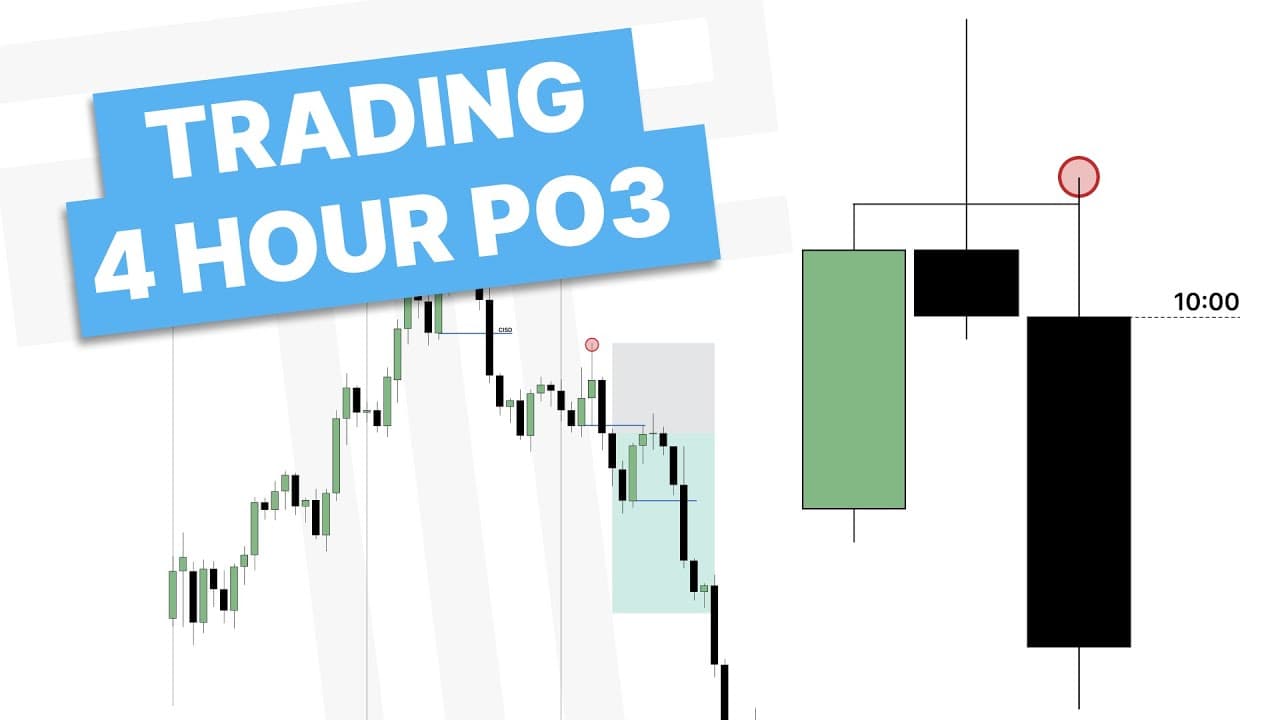
Trading the 4-hour candle involves understanding the power of three: accumulation, manipulation, and distribution. To trade effectively, identify the candle patterns on lower time frames, focusing on the wick formation before trading the body. This method helps align with daily biases and optimize entry and exit points.
Transcript
How's it going everyone and welcome back to another video. We are going to be talking about the 4hour power of three or how to trade the open high low close of a 4hour candle. Now, if you haven't already seen my candle 2 and candle 3 video, be sure to check those out first, as if you do not understand those, this video will not make sense. So, the ... Read More
Key Insights
- The power of three in trading involves accumulation, manipulation, and distribution phases.
- Candle 1 is always the accumulation phase, setting the stage for subsequent moves.
- Candle 2 can indicate manipulation, especially if it has a small wick and large opposing run.
- Candle 3 is the distribution or expansion phase, ideal for trading the directional move.
- A shallow wick in candle 2 suggests potential for expansion, supporting a higher trade.
- Aligning 4-hour candles with daily biases can enhance trading effectiveness.
- Using lower time frames like 15-minute charts helps identify precise entry points.
- Trading the body of the candle after wick formation reduces the risk of being stopped out.
Install to Summarize YouTube Videos and Get Transcripts
Explore YouTube Video Summarizer or Get YouTube Transcript Extractor
Questions & Answers
Q: How to identify the power of three in trading?
The power of three involves three phases: accumulation, manipulation, and distribution. Accumulation occurs in candle 1, setting the stage for potential moves. Manipulation often appears in candle 2, which may show a large opposing run. Distribution or expansion is seen in candle 3, where traders aim to capture the directional move.
Q: What is the significance of a shallow wick in candle trading?
A shallow wick in candle trading suggests a potential for expansion, indicating that the market is likely to continue in the direction of the trade. This is particularly important in candle 2, as a shallow wick can support the expansion phase in candle 3, making it an ideal time to enter a trade.
Q: Why is aligning with daily biases important in trading?
Aligning with daily biases is crucial because it ensures that trades are made in the direction of the overall market trend, increasing the likelihood of success. By analyzing daily trends and aligning them with the 4-hour candle patterns, traders can make more informed decisions and optimize their entry and exit points.
Q: How can lower time frames enhance trading strategies?
Lower time frames, such as the 15-minute chart, provide detailed insights into market movements, allowing traders to identify precise entry and exit points. By analyzing these shorter time frames, traders can better understand the formation of wicks and bodies in the 4-hour candles, improving their overall trading strategy.
Q: What role does candle 2 play in the power of three?
Candle 2 often serves as the manipulation phase in the power of three. It may show a large opposing run, indicating a possible manipulation of the market. If candle 2 has a shallow wick, it supports the potential for expansion in candle 3, making it a critical component of the trading strategy.
Q: When should traders enter a trade based on the 4-hour candle?
Traders should enter a trade after the wick has formed and focus on trading the body of the candle. This approach reduces the risk of being stopped out prematurely and aligns with the natural market movements, as the body represents the true directional move following the initial wick formation.
Q: How does the 15-minute chart assist in 4-hour candle trading?
The 15-minute chart helps traders identify the precise timing of wick formations and potential entry points within the 4-hour candle. By analyzing these shorter time frames, traders can gain a clearer view of market dynamics and make more informed decisions about when to enter or exit trades.
Q: What is the main goal when trading the 4-hour candle?
The main goal when trading the 4-hour candle is to let the wick form and then trade the body of the candle. This strategy aims to capture the directional move of the market, reducing the risk of premature stop-outs and aligning trades with the overall market trend for better outcomes.
Summary & Key Takeaways
-
Trading the 4-hour candle involves recognizing the phases of accumulation, manipulation, and distribution. Candle 1 sets the stage with accumulation, while candle 2 often indicates manipulation. Candle 3 is typically the expansion phase, where traders aim to capture the directional move. The key is to let the wick form before trading the body.
-
Aligning trades with daily biases and using lower time frames such as the 15-minute chart can help in identifying optimal entry points. A shallow wick in candle 2 often supports expansion, suggesting a higher probability trade. This approach minimizes the risk of being stopped out prematurely.
-
The strategy emphasizes the importance of understanding candle patterns and aligning them with daily market biases. By focusing on the power of three and utilizing lower time frame analysis, traders can improve their entry and exit strategies, leading to more effective trading outcomes.
Read in Other Languages (beta)
Share This Summary 📚
Summarize YouTube Videos and Get Video Transcripts with 1-Click
Try YouTube Summary with ChatGPT & Claude or YouTube Transcript Generator
Explore More Summaries from TTrades 📚

Summarize YouTube Videos and Get Video Transcripts with 1-Click
Try YouTube Summary with ChatGPT & Claude or YouTube Transcript Generator