How to Use the A+ ICT Entry Checklist for Trading
TL;DR
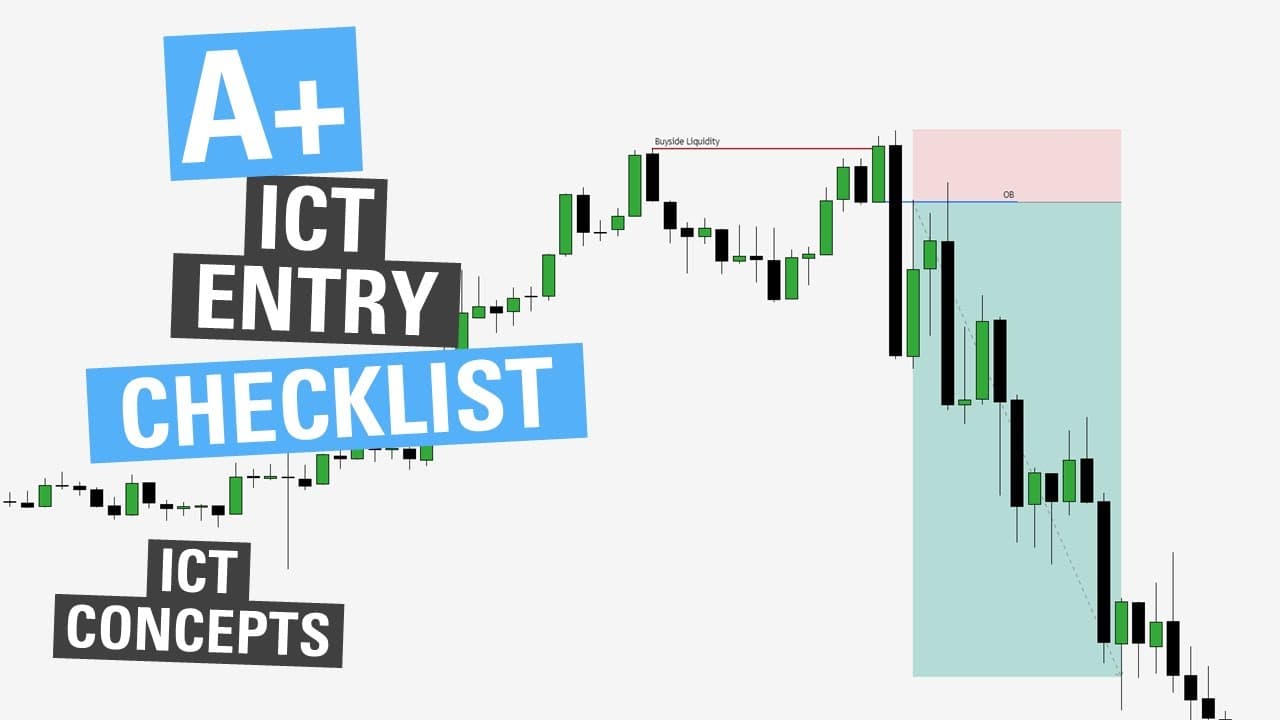
The A+ ICT entry checklist helps traders confirm all necessary criteria before executing a trade by focusing on key concepts like stop raids, market structure shifts, and price movement within specific ranges. To apply the checklist effectively, traders should blend strategies such as identifying fair value gaps and order blocks, while managing risk to optimize their entries and maximize potential rewards.
Transcript
Read and summarize the transcript of this video on Glasp Reader (beta).
Key Insights
- The A+ ICT entry checklist is used to ensure all trading requirements are met before entering a trade, focusing on stop raids, market structure shifts, and price movements.
- Key concepts include identifying stop raids, market structure shifts, and price returning to a discount or premium, with flexibility in blending different entry models.
- Examples are provided using NASDAQ and ES charts, demonstrating the application of the checklist and entry models in real trading scenarios.
- The checklist involves identifying sell side liquidity, using optimal trade entry (OTE) models, and recognizing fair value gaps, order blocks, and breaker blocks.
- Risk management is crucial, with a focus on balancing risk to reward, entry proximity to stop loss, and ensuring trade execution.
- The video emphasizes the importance of blending different concepts like fair value gaps and order blocks to create a personal trading strategy.
- The checklist is adaptable, allowing traders to choose entry points based on personal preferences and what catches their eye in the market.
- The video encourages traders to manage risk effectively and use the checklist as a tool to enhance their trading strategy, with examples showing successful trade outcomes.
Install to Summarize YouTube Videos and Get Transcripts
Explore YouTube Video Summarizer or Get YouTube Transcript Extractor
Questions & Answers
Q: What is the purpose of the A+ ICT entry checklist?
The A+ ICT entry checklist is designed to ensure that all trading requirements are met before taking a trade. It helps traders focus on key concepts such as stop raids, market structure shifts, and price movements, allowing for a systematic approach to entering trades. By following the checklist, traders can make informed decisions and enhance their trading strategies.
Q: How does the checklist assist in identifying entry points?
The checklist assists in identifying entry points by guiding traders to look for specific market conditions, such as stop raids, market structure shifts, and price returning to a discount or premium. It encourages blending different entry models, like fair value gaps and order blocks, to create a personalized strategy. This structured approach helps traders pinpoint optimal entry points with better risk management.
Q: Can you explain the concept of a stop raid in trading?
A stop raid in trading refers to a scenario where a low or high is intentionally broken to trigger stop-loss orders placed by other traders. This creates liquidity in the market, allowing larger players to enter or exit positions. The checklist uses stop raids as an indication that a significant price movement may follow, helping traders anticipate potential entry points.
Q: What role does market structure shift play in the checklist?
Market structure shift plays a crucial role in the checklist by indicating a change in the market's direction or trend. It occurs when a previous high or low is broken, suggesting a potential reversal or continuation of a trend. Identifying these shifts helps traders determine when to enter or exit trades, aligning with the checklist's goal of making informed trading decisions.
Q: How does the checklist incorporate risk management?
The checklist incorporates risk management by emphasizing the balance between risk to reward, entry proximity to stop loss, and ensuring trade execution. It guides traders to choose entry points that maximize potential returns while minimizing risk. By following the checklist, traders can manage their positions effectively, reducing the likelihood of significant losses and enhancing overall profitability.
Q: What are PD arrays, and how are they used in the checklist?
PD arrays, or price delivery arrays, refer to specific price levels or zones where traders expect significant market reactions, such as fair value gaps or order blocks. In the checklist, PD arrays are used to identify potential entry or exit points. By recognizing these zones, traders can anticipate price movements and make informed decisions about where to place trades, aligning with their overall strategy.
Q: Why is blending different concepts important in trading strategy?
Blending different concepts is important in trading strategy because it allows traders to create a personalized approach that suits their individual preferences and market conditions. By combining elements like fair value gaps, order blocks, and OTE models, traders can develop a versatile strategy that adapts to various scenarios. This flexibility enhances the effectiveness of the checklist and improves overall trading outcomes.
Q: How do the provided examples illustrate the checklist's application?
The provided examples illustrate the checklist's application by demonstrating how each concept is used in real trading scenarios. By analyzing NASDAQ and ES charts, the video shows how traders can identify stop raids, market structure shifts, and PD arrays to make informed decisions. These examples highlight the checklist's practical use, guiding traders through the process of selecting entry points and managing risk effectively.
Summary & Key Takeaways
-
The video provides an overview of the A+ ICT entry checklist, detailing how it helps traders meet all requirements before entering a trade. It discusses the importance of stop raids, market structure shifts, and price movements in trading strategies.
-
Examples using NASDAQ and ES charts illustrate how the checklist is applied in real trading scenarios. The video emphasizes the importance of blending concepts like fair value gaps and order blocks to create a personal trading strategy.
-
Risk management is a key focus, with the video highlighting the need to balance risk to reward, entry proximity to stop loss, and ensuring trade execution. Traders are encouraged to use the checklist to enhance their trading strategy.
Read in Other Languages (beta)
Share This Summary 📚
Summarize YouTube Videos and Get Video Transcripts with 1-Click
Try YouTube Summary with ChatGPT & Claude or YouTube Transcript Generator
Explore More Summaries from TTrades 📚

Summarize YouTube Videos and Get Video Transcripts with 1-Click
Try YouTube Summary with ChatGPT & Claude or YouTube Transcript Generator