How to Set Up Google Ads for a Small Brand
TL;DR
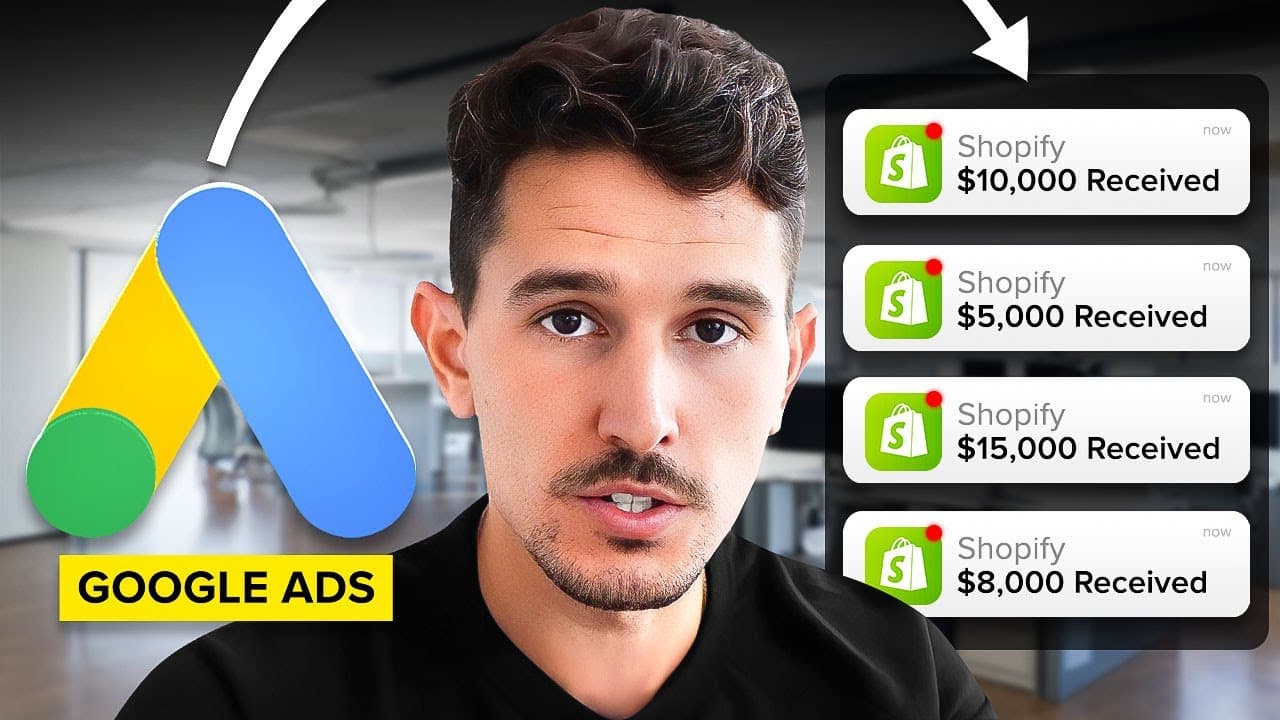
Use one Performance Max campaign and one branded search campaign to keep Google Ads manageable for a brand earning under $1 million in revenue. Optimize Performance Max for purchase conversions, organize products into clear listing groups, supply varied lifestyle images and copy, and guide the system with search terms, first-party visitor and purchaser data, interests, and demographics.
Transcript
ever feel like you're running ads over and over and over again only to get zero results but what if we can create an omnipresent strategy just in Google ads my name is s poo I used to run ads for Vayner media one of the biggest agencies in New York City then I ran ads at bark one of the largest and fastest growing direct consumer e-commerce brands ... Read More
Key Insights
- The recommended Google Ads structure is one Performance Max campaign and one branded search campaign for brands earning under $1 million in revenue. Keeping the setup compact prevents the available budget from being spread too thin and makes campaign performance easier to understand.
- Performance Max is useful for smaller brands because one campaign can cover shopping, display, Discovery, YouTube, and search placements. The strategy uses this broad coverage to create an omnipresent advertising presence without requiring the brand to operate a separate campaign for every placement type.
- Purchase is the conversion goal that should guide the campaign, while add-to-cart tracking should be removed from the selected campaign goals. Focusing the setup on completed purchases gives Google a simpler outcome to pursue and avoids mixing purchase data with a less valuable intermediate action.
- Conversions should be the initial bidding focus instead of conversion value, and a target cost per action should not be set when starting. The recommended approach deliberately gives Google the straightforward instruction to generate conversions before adding more restrictive or complicated bidding controls later.
- Product selection should prioritize items that the brand genuinely wants customers to buy. A catalog ranging from $2 to $200 does not require advertising every item, especially inexpensive products such as socks that may be less valuable for initial customer acquisition.
- Listing groups are product selections within Performance Max asset groups, and distinct categories should be separated. A shoe retailer could divide high heels, running sneakers, and casual shoes so the advertiser can identify which category generates conversions and direct more spending toward it.
- Creative assets should include at least 10 lifestyle images with both square and landscape formats, plus one logo on a white or transparent background. Product images are not the preferred creative, and video should generally be omitted for products priced below $11,000 because YouTube delivery may be inefficient.
- Audience signals should combine custom segments, owned data, interests, and demographics. Suggested owned-data groups include all-time purchasers and site visitors from the previous 180 days, while custom segments should use at least two lists containing search terms and competitor-related information.
Install to Summarize YouTube Videos and Get Transcripts
Explore YouTube Video Summarizer or Get YouTube Transcript Extractor
Questions & Answers
Q: How should a small brand structure its Google Ads account?
A brand earning under $1 million in revenue should use a simple structure consisting of one Performance Max campaign and one branded search campaign. The purpose is to avoid dividing the available advertising budget among too many campaigns. Performance Max supplies broad placement coverage, while the compact setup makes it easier to determine what is working and where results originate.
Q: Why should beginners use a Performance Max campaign?
Performance Max allows a smaller brand to appear across shopping, display, Discovery, YouTube, and search through one campaign type. This broad distribution creates the omnipresent effect described in the strategy without requiring separate campaigns for every channel. The approach is intended for smaller advertisers that need extensive coverage while keeping their campaign structure and budget allocation manageable.
Q: Which conversion goal should a Performance Max campaign use?
The campaign should use the sales objective and select purchases as the conversion goal. Add-to-cart should be removed from the chosen campaign goals so the system is not guided by both completed sales and an intermediate shopping action. The strategy seeks to simplify the data and tell Google that completed purchase conversions are the result the campaign should pursue.
Q: What bidding strategy should a new Performance Max campaign use?
A new campaign should focus on conversions rather than conversion value. It should begin without a target cost per action, since the proposed setup is designed for brands earning under $1 million and intentionally avoids unnecessary complexity. A target cost per action may be introduced eventually, but the initial instruction to Google should simply be to obtain conversions.
Q: How should products be organized in Performance Max?
Products must first be available through Merchant Center and then selected for the Performance Max campaign. Within an asset group, listing groups should separate meaningful product categories. A seller of high heels, running sneakers, and casual shoes could create distinct groups for each category. This organization helps reveal which category drives conversions and deserves additional advertising expenditure.
Q: What images and logos should a Performance Max asset group include?
An asset group should contain about 10 images as a minimum, although Google allows up to 20. The preferred assets are lifestyle images rather than standard product images. Include both square and landscape formats because Performance Max covers multiple placements with different requirements. The logo portion only needs one logo displayed on either a white background or a transparent background.
Q: Should a beginner add video to a Performance Max campaign?
Video should generally be omitted because adding it can cause the campaign to appear widely across YouTube, which the transcript describes as inefficient for most advertisers. The stated exception is a very high-priced product. The specific recommendation is that products priced under $11,000 do not need video assets placed in this section of the Performance Max campaign.
Q: What audience signals should be added to Performance Max?
Audience signals should include custom segments, owned data, relevant interests, and detailed demographics. Custom segments can contain search-term lists and information related to competitors, with at least two lists recommended. Owned-data signals should include all-time purchasers and site visitors from the last 180 days. Relevant interests, such as shoe stores or high heels, provide further guidance for reach.
Summary & Key Takeaways
-
The recommended account structure for a brand earning under $1 million in revenue consists of one Performance Max campaign and one branded search campaign. This simple arrangement avoids spreading the available budget across too many campaigns while giving the brand placements across shopping, display, Discovery, YouTube, and search through Performance Max.
-
Performance Max should use the sales objective with purchases as its conversion goal. The campaign should initially optimize for conversions without a target cost per action or new-customer setting. Products should come from Merchant Center, with low-priced items excluded when they are not the products the brand most wants customers to purchase.
-
Each asset group should combine a defined product selection, lifestyle images, a logo, advertising copy, and audience signals. Product categories should be separated into listing groups for clearer performance analysis. Audience signals should include search terms, competitor-related inputs, site visitors, past purchasers, relevant interests, and detailed demographics that guide Google's system.
Read in Other Languages (beta)
Share This Summary 📚
Summarize YouTube Videos and Get Video Transcripts with 1-Click
Try YouTube Summary with ChatGPT & Claude or YouTube Transcript Generator
Explore More Summaries from Sam Piliero 📚



Summarize YouTube Videos and Get Video Transcripts with 1-Click
Try YouTube Summary with ChatGPT & Claude or YouTube Transcript Generator