How Does Mark Rober Make Science Videos Viral?
TL;DR
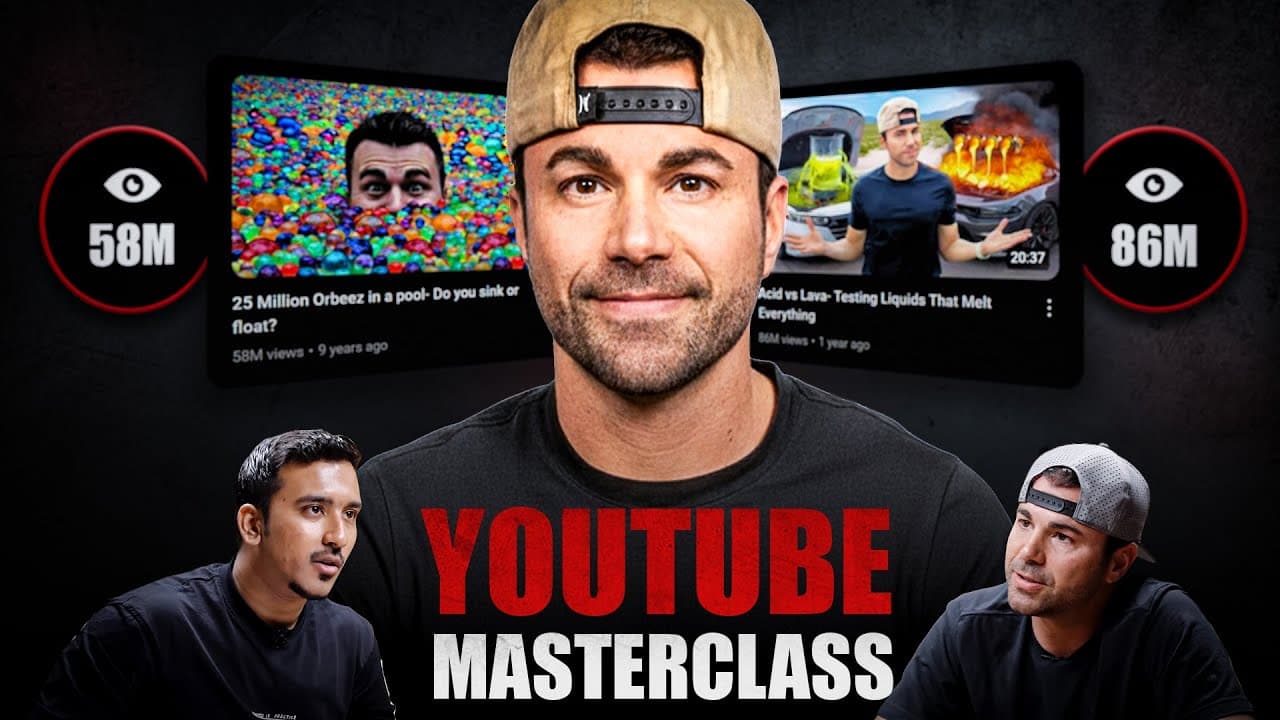
Strong YouTube videos begin with a compelling idea, then use clear storytelling, thoughtful packaging, and audience trust to make complex subjects broadly appealing. Mark Rober built sustained success by following his creative interests, publishing roughly one video per month, and extending popular concepts into repeatable formats and creator-led businesses instead of chasing every algorithmic trend.
Transcript
If you, you know, challenge Elon Musk, you don't get to invest in Mark. You are one of the most phenomenal creators in the world. This is Mark Robber. Mark Robber. Mark Robber. I'm Mark Robber, a former Apple and NASA mechanical engineer who became a YouTuber. You know, I worked at NASA for a decade. Seven years of my life and career cut down to ab... Read More
Key Insights
- Creative problem-solving is a habit that can begin in childhood. At age six, Mark Rober solved the problem of crying while cutting onions by wearing swimming goggles, and his mother's enthusiastic reaction encouraged him to keep treating unusual ideas as valuable contributions.
- A supportive environment is foundational to sustained creativity. Rober describes his childhood home as a place where creative ideas, chores, experimentation, and thinking outside the box were encouraged, giving him the confidence to devise solutions and share interesting concepts with other people.
- Rober's first viral success was built around a simple visual illusion. He used an iPad on the front and back of a Halloween costume, connected them through FaceTime, and created the appearance of a bloody hole passing completely through his body.
- External validation can turn a private idea into a lasting creative practice. After Rober's Halloween costume reached Gizmodo and attracted roughly two or three million views, he recognized how rewarding it was to release an idea and have viewers appreciate its originality.
- Consistency is part of Rober's long-term creative model. After his first successful upload, he made roughly one video each month for 13 years, maintaining that rhythm even during periods when the YouTube algorithm appeared to favor creators publishing daily vlogs.
- The quality of the core idea matters more than decorative production choices. The episode description presents idea selection, storytelling, and thumbnails as central to reaching viewers, while cautioning creators against assuming that elaborate editing alone can make educational material compelling.
- Audience trust can support businesses beyond advertising and sponsorships. The discussion points to creator-led products such as Feastables and Prime, while arguing that creators can use established audiences, suitable products, and the right business partners to build companies around their work.
- Repeatable formats can extend the value of a successful concept. Rober says he made one glitter bomb video and then produced seven more, illustrating how a strong idea can become a recognizable series without abandoning the creative interests that attracted viewers initially.
Install to Summarize YouTube Videos and Get Transcripts
Explore YouTube Video Summarizer or Get YouTube Transcript Extractor
Questions & Answers
Q: How does Mark Rober make science videos appealing to large audiences?
Mark Rober makes science broadly appealing by starting with an interesting idea and presenting it through clear, visual storytelling. His work treats educational content as creative entertainment rather than assuming technical subjects must remain niche. The conversation also identifies thumbnails, trust, and careful thought about the craft as important, while emphasizing that the central concept matters more than fancy editing by itself.
Q: What matters most when trying to make a YouTube video viral?
The strongest foundation for a viral video is the idea itself. According to the episode description, Rober's approach also considers storytelling and thumbnails, but polished editing cannot compensate for a concept that gives viewers little reason to care. His first major upload succeeded because the iPad costume created an immediately understandable visual illusion that people wanted to watch and share.
Q: How did Mark Rober's childhood encourage creative problem-solving?
Rober grew up in a household where creativity and thinking outside the box were actively encouraged. When he was six, he had to cut onions while helping prepare a salad. To stop his eyes from watering, he retrieved swimming goggles and wore them. His mother laughed, used one of the family's limited film photographs to capture the moment, and positively reinforced his solution.
Q: What was Mark Rober's first successful YouTube video?
Rober's first successful upload showed a Halloween costume made with an iPad on the front and another on the back. A FaceTime connection let the front camera display what was behind him, producing the illusion of a bloody hole through his body. After people enjoyed it at a party, he posted the concept online, reached Gizmodo, and gained roughly two or three million views.
Q: How often did Mark Rober publish videos after his first viral upload?
Rober says he made approximately one video every month for 13 years after his first upload succeeded. That publishing pattern remained relatively stable even when YouTube appeared to promote daily vlogs. His experience suggests that creators can build a lasting body of work through a schedule suited to ambitious ideas, instead of copying every short-term platform trend.
Q: How can creators build businesses beyond YouTube sponsorships?
Creators can develop products and companies around the trust and attention they have earned from an audience. The conversation cites Feastables, Prime, and Rober's own work as prominent examples, while the episode description stresses choosing an appropriate product and having the right business partner. It presents creator businesses as opportunities that can extend beyond advertising and potentially reach very large scale.
Q: Why should creators focus on audience trust instead of algorithm trends?
Audience trust supports long-term viewing and can also become the basis for products and businesses beyond sponsorship revenue. Algorithmic preferences can change, as illustrated by the period when daily vlogs were heavily promoted, but Rober continued making roughly monthly videos. His approach favors creative interests, recognizable quality, and sustained relationships with viewers over repeatedly reshaping the work around short-term platform incentives.
Q: When should a creator turn one successful video into a series?
A successful concept can become a series when it offers enough room for meaningful variations and continues to fit the creator's interests. Rober provides a direct example with his glitter bomb project: after making the first video, he produced seven more. This approach lets creators build viewer familiarity around a proven format while still introducing new problems, experiments, and story developments.
Summary & Key Takeaways
-
Mark Rober traces his creative instincts to a childhood environment where unconventional solutions were encouraged. At age six, he wore swimming goggles while cutting onions, and his mother's delighted reaction reinforced the value of inventive thinking. That early experience shaped his continuing desire to develop ideas and communicate them to other people.
-
Rober's first online success came from a Halloween costume using two iPads and a FaceTime call to create the illusion of a hole through his body. After the costume impressed people at a party, he posted it online, reached Gizmodo, and received roughly two or three million views, validating his creative approach.
-
The conversation frames sustainable YouTube success as a combination of strong ideas, storytelling, thumbnails, trust, and business development beyond sponsorships. Rober emphasizes creativity over blindly serving the algorithm, while the broader discussion highlights creator products, capable business partners, repeatable concepts such as the glitter bomb series, and opportunities to build very large companies around audiences.
Read in Other Languages (beta)
Share This Summary 📚
Summarize YouTube Videos and Get Video Transcripts with 1-Click
Try YouTube Summary with ChatGPT & Claude or YouTube Transcript Generator
Explore More Summaries from Think School 📚






Summarize YouTube Videos and Get Video Transcripts with 1-Click
Try YouTube Summary with ChatGPT & Claude or YouTube Transcript Generator