What Happens to Your Body When You Get Sick?
TL;DR
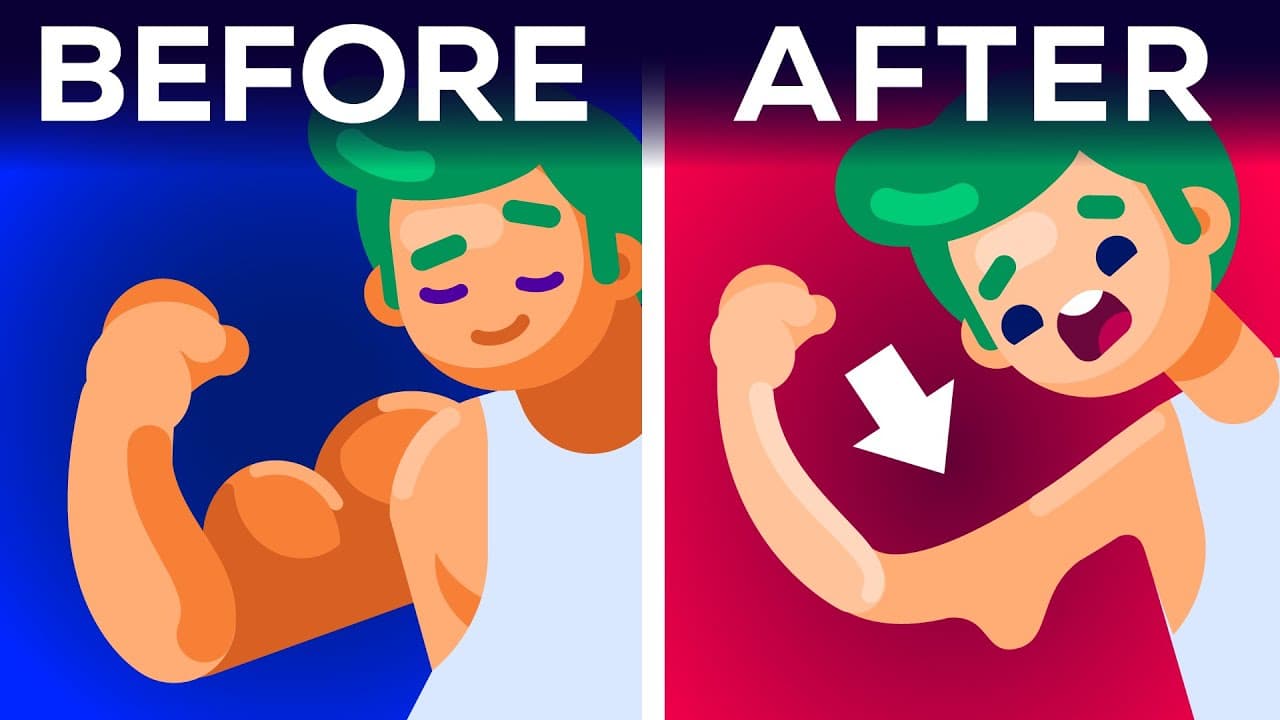
When you get sick, your body activates the immune system by releasing cytokines, leading to fatigue, loss of appetite, and increased pain sensitivity. This response consumes significant energy, often breaking down muscle tissue for resources, and can cause long-term damage to organs. Vaccines are a safer method to train the immune system and develop memory cells to combat future infections.
Transcript
There is this idea floating around that what doesn’t kill you, makes you stronger. That surviving a disease leaves you better off. And it seems to make sense because we have all experienced this. When you go through hardship, often you come out more resilient, more ready to face a difficult situation in the future. But it turns out that sometimes, ... Read More
Key Insights
- 🎨 When the body gets sick, it activates the immune system and redirects energy towards defense, leading to symptoms such as fatigue, loss of appetite, and increased pain sensitivity.
- 🏗️ The immune system demands a substantial amount of energy, amino acids, and micro elements to build weapons and fight off infections.
- 🪘 Severe infections can cause damage to organs, which are repaired with collagen. However, the repaired tissue is not as functional as the original tissue, potentially resulting in long-term organ damage.
- 🩹 The immune system's response to infections can overwhelm the body, especially in individuals who are already weakened due to age, chronic illness, or poor health.
- 🥺 Neutrophils, immune cells that respond to infections, can also cause collateral damage to healthy cells, leading to additional harm.
- 🚡 Vaccines provide a safer way to train the immune system and develop memory cells that can protect against future infections.
- 🚡 Vaccines are often more effective than natural resistance as they are designed to engage the immune system in a productive way.
Install to Summarize YouTube Videos and Get Transcripts
Explore YouTube Video Summarizer or Get YouTube Transcript Extractor
Questions & Answers
Q: How does the body respond to infection?
When the body detects an infection, it releases cytokines, signaling the immune system to activate and mobilize resources. This leads to symptoms such as fatigue, loss of appetite, heightened pain sensitivity, and a focus on rest to conserve energy for the immune response.
Q: What resources does the immune system require to fight off infections?
The immune system demands large amounts of energy, amino acids, and micro elements to build weapons for defense, such as antibodies and cytokines. When the body is sick, it slows down digestion and breaks down muscle tissue to obtain these resources.
Q: Does getting sick always result in organ damage?
Severe infections can cause damage to organs, leading to small wounds that need to be repaired. While the body can fill these wounds with collagen, the repaired tissue (scar) is not as functional as the original tissue, potentially leading to long-term organ damage.
Q: How can vaccines help train the immune system?
Vaccines simulate an infection and train the immune system to recognize and fight specific pathogens. By creating memory cells, vaccines provide better defenses against future infections and can prevent long-term damage caused by natural infections.
Key Insights:
- When the body gets sick, it activates the immune system and redirects energy towards defense, leading to symptoms such as fatigue, loss of appetite, and increased pain sensitivity.
- The immune system demands a substantial amount of energy, amino acids, and micro elements to build weapons and fight off infections.
- Severe infections can cause damage to organs, which are repaired with collagen. However, the repaired tissue is not as functional as the original tissue, potentially resulting in long-term organ damage.
- The immune system's response to infections can overwhelm the body, especially in individuals who are already weakened due to age, chronic illness, or poor health.
- Neutrophils, immune cells that respond to infections, can also cause collateral damage to healthy cells, leading to additional harm.
- Vaccines provide a safer way to train the immune system and develop memory cells that can protect against future infections.
- Vaccines are often more effective than natural resistance as they are designed to engage the immune system in a productive way.
- While vaccines are not perfect, they remain one of the best tools to train the natural defenses of the human body and prevent damage caused by diseases.
Summary & Key Takeaways
-
When the body detects an infection, it releases cytokines, which activate immune cells and trigger sickness behavior. This includes a drop in energy levels, loss of appetite, increased sensitivity to pain, and a focus on rest to conserve energy for the immune response.
-
The immune system mobilizes and demands large amounts of energy, amino acids, and micro elements to build weapons for defense. This energy is often obtained by breaking down muscle tissue, resulting in temporary muscle loss.
-
Infections can cause damage to the body's organs, which are repaired with collagen. However, the repaired tissue (scar) is not as functional as the original tissue, leading to potential long-term organ damage.
Read in Other Languages (beta)
Share This Summary 📚
Summarize YouTube Videos and Get Video Transcripts with 1-Click
Try YouTube Summary with ChatGPT & Claude or YouTube Transcript Generator
Explore More Summaries from Kurzgesagt – In a Nutshell 📚




Summarize YouTube Videos and Get Video Transcripts with 1-Click
Try YouTube Summary with ChatGPT & Claude or YouTube Transcript Generator