Why Is India Regulating Buy Now, Pay Later?
TL;DR
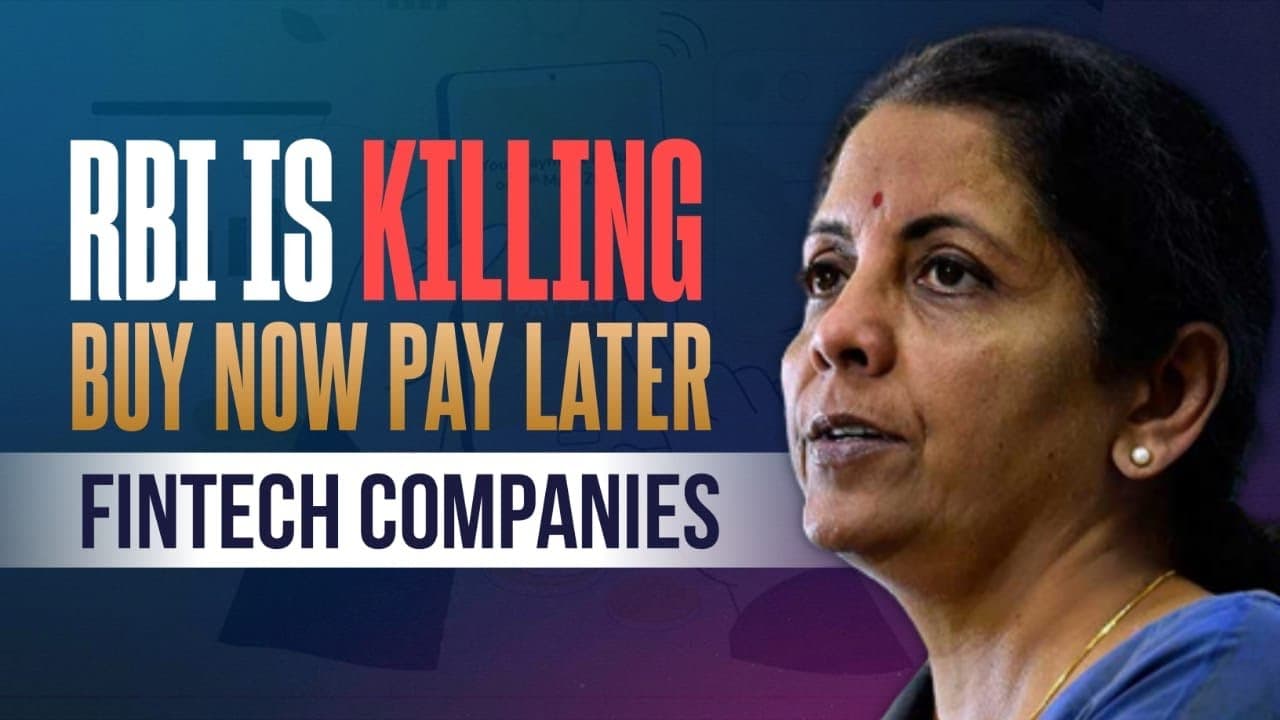
India’s central bank restricted non-bank prepaid instruments from being loaded through credit lines because BNPL products can encourage unaffordable spending, late payments, and debt. Although these services expand access for people without credit cards and help merchants sell more, their focus on younger, lower-income customers raises concerns about repayment capacity, consumer protection, and regulatory compliance.
Transcript
Reserve Bank of India recently proposed guidelines to regulate digital lending in India. In India, where many people don't have a credit card, the option to borrow money for purchases via apps is giving many citizens access to credit for the first time. In a move that could have huge ramifications for India's fledgling buy now, pay later or BNPL ma... Read More
Key Insights
- India’s BNPL market is built on a credit gap affecting people who lack access to conventional credit cards, particularly consumers with annual income below ₹1.44 lakhs and those seeking credit for purchases valued below ₹10,000.
- BNPL services work by dividing a purchase into smaller installments, allowing a customer with insufficient immediate funds to obtain the product and repay over time. In the example provided, a ₹3,000 purchase is split into three monthly payments of ₹1,000.
- BNPL providers can earn revenue from merchant commissions even when customers pay no interest. In the illustrative transaction, the provider receives ₹3,000 from the customer, pays ₹2,850 to the merchant, and retains ₹150 for facilitating the sale.
- BNPL financing increases purchasing power and can raise merchant sales by making higher-priced products affordable to more customers. Klarna stated that its service increased average order value by 41%, while Affirm claimed an increase of 85%.
- Fintech firms without their own PPI licenses rely on partnerships with licensed banks or financing institutions to issue prepaid cards. Slice partnered with SBM Bank of India, while UniOrbit Technology partnered with RBL Bank and SBM Bank for co-branded prepaid cards.
- The RBI’s June 20, 2022 notification disallowed non-bank prepaid wallets and prepaid cards from being loaded through credit lines. The restriction directly affected fintech models that offered card-like spending through credit supplied by partner banks or non-bank financial companies.
- BNPL credit can reach consumers who may have limited savings or insufficient experience managing debt. The transcript identifies customers earning less than ₹20,000 per month and people younger than twenty-five as groups more likely to receive these products.
- Missed BNPL repayments can contribute to additional borrowing and damaged credit. The cited examples state that 15% of Australian users borrowed to repay purchases, while about one-third of American users fell behind and 72% of that group reported lower credit scores.
Install to Summarize YouTube Videos and Get Transcripts
Explore YouTube Video Summarizer or Get YouTube Transcript Extractor
Questions & Answers
Q: How do buy now, pay later companies make money?
BNPL companies can earn merchant commissions by helping sellers complete purchases that customers could not otherwise afford immediately. In the transcript’s example, the provider collects ₹3,000 from the customer, pays ₹2,850 to the shoe company, and keeps ₹150. Providers may also earn interest or additional charges when customers miss payment deadlines, although exact commissions and charges vary.
Q: Why did the RBI restrict BNPL prepaid cards?
The RBI restricted non-bank prepaid wallets and prepaid cards from being loaded through credit lines because these arrangements raised consumer and regulatory concerns. The transcript highlights the risks of offering credit to young or lower-income consumers, encouraging people to spend beyond their normal budgets, and exposing users to late payments, additional borrowing, debt traps, and possible credit-score declines.
Q: How does BNPL expand access to credit in India?
BNPL expands credit access by serving consumers who cannot qualify for or do not possess conventional credit cards. According to the transcript, only 3% of India’s population had a credit card, leaving a gap for people earning below ₹1.44 lakhs annually or seeking credit below ₹10,000. Installment plans let these consumers purchase goods without paying the full price immediately.
Q: How does a BNPL installment purchase work?
A BNPL provider pays or facilitates payment to the merchant while allowing the customer to repay the purchase in smaller installments. The transcript illustrates a student buying shoes priced at ₹3,000 by paying ₹1,000 per month for three months. No interest is charged in that example when payments arrive on time, but late payments can produce additional interest or charges.
Q: Why can BNPL cause customers to spend more?
BNPL reduces the amount that must be paid at the moment of purchase, making higher-priced products appear more affordable within a customer’s monthly cash flow. The transcript says someone who normally spends ₹1,000 may spend ₹1,400 to ₹2,000 with BNPL. It also cites claimed average-order-value increases of 41% for Klarna and 85% for Affirm.
Q: What role do banks play in fintech BNPL cards?
Banks provide the regulated infrastructure that fintech firms may lack. The transcript says fintech companies cannot independently launch prepaid instruments without an RBI-issued PPI license, so they partner with licensed banks or non-bank financial companies. Slice issued a card with SBM Bank of India, while UniOrbit Technology partnered with RBL Bank and SBM Bank to issue co-branded prepaid cards.
Q: Who is most vulnerable to BNPL debt problems?
The transcript identifies younger and lower-income users as particularly exposed because they may have limited savings, little experience managing credit, or insufficient repayment capacity. BNPL is often offered to consumers who cannot obtain conventional credit cards, including people more likely to earn less than ₹20,000 monthly or be younger than twenty-five, increasing the potential consequences of overspending or missed payments.
Q: What evidence suggests BNPL can create debt traps?
The transcript cites several indicators from foreign markets. In Australia, 15% of BNPL users reportedly took out another loan to repay their purchases. In the United States, about one in three users reportedly fell behind on at least one payment, and 72% of those people said their credit score declined. These examples illustrate how repayment problems can compound existing debt.
Summary & Key Takeaways
-
Buy now, pay later services address a gap in India’s credit market by serving consumers who lack conventional credit cards or need purchases below ₹10,000. They let users divide purchases into installments, sometimes without interest when payments are timely, making higher-priced goods accessible to people with limited immediate cash.
-
BNPL providers can earn merchant commissions because installment financing increases affordability and the probability of a sale. They may also collect interest or charges when customers pay late. Fintech firms such as Slice and UniOrbit partnered with licensed banks or financing institutions to issue prepaid cards and connect customers with credit.
-
The RBI restricted non-bank prepaid wallets and cards from being loaded through credit lines. The stated concerns include extending credit to young or lower-income consumers, encouraging larger orders, and increasing the risk of missed repayments and debt traps. The restriction therefore challenges card-based BNPL business models built around prepaid instruments.
-
Key Insights grade situational employee budget
-
Q_and_A grade situational employee budget
Read in Other Languages (beta)
Share This Summary 📚
Summarize YouTube Videos and Get Video Transcripts with 1-Click
Try YouTube Summary with ChatGPT & Claude or YouTube Transcript Generator
Explore More Summaries from Think School 📚






Summarize YouTube Videos and Get Video Transcripts with 1-Click
Try YouTube Summary with ChatGPT & Claude or YouTube Transcript Generator