What Happens After a Nuclear War?
TL;DR
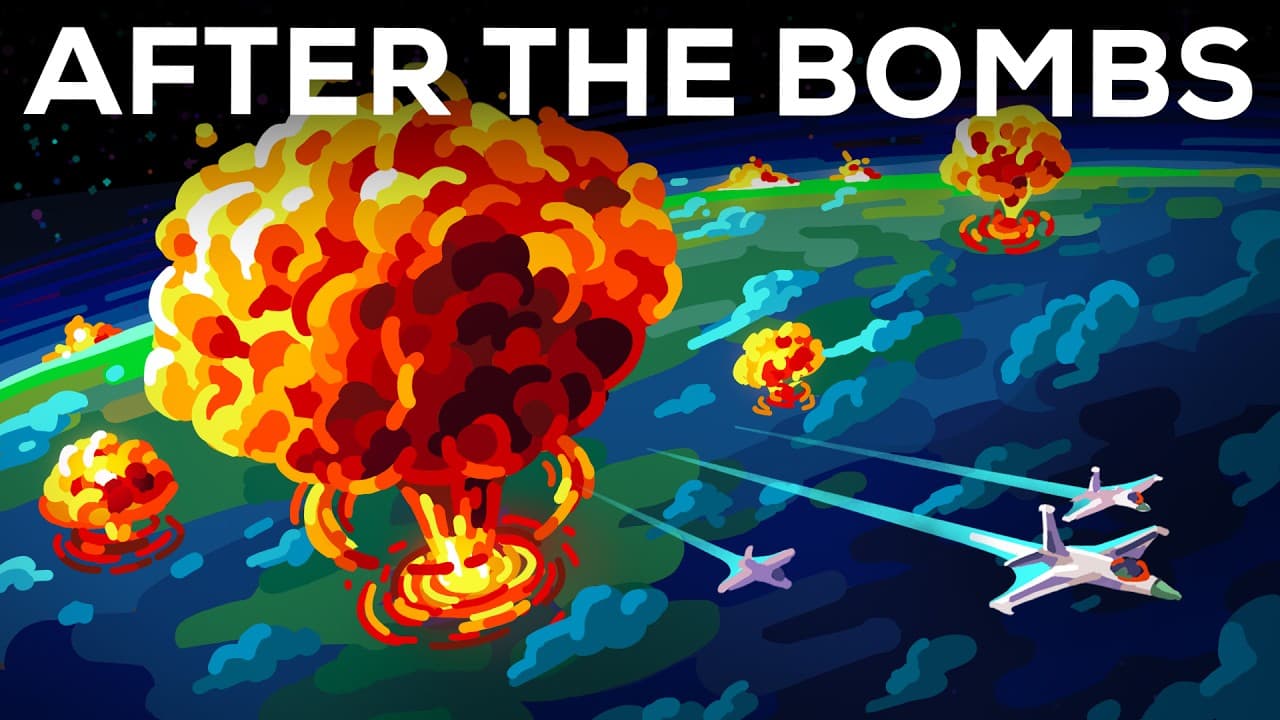
After a nuclear war, immediate mass destruction occurs, potentially triggering a nuclear winter that can last up to a decade. This event severely disrupts global agriculture, leading to widespread famine and the deaths of billions due to collapsed food production and extreme climate changes. Recovery would be prolonged, and civilization may face drastic transformations or collapse.
Transcript
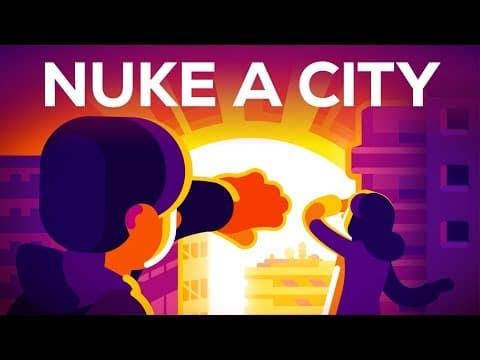
Nuclear war would forever split human history. Into anything that happened before and the post-war apocalypse. In the worst case, mass fires consume everything within tens of thousands of square kilometers, killing hundreds of millions within hours. But the worst part comes after that - nuclear war could trigger a nuclear winter that migh... Read More
Key Insights
- 😶🌫️ Nuclear war can cause immediate destruction and the formation of a pyrocumulonimbus cloud.
- 😶🌫️ The soot and aerosols from the cloud can trigger a nuclear winter, disrupting the climate worldwide.
- ❄️ Nuclear winter leads to longer, colder winters, shorter summers, and reduced rainfall, severely impacting global agriculture.
- 😋 The majority of humanity depends on the midlatitudes for food production, which would be severely affected by a nuclear winter.
- 😋 Food shortages and widespread hunger would result from the collapse of global agriculture.
- 🫱 Modern industrialized agriculture relies on functioning supply chains, which would be severely damaged after a nuclear war.
- 🍃 Countries with nuclear weapon capabilities are primarily located in the northern hemisphere, potentially leaving some countries in the southern hemisphere relatively unaffected.
- 🥺 A global nuclear war could lead to the collapse of human civilization and the need for thousands of years of recovery.
Install to Summarize YouTube Videos and Get Transcripts
Explore YouTube Video Summarizer or Get YouTube Transcript Extractor
Questions & Answers
Q: How does a nuclear explosion create a pyrocumulonimbus cloud?
A nuclear explosion releases intense heat that burns cities, forests, or fields, creating its own microclimate. The rising hot air and smoke form a pyrocumulonimbus cloud, carrying soot and aerosols into the stratosphere.
Q: How long does a nuclear winter last?
A nuclear winter lasts as long as the soot remains in the atmosphere, typically up to a decade. During this period, the climate is disrupted, leading to longer, colder winters and shorter summers.
Q: What are the potential consequences of a nuclear winter on agriculture?
Nuclear winter disrupts the climate and reduces sunlight, resulting in shrinking or collapsing growing seasons. The midlatitudes, where most of the world's major food-producing regions are located, would experience freezing temperatures for several years, leading to a significant drop in food production.
Q: How many people could starve to death in the worst-case scenario of a global nuclear war?
In a full-scale global war between major nuclear powers, it is estimated that up to 2 billion people could starve to death due to the severe damage to global agriculture and prolonged nuclear winter.
Summary & Key Takeaways
-
Nuclear war can create massive fires that burn everything within kilometers, resulting in immediate destruction and the formation of a colossal pyrocumulonimbus cloud.
-
This cloud carries soot and aerosols into the stratosphere, blocking sunlight and triggering a nuclear winter, disrupting the climate.
-
Nuclear winter leads to longer, colder winters, shorter summers, and reduced rainfall, causing a collapse in global agriculture and leading to widespread hunger and food shortages.
Read in Other Languages (beta)
Share This Summary 📚
Summarize YouTube Videos and Get Video Transcripts with 1-Click
Try YouTube Summary with ChatGPT & Claude or YouTube Transcript Generator
Explore More Summaries from Kurzgesagt – In a Nutshell 📚


Summarize YouTube Videos and Get Video Transcripts with 1-Click
Try YouTube Summary with ChatGPT & Claude or YouTube Transcript Generator