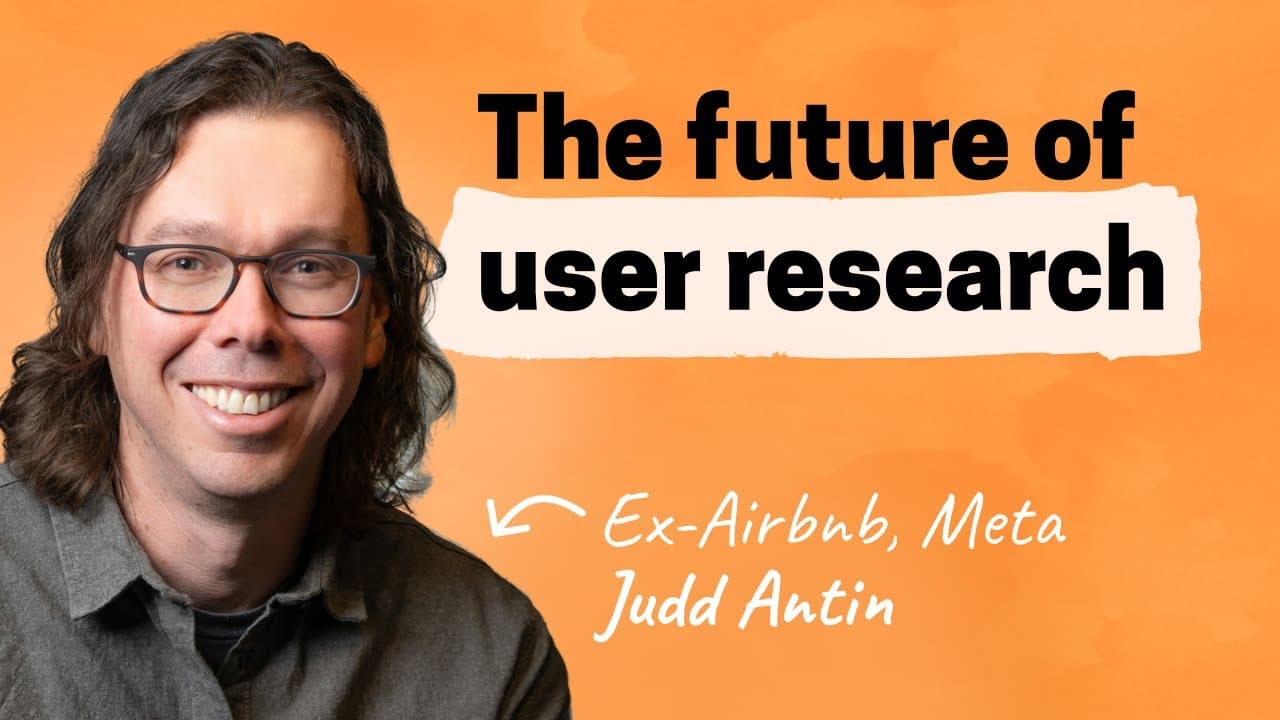
Why Is the UX Research Reckoning Here? Judd Antin on Airbnb, Meta, and What Must Change
TL;DR
User research is facing a reckoning because layoffs and limited organizational influence raise questions about whether the field is creating and demonstrating enough business value. Judd Antin, who helped build research at Facebook and led research at Airbnb, argues that teams should prioritize consequential macro and micro work, falsify assumptions, and involve researchers before decisions become irreversible. Read on to distinguish impactful research from symbolic user-centered performance.
Transcript
User-centered performance refers to customer obsession or user-centered practice that is symbolic rather than focused on learning. It's hugely common, I would argue. It's work we do to signal to each other how customer obsessed we are, not because we want to make a different decision. If your listeners are like, "I don't do that." I'm like, "... Read More
Key Insights
- User research is facing a reckoning because research teams were hit particularly hard by layoffs, suggesting that the discipline may not be delivering, demonstrating, or receiving recognition for the business value and organizational impact it could provide.
- Macro research is strategic, forward-looking work that examines markets, competitors, innovation, long-term opportunities, and where a product should go next. Its purpose is to connect user understanding with consequential choices about business and product direction.
- Micro research is focused work that supports high-quality execution, including technical usability studies, detailed product refinement, and investigation of A/B test results. It helps teams improve the specific experience they are preparing to deliver.
- Middle-range research is centered on understanding how selected groups think, feel, behave, or use a product. Antin argues that this work can be genuinely interesting while remaining insufficiently connected to decisions that materially affect the business.
- User-centered performance is symbolic customer obsession conducted to signal that a team cares about users, not to learn something that could change its course. It commonly appears when research is requested after the important product decisions have already been made.
- Research should falsify assumptions rather than merely validate them. A useful study actively searches for evidence that a team might be wrong, while validation-oriented requests can become exercises in confirming what product managers or designers already want to believe.
- Researchers need to focus more directly on business success because their role within a company is to help the organization succeed. Antin identifies resistance to profit and growth considerations as one of the notable critiques of his argument.
- Research quality depends on organizational integration as well as researcher performance. Antin does not place responsibility solely on researchers, because companies often position them poorly and repeatedly ask them to answer middle-altitude questions with limited influence on important decisions.
Install to Summarize YouTube Videos and Get Transcripts
Explore YouTube Video Summarizer or Get YouTube Transcript Extractor
Questions & Answers
Q: Why is user research facing a reckoning?
Research and other UX roles were hit particularly hard by layoffs, raising questions about whether the discipline creates and demonstrates enough business impact. Judd Antin argues that the problem involves both the work researchers pursue and how companies position, integrate, and use research.
Q: What are the three types of user research?
Antin divides user research into macro, middle-range, and micro work. Macro research informs markets, innovation, and long-term direction; micro research improves detailed product quality and interprets experiments; middle-range research examines how groups think, feel, behave, or use products.
Q: What is macro user research used for?
Macro research addresses strategic, forward-looking questions about markets, competitors, innovation, long-term opportunities, and product direction. It connects user understanding to consequential choices about where a product and business should go next.
Q: What is micro user research used for?
Micro research helps teams improve the detailed quality of a product they are preparing to deliver. It includes technical usability studies, focused product refinement, and investigation of A/B test results.
Q: Why can middle-range user research have limited impact?
Middle-range research explores how selected groups think, feel, behave, or use a product. Although its findings can be genuinely interesting, they may have limited impact when they are disconnected from major strategic choices or detailed execution decisions.
Q: What is user-centered performance in product development?
User-centered performance is customer obsession practiced symbolically rather than to learn something that could change a decision. Antin’s example is a product manager requesting a quick study at the end of development merely to validate assumptions when the team already intends to ship.
Q: Why should researchers falsify rather than validate assumptions?
Antin’s mantra is that researchers should look for evidence showing the team may be wrong. Validation requests can become box-checking exercises that confirm what product managers or designers already believe, while falsification makes contradictory evidence useful and allows research to redirect decisions.
Q: How can companies use user researchers more effectively?
Companies should involve researchers early enough to affect decisions and connect their work to business goals. They should prioritize questions with strategic or execution value instead of using research as late-stage validation, while improving how researchers are positioned and integrated within the organization.
Summary & Key Takeaways
-
Judd Antin argues that the user research discipline is facing a reckoning because layoffs may signal deeper problems with its organizational position and business impact. The field can still thrive, but researchers and companies must reconsider which questions they study, how research is integrated, and whether findings can change decisions.
-
Antin divides research into macro, middle-range, and micro work. Macro research examines markets, competitors, innovation, long-term direction, and business strategy. Micro research improves detailed product quality and interprets experiments. Middle-range research explores how groups think, feel, behave, or use products, but can produce interesting findings without sufficient business impact.
-
User-centered performance occurs when teams conduct research mainly to demonstrate customer obsession rather than learn or reconsider a decision. A late request to validate assumptions often arrives after shipping is effectively inevitable. Antin recommends seeking evidence that could falsify assumptions and involving researchers early enough to influence product direction and business outcomes.
Read in Other Languages (beta)
Share This Summary 📚
Summarize YouTube Videos and Get Video Transcripts with 1-Click
Try YouTube Summary with ChatGPT & Claude or YouTube Transcript Generator
Explore More Summaries from Lenny's Podcast 📚






Summarize YouTube Videos and Get Video Transcripts with 1-Click
Try YouTube Summary with ChatGPT & Claude or YouTube Transcript Generator