What Is Non-Sleep Deep Rest (NSDR) and How to Do It?
TL;DR
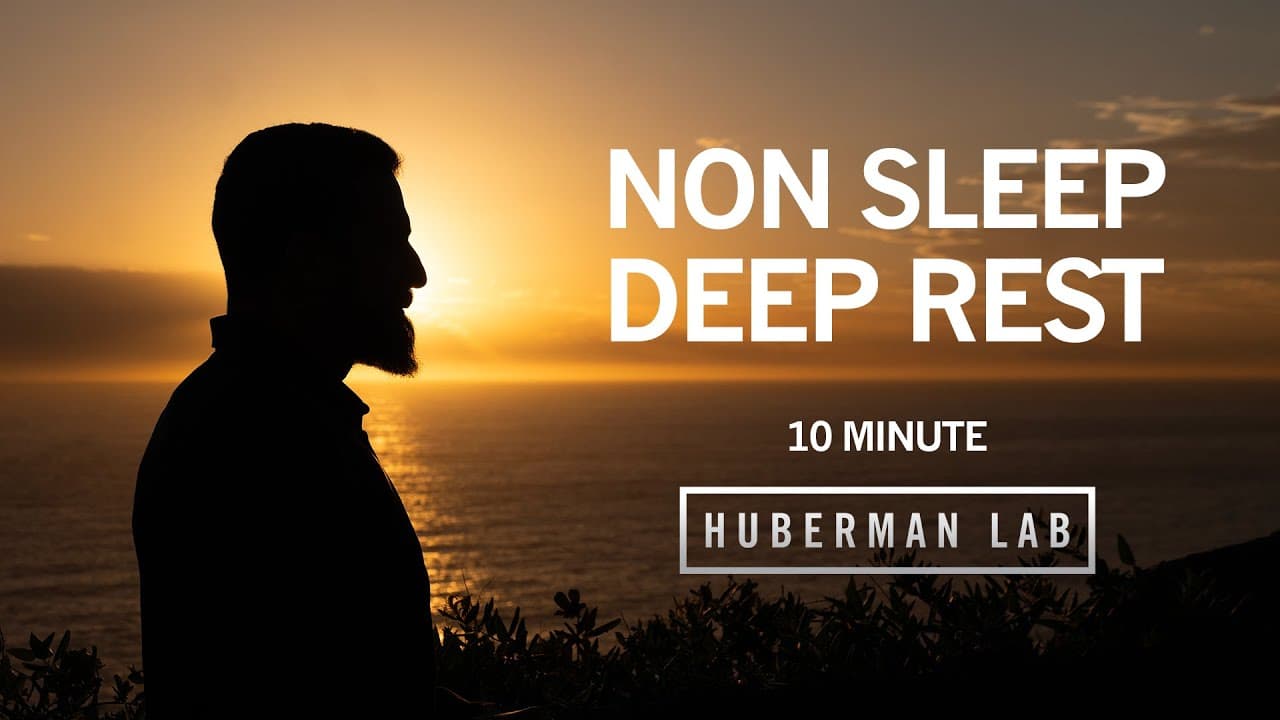
Non-sleep deep rest (NSDR) is a simple 10-minute protocol done seated or lying down with eyes closed, using slow breathing and a mental attention 'spotlight' scanned across the body. It restores mental and physical vigor, can partially offset lost sleep, and helps you fall and stay asleep. It can be done any time of day or night.
Transcript
ANDREW HUBERMAN: Welcome to this 10 minute non-sleep deep rest protocol. Non-sleep deep rest is a powerful tool that can allow you to control the relaxation state of your nervous system and your overall state of mind. It can restore mental and physical vigor. And it can be done any time of day or night. It's very simple to do. You'll want to do thi... Read More
Key Insights
- Non-sleep deep rest is a tool that lets you control the relaxation state of your nervous system and your overall state of mind, restoring mental and physical vigor at any time of day or night.
- The NSDR protocol is done seated or lying down with eyes closed, breathing normally except when specifically instructed to breathe otherwise, making it simple and accessible anywhere.
- The core breathing pattern is inhaling deeply through the nose and exhaling completely through thinly pursed lips, as if through a small straw, which is known to slow heart rate and relax the nervous system.
- The central technique is an 'attentional spotlight': imagining standing over your own body and directing a flashlight or spotlight to specific body parts, starting at the feet and expanding upward.
- During the body scan you focus on whatever each part senses, whether tingling, numbness, or contact with socks, a chair, or air, without judging or changing the sensation.
- On each exhale you imagine the illuminated body part sinking about a centimeter into whatever surface it contacts, deepening the sense of physical relaxation.
- Moving toes, ankles, knees, hands, and arms at the end demonstrates that you remain in control of your nervous system, directing your own perceptions and actions.
- NSDR works partly by eliminating sensory bombardment, especially visual information, so controlling perception becomes simply directing your attention to chosen sensations.
Install to Summarize YouTube Videos and Get Transcripts
Explore YouTube Video Summarizer or Get YouTube Transcript Extractor
Questions & Answers
Q: What is non-sleep deep rest (NSDR)?
Non-sleep deep rest is a powerful tool that allows you to control the relaxation state of your nervous system and your overall state of mind. It can restore mental and physical vigor and can be done any time of day or night. It is very simple to do, requiring only that you sit or lie down, close your eyes, and follow a guided sequence of breathing and directed attention across your body.
Q: How do you do the NSDR protocol?
You do the protocol seated or lying down with your eyes closed, breathing normally unless instructed otherwise. You periodically inhale deeply through your nose and exhale completely through thinly pursed lips. Then you imagine a spotlight directed at your feet and gradually expand it to include your legs, waist, abdomen, chest, arms, back, and head, focusing your attention on the sensations of each body part as you go.
Q: What breathing pattern is used in NSDR?
Throughout the protocol you breathe normally, but at certain points you inhale deeply, ideally through your nose (or through your mouth if needed), and then exhale all your air completely through thinly pursed lips, as if breathing through a small straw. Breathing in this way is known to slow your heart rate down and relax your nervous system. This deep inhale and long exhale is repeated several times during the session.
Q: What is the attentional spotlight in NSDR?
The attentional spotlight is a mental image where you imagine standing over yourself, holding a flashlight or spotlight, and directing its beam at specific parts of your body. You start at the bottoms of your feet, focus on whatever they are sensing, then expand the beam upward through your legs, torso, arms, and head. Controlling your perceptions is simply directing this attentional spotlight to whatever part of your body you choose.
Q: Why should you imagine your body sinking during NSDR?
During the scan, each time you exhale you imagine the illuminated part of your body sinking about a centimeter into whatever surface you are in contact with, such as a chair, sofa, or floor. This visualization deepens physical relaxation by pairing the long exhale with a sensation of release and heaviness, helping your body settle further into the surface and reinforcing the calming effect of the breathing.
Q: What are the benefits of non-sleep deep rest?
NSDR protocols can help you restore your sense of mental and physical vigor and can partially offset the effects of not getting enough sleep. They can also help you get better at falling asleep and staying asleep. The practice can be done any time of day or night whenever you feel you need a mental or physical reset, giving you a low-cost way to relax and recharge your nervous system.
Q: When can you do NSDR?
You can do non-sleep deep rest any time of day or night, whenever you feel you need a mental and/or physical reset. Because the protocol is simple and only requires you to sit or lie down with your eyes closed, it fits into almost any schedule. It is useful when you want to restore energy, calm your nervous system, offset lost sleep, or prepare yourself to fall and stay asleep.
Q: How does NSDR show you are in control of your nervous system?
Near the end of the protocol you deliberately move your toes, ankles, knees, upper body, head, hands, and arms just slightly, then set them down. Doing so demonstrates that you direct your own perceptions and actions. The session also removes most sensory input, especially visual information, showing that you control which sensations you perceive simply by directing your attentional spotlight to whatever part of your body you choose.
Summary & Key Takeaways
-
Non-sleep deep rest is a powerful 10-minute protocol that lets you control your nervous system's relaxation state and restore mental and physical vigor. It is simple, requires no equipment, and can be done seated or lying down with eyes closed at any time of day or night when you need a reset.
-
The protocol combines normal breathing with periodic deep inhales through the nose and complete exhales through thinly pursed lips, which slows heart rate. You then imagine a spotlight scanning your body from feet to head, focusing attention on the sensations of each part and imagining it sinking into the surface beneath you.
-
Ending the session by gently moving toes, ankles, knees, hands, and arms shows you are in control of your perceptions and actions. NSDR restores vigor, can partially offset the effects of insufficient sleep, and can help you get better at falling and staying asleep.
Read in Other Languages (beta)
Share This Summary 📚
Summarize YouTube Videos and Get Video Transcripts with 1-Click
Try YouTube Summary with ChatGPT & Claude or YouTube Transcript Generator
Explore More Summaries from Huberman Lab Clips 📚


Summarize YouTube Videos and Get Video Transcripts with 1-Click
Try YouTube Summary with ChatGPT & Claude or YouTube Transcript Generator