How Fast Food Marketing Drives Bigger Orders
TL;DR
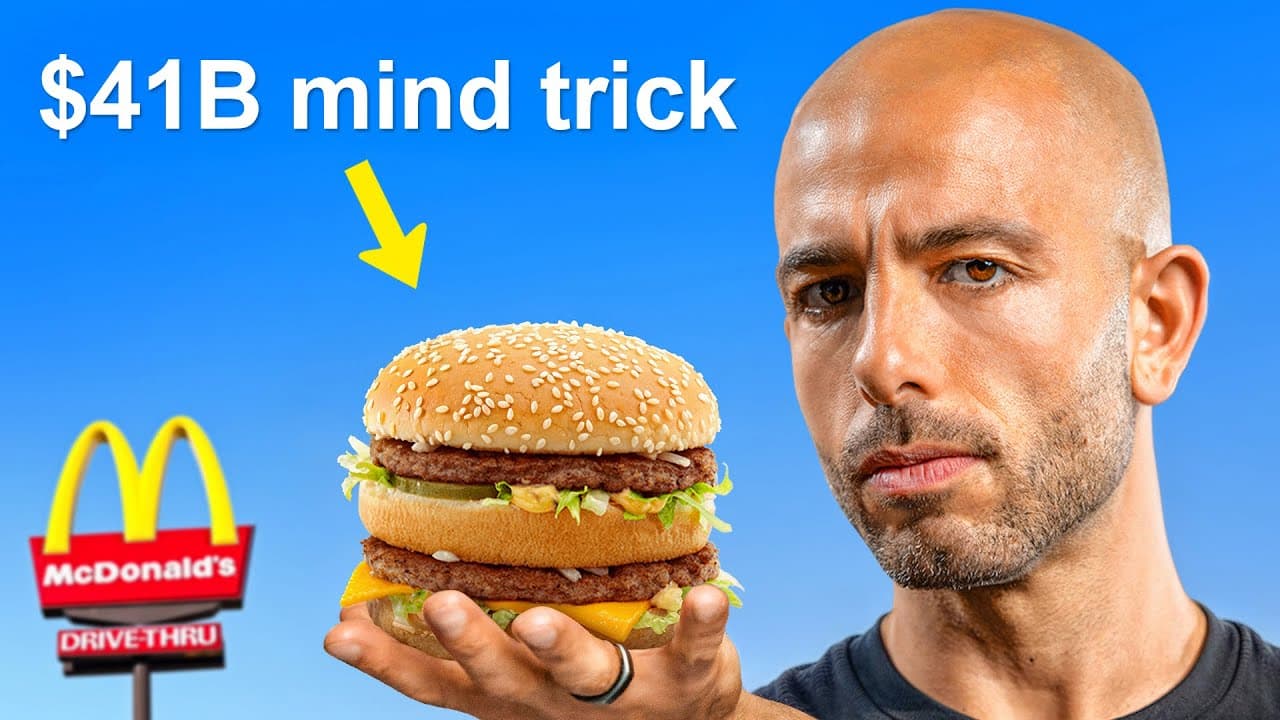
Fast food marketing drives bigger orders by attracting customers with cheap offers, establishing price anchors, and repeatedly prompting upgrades and add-ons. McDonald’s self-service kiosks reportedly increased average in-store orders by 20 to 30%, while celebrity partnerships and campaigns such as the 2023 Grimace Shake broadened attention. Read on to see how McDonald’s, Starbucks, and Subway apply these tactics.
Transcript
this is a Big Mac each year McDonald's sells over 900 million of these Bad Boys Around the Globe but what you don't see is how these fast food companies are taking advantage of our weaknesses and brainwashing us to consume their products I'm going to be investigating the dark secrets of the world's most beloved restaurants in real life and exposing... Read More
Key Insights
- McDonald's sells over 900 million Big Macs around the world each year, according to the investigation. That scale provides the context for examining how marketing systems, store technology, low-priced offers, cultural figures, and repeated prompts can shape customer attention and purchasing behavior.
- Ronald McDonald disappeared after changing attitudes toward using mascots to market unhealthy food to children and the 2016 clown incidents. McDonald's stated that Ronald would step away from the limelight, pushing the brand toward newer promotional methods based on celebrities, social media, and its own character history.
- Social hacking is presented as McDonald's practice of partnering with currently popular figures, such as Travis Scott, and promoting their supposed go-to meals. Cycling through trending personalities allows the company to connect with different customer groups while repeatedly applying the same endorsement strategy.
- McDonald's kiosks work as automated upselling engines that never forget to present additions, sizes, meals, and other choices. The interface first displays expensive products to establish a price reference, making cheaper items appear more attractive and encouraging customers to consider buying multiple products.
- Price priming is demonstrated by showing a $7.22 Big Mac before a $1.99 cheeseburger. The lower price can then feel unusually inexpensive, potentially leading a customer to order two, while further kiosk prompts encourage upgrades and additions that increase the total purchase.
- McDonald's low-priced menu functions as an entry offer rather than the main source of profit, according to the investigation. The company spends $4.5 billion annually on advertising and heavily promotes its Loose Change menu to bring cold customers into stores, where other products can be sold afterward.
- Starbucks rewards balances operate like interest-free customer financing because users must select preset top-up amounts rather than load the exact drink price. With an average drink described as costing about $5 and a $20 minimum top-up, the initial payment can be increased by 300%.
- Subway's health-focused positioning can influence customers even when an order contains very high calories. The investigation's popular sub with every add-on contained 1,700 calories, while vegetables and the brand's fresh image still made the diners feel that the meal was healthier.
Install to Summarize YouTube Videos and Get Transcripts
Explore YouTube Video Summarizer or Get YouTube Transcript Extractor
Questions & Answers
Q: How does fast food marketing drive bigger orders?
Fast food companies combine low-priced entry offers, price priming, automated upsells, tiered sizes, rewards, celebrity endorsements, and viral campaigns. These tactics attract customers with an initial product and then encourage upgrades, add-ons, additional purchases, or future visits.
Q: How do McDonald’s self-service kiosks increase order values?
McDonald’s kiosks consistently present size choices, meal upgrades, and additional products without depending on an employee to remember each prompt. The investigation says data scientists split-test item placement and that kiosk deployment increased average in-store orders by 20 to 30%.
Q: What is price priming in McDonald’s marketing?
Price priming means displaying an expensive product first so later choices appear inexpensive by comparison. The investigation shows a $7.22 Big Mac before a $1.99 cheeseburger, which can make buying two cheeseburgers feel reasonable before further upgrade prompts appear.
Q: Why does McDonald’s advertise its Loose Change menu?
The investigation describes the $1 Loose Change menu as an entry offer designed to attract even cold customers into the store. McDonald’s reportedly spends $4.5 billion per year on advertising and uses the cheap offer as the start of a purchasing sequence in which customers may buy several other items.
Q: How do broken McDonald’s soft-serve machines encourage additional purchases?
The investigation argues that an unavailable soft serve can leave the original craving unresolved while making customers reluctant to leave after traveling to the restaurant. In the example shown, the customer instead bought frozen drinks, hamburgers, pies, and other products totaling $18.50, while still having a reason to search again later.
Q: How does McDonald’s use celebrities and viral campaigns?
McDonald’s partners with currently popular figures such as Travis Scott and markets their supposed go-to meals to reach different audiences. It also draws on brand characters through campaigns such as the 2023 Grimace Shake, which gained widespread TikTok attention even from posts mocking the product.
Q: How does the Starbucks rewards app increase customer spending?
The Starbucks app uses preset top-up amounts instead of allowing customers to load only the exact beverage price. With an average drink described as costing about $5 and a $20 minimum top-up, the investigation calculates a 300% increase in the initial payment, while unused money remains in the customer’s balance.
Q: How did Subway create a healthier fast food image?
Subway positions itself around “eat fresh,” visible vegetables, and customizable meals, encouraging customers to perceive it as a healthier option. In the investigation, a popular sub with every add-on contained 1,700 calories, yet diners still connected its vegetables and fresh presentation with healthier eating.
Summary & Key Takeaways
-
McDonald's replaced its fading Ronald McDonald strategy with current celebrity partnerships and viral campaigns based on familiar brand characters. Travis Scott meals helped the company reach specific audiences, while the 2023 Grimace Shake generated widespread TikTok attention, including posts that mocked the product but still expanded its visibility.
-
McDonald's kiosks create a consistent upselling system through price priming, meal upgrades, size choices, and additional product prompts. According to the investigation, data scientists test different arrangements, and kiosks increased average in-store orders by 20 to 30%. Low-priced menu items also attract customers before additional purchases raise the final bill.
-
Starbucks uses app top-ups, rewards, and tiered drink sizes to secure more customer spending, while Subway presents itself as a fresher choice despite selling highly caloric products. The investigation connects these approaches to prepaid balances, pricing ladders, perceived healthiness, visual endorsements, and memorable promotional stories that influence purchase decisions.
Read in Other Languages (beta)
Share This Summary 📚
Summarize YouTube Videos and Get Video Transcripts with 1-Click
Try YouTube Summary with ChatGPT & Claude or YouTube Transcript Generator
Explore More Summaries from Sabri Suby 📚
Summarize YouTube Videos and Get Video Transcripts with 1-Click
Try YouTube Summary with ChatGPT & Claude or YouTube Transcript Generator