How Can AI Make Cities Safer Without Surveillance?

TL;DR
Cities can improve public safety without adding sensors or collecting new information by connecting and governing data they already own. Peregrine combines privacy-first infrastructure, forward-deployed engineering, and AI agents to help public institutions analyze complex evidence, preserve data sovereignty, and reach operational outcomes faster while limiting information mishandling.
Transcript
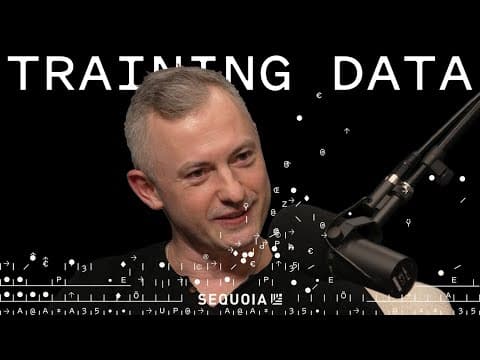
Peregrine is really around this idea of how can we leverage technology to work with our cities, our counties, our states uh to to impact the the places that we live in. >> At the bottom of the pyramid, really, when it comes to how to make cities awesome, is the idea of safety. The idea that people need objective safety and also need to feel safe. A... Read More
Key Insights
- Forward-deployed engineering is an outcome-focused practice in which engineers enter a customer’s environment, co-own the operational problem, and stay engaged until the customer succeeds. Peregrine aims to reach that outcome three to five times faster than another person or team could, while treating the result as the customer’s win.
- Institutional empathy is essential when deploying technology inside complex public organizations. Engineers must understand decades of operational history, human relationships, decision processes, and collaboration patterns, while suspending their own ego and respecting professionals who have devoted their careers to the institution.
- Many operational failures are downstream of fragmented data. Ben Rudolph observed at the UN Refugee Agency that valuable information was often disconnected or confined to spreadsheets, making it difficult to interpret and use despite the organization’s strong humanitarian work.
- Public safety is the foundation of Peregrine’s theory for improving cities. People need to be objectively safe and also feel safe, because that stability creates the conditions in which communities can thrive and pursue broader civic possibilities.
- Peregrine’s founding breakthrough followed more than two dozen rejections. San Pablo Police Department granted the founders badges, desk space, and information access on February 26, 2018, allowing them to stop theorizing from outside and begin learning through direct institutional work.
- Peregrine’s collection model uses no sensors and creates no new data. The company instead connects information that cities already possess, turning fragmented records into infrastructure that can support public services without making expanded data collection the basis of the business.
- Data sovereignty is a central principle of Peregrine’s approach. Cities retain ownership of their information, while governance and controlled access are designed to protect sensitive records, preserve individual privacy, and reduce mishandling inside complicated organizations.
- AI agents can perform deep analysis across difficult evidence collections. Examples include reproducing a manually reached cold-case exoneration, finding cell records within 300GB of evidence to place a suspect, identifying threats to a synagogue, and determining the cause of increased weather-related incidents.
- More videos from this channel:
- More from this channel: Sequoia Capital
Install to Summarize YouTube Videos and Get Transcripts
Explore YouTube Video Summarizer or Get YouTube Transcript Extractor
Questions & Answers
Q: What does forward-deployed engineering mean?
Forward-deployed engineering means entering a customer’s operating environment, understanding the problem in its real institutional context, and psychologically co-owning it until the customer reaches the desired outcome. Technology is only part of the work. Engineers must also learn how decisions are made, how teams cooperate, and how to deliver results while recognizing that the final success belongs to the customer.
Q: What does Silicon Valley misunderstand about public-sector technology deployments?
Silicon Valley can underestimate the depth of history and human context inside institutions such as large police departments. An intelligent engineer cannot assume that technical ability alone provides an immediate understanding of 30 years of institutional experience. Moving quickly without humility can appear egotistical, so effective deployment requires patience, empathy, respect, and a willingness to suspend personal assumptions.
Q: Why did Peregrine focus first on public safety?
Peregrine’s founders viewed safety as the bottom of the pyramid for making cities better. Residents need both objective safety and the feeling that they are safe. Once that stability exists, more possibilities become available to a community. The founders therefore saw public safety infrastructure as a practical starting point for improving the cities where people spend and build most of their lives.
Q: How did Peregrine get its first police department customer?
The founders researched municipal public safety experts and found an article about San Pablo commander Brian Bubar and his work on Operation Red Reach. They cold-called him, admitted that they had much to learn, and asked to visit and understand his work. After more than two dozen rejections, San Pablo Police Department gave them badges, desk space, and information access on February 26, 2018.
Q: How does Peregrine differ from public safety companies that collect more data?
Peregrine inverted the collection model by building its business without sensors or newly collected information. Its system connects data and records that cities already own, allowing public institutions to make better use of fragmented information. This approach makes integration, analysis, access governance, and institutional outcomes the focus instead of treating expanded surveillance or continuous data collection as the core product.
Q: How does Peregrine protect privacy and city data sovereignty?
Peregrine’s philosophy treats city ownership and governance of data as a north star. The infrastructure is intended to connect sensitive information while controlling how that information is accessed and reducing mishandling inside complex organizations. The stated goal is to preserve individual privacy and municipal sovereignty while still helping teams work from shared information and coordinate around common public safety outcomes.
Q: How are AI agents used in Peregrine’s public safety work?
Peregrine uses AI and long-horizon agents for analysis that goes beyond simple search. Described applications include reproducing a cold-case exoneration that detectives had reached manually, locating relevant cell records buried within 300GB of evidence, identifying threats to a synagogue, and finding the root cause of an increase in incidents associated with weather. Agents are also being used to write integrations.
Q: What experiences shaped Peregrine’s approach to civic technology?
Nick Noone’s work at Palantir included high-stakes intelligence deployments and leadership of its SOCOM unit, which shaped his understanding of forward-deployed engineering. Ben Rudolph worked with the UN Refugee Agency near the Sudanese and Colombian borders, then helped Dimagi build last-mile health applications, including a project supporting tuberculosis drug adherence in rural India. Both experiences emphasized practical outcomes and fragmented data.
Summary & Key Takeaways
-
Peregrine began with the belief that safe cities require both objective safety and a public feeling of safety. After receiving more than two dozen rejections, the founders entered San Pablo Police Department in February 2018, working inside the institution to understand its people, information, decisions, and operational constraints firsthand.
-
The company inverted the conventional public safety technology model. Instead of installing sensors or gathering additional information, Peregrine connects data that cities already own. Its privacy-first philosophy emphasizes municipal data ownership, access governance, individual privacy, and institutional sovereignty while helping departments reduce the mishandling of highly sensitive information across complex organizations.
-
Peregrine now supports law enforcement, emergency medical services, fire and rescue, and other services in more than 400 cities and communities globally. Its AI agents can examine large evidence collections, reconstruct investigative reasoning, identify threats, explain incident escalations, and even write integrations needed to connect fragmented institutional systems together.
Read in Other Languages (beta)
Share This Summary 📚
Summarize YouTube Videos and Get Video Transcripts with 1-Click
Try YouTube Summary with ChatGPT & Claude or YouTube Transcript Generator
Explore More Summaries from Sequoia Capital 📚




Summarize YouTube Videos and Get Video Transcripts with 1-Click
Try YouTube Summary with ChatGPT & Claude or YouTube Transcript Generator