How AI Agents Are Changing Marketing and Search
TL;DR
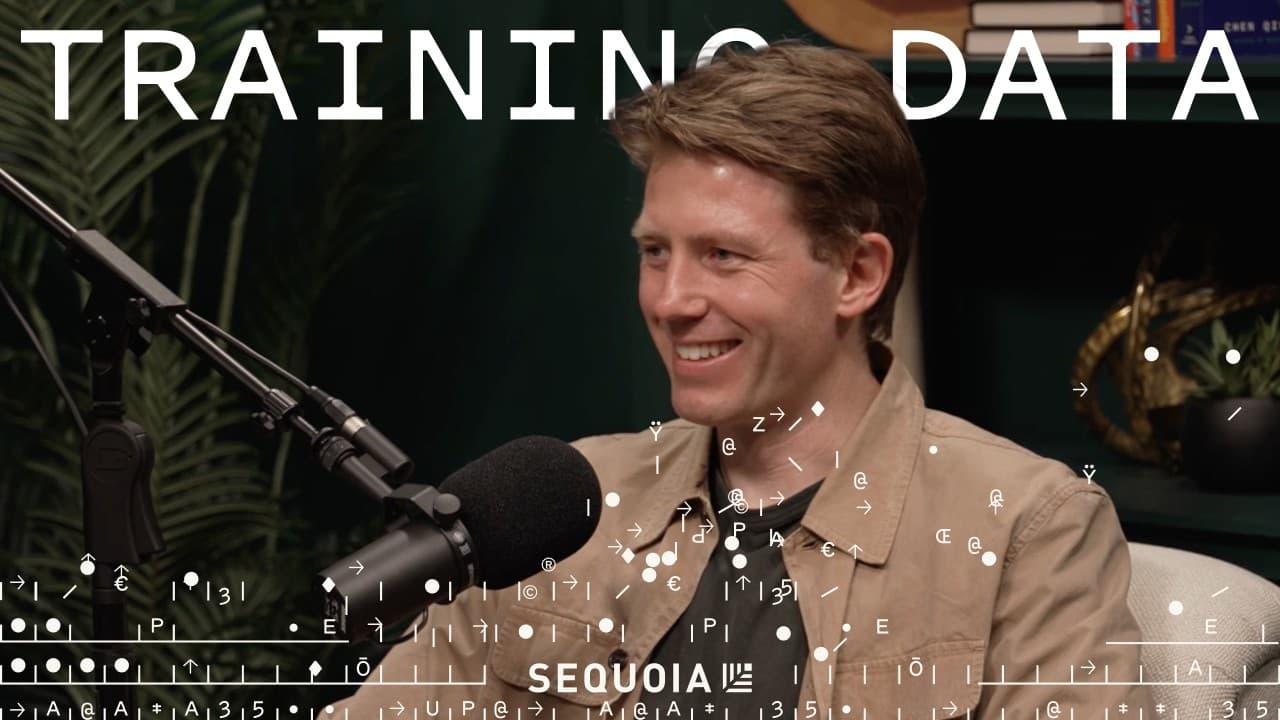
Marketers must create and distribute information for AI agents that research products, synthesize sources, and influence buying decisions. This requires more than applying traditional SEO tactics: brands need to measure visibility, sentiment, citations, and themes across individual AI platforms, then provide useful original insights that agents can discover and incorporate into their answers.
Transcript
We've now reached a point in marketing where if your marketing team is not using agents and in particular profound agents to do marketing then you are failing. >> It's gone from a nice to have to a must have. And I think the big misconception with using agents to build marketing is that it's just a way to automate the work that we've been doing in ... Read More
Key Insights
- AI agents are replacing consumers as the direct users of much of the web, crawling sites, judging usefulness, combining information, and returning answers. The internet itself may remain familiar, but the entity discovering brands and mediating purchasing decisions has fundamentally changed.
- Agent-led marketing is not simply traditional marketing automation. Agents and large language models enable marketers to perform forms of research, analysis, content creation, and distribution that were previously impractical, making agent use a core capability rather than merely a convenient efficiency.
- Content for AI discovery is designed for both retrieval and consumption by an agent, and it may never be read directly by a person. Traditional SEO content, by contrast, was optimized for algorithmic discovery but ultimately intended to attract and inform human visitors.
- AI agents use a much broader portion of the internet than human searchers because they are not constrained by the same patience, time, or cognitive energy. One product-research example involved ChatGPT using 65 web pages to recommend a shower head.
- High-consideration and high-ticket purchases are especially suited to AI-assisted research because consumers normally need to investigate many options and sources. The discussion identifies consumer electronics, cars, and white goods as categories where agents can handle the required deep research effectively.
- AI platforms differ substantially in how they surface and characterize brands. Effective measurement must therefore compare visibility across ChatGPT, Gemini, and Claude while also examining associated sentiment, themes, citations, and sources rather than treating AI search as one uniform channel.
- Gemini is described as leaning heavily on YouTube content, while ChatGPT often uses Reddit for consumer questions and LinkedIn for business questions. These patterns imply that the most useful distribution channel can vary according to both the AI platform and audience.
- Claude has historically relied more on its pre-trained model, but the conversation reports that it has recently used the web more frequently for real-time information. Changing retrieval behavior means marketers must continually observe platforms instead of assuming their source preferences remain fixed.
- More videos from this channel:
- More from this channel: Sequoia Capital
Install to Summarize YouTube Videos and Get Transcripts
Explore YouTube Video Summarizer or Get YouTube Transcript Extractor
Questions & Answers
Q: How are AI agents changing online marketing?
AI agents are changing marketing by becoming the systems that directly browse and interpret the internet for consumers. Instead of a person opening several blue links, an agent can visit websites, judge which information is useful, combine material from many sources, and present a synthesized response. Brands must therefore influence both human audiences and the agents that mediate discovery and purchasing decisions.
Q: Why is agent-led marketing different from traditional SEO?
Agent-led marketing differs from traditional SEO because the intended consumer of the content can be an AI agent rather than a person. SEO traditionally aimed to satisfy an algorithm so a human would click and read a page. In AI search, content may be discovered, interpreted, and incorporated into an answer without ever being directly viewed by a human consumer.
Q: How do AI agents research products differently from people?
AI agents can examine a much wider range of online material because they do not face the same limits on patience, time, or cognitive energy as people. Human search behavior concentrates value in the first four or five blue links, while agents can explore the long tail. In one example, ChatGPT consulted 65 web pages while helping select a shower head.
Q: Which purchases are most influenced by AI research?
AI research is particularly useful for high-consideration or high-ticket purchases that normally require substantial investigation. The conversation points to consumer electronics, cars, and white goods as examples. In these categories, an agent can review many sources, compare available information, and reduce the burden of deep product research that would otherwise fall on the consumer.
Q: Why do ChatGPT, Gemini, and Claude recommend different brands?
ChatGPT, Gemini, and Claude behave like distinct systems with different source preferences and retrieval patterns. Their answers can therefore vary in brand visibility, recommendations, sentiment, and accompanying themes. The conversation says marketers should examine the citations and sources used by each model to understand why a brand appears prominently on one platform but less frequently on another.
Q: What content sources do Gemini and ChatGPT tend to use?
Gemini is described as leaning heavily on YouTube content, which can make YouTube an important lever for brands seeking visibility in Gemini responses. ChatGPT is described as frequently drawing from Reddit for consumer questions and LinkedIn for business questions. These observations show why marketers may need different distribution strategies for each platform and category.
Q: How should marketers measure visibility in AI answers?
Marketers should measure whether their brand or product appears across individual AI platforms, then evaluate the context surrounding each appearance. Relevant signals include visibility frequency, sentiment, recurring themes, citations, and underlying sources. Connecting an answer to the material that informed it helps marketers understand both what an AI system says and why it produced that representation.
Q: Why must marketers keep monitoring AI platform behavior?
AI platform behavior can change as systems adjust how they use pre-trained knowledge and current web information. Claude, for example, is described as historically relying more on its pre-trained model but recently using the web more often for real-time questions. Because source selection and recommendations can shift, a one-time audit cannot reliably represent continuing brand visibility across AI systems.
Summary & Key Takeaways
-
Marketing is shifting from deterministic lists of blue links toward probabilistic answers assembled by AI. Consumers increasingly delegate research to agents that visit websites, evaluate information, and return synthesized recommendations. Consequently, marketers must consider not only whether people can find their content, but whether AI systems can discover, interpret, and reuse it.
-
Agent-oriented marketing differs from SEO because its content may never be read directly by a person. AI agents can examine far more sources than time-constrained consumers, including the internet's long tail. This wider research surface changes how brands should create, distribute, and evaluate information intended to influence discovery and purchasing decisions.
-
AI platforms can present the same brand differently because they use distinct sources and retrieval behavior. Gemini frequently leans on YouTube, while ChatGPT often draws from Reddit for consumer topics and LinkedIn for business topics. Marketers therefore need platform-specific visibility, sentiment, theme, citation, and source analysis before deciding what to improve.
Read in Other Languages (beta)
Share This Summary 📚
Summarize YouTube Videos and Get Video Transcripts with 1-Click
Try YouTube Summary with ChatGPT & Claude or YouTube Transcript Generator
Explore More Summaries from Sequoia Capital 📚
Summarize YouTube Videos and Get Video Transcripts with 1-Click
Try YouTube Summary with ChatGPT & Claude or YouTube Transcript Generator