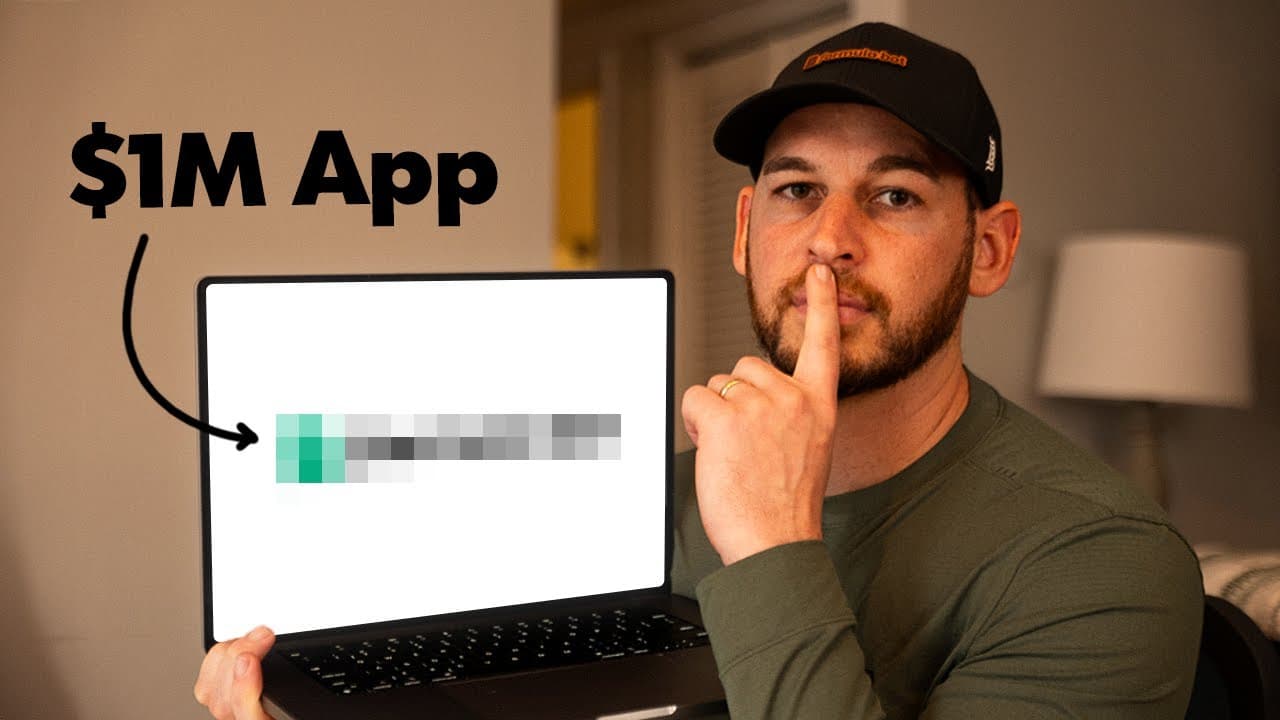
How did a non coder build a $1M AI app without code?
TL;DR
A non coder built an AI app that reached over $1M in value by using no code tools, viral marketing, and continuous iteration. The founder started with a simple MVP, funded growth through early donations and ads, and learned from user feedback to add more generators and features for data work.
Transcript
this is David he built an AI app that is now valued at over a million dollar and the crazy part is he built it all with no code he invit us into his house to show us exactly how he built this thing with a family a full-time job and just working a couple hours a day really took me just a couple weeks came down to learning all of this content mostly ... Read More
Key Insights
- X is a founder who built a million-dollar, no-code AI app based on solving personal workflow needs.
- The key to growth is rapid MVP validation, viral marketing, and listening to early users to guide feature development.
- The app started as a single generator and expanded into multiple generators as user requests dictated development.
- The founder used no code tools initially to reduce build time and avoid coding from scratch.
- The monetization path included donations, ads, and eventually paid subscriptions after a period of experimentation.
- User feedback extended beyond formula generation to reporting and analytics needs in spreadsheets.
- Viral channels played a critical role in early traction, notably Reddit and niche communities.
- The long-term strategy is to create a product that is hard to replicate by large AI platforms.
- More videos from this channel:
- More from this channel: Starter Story
Install to Summarize YouTube Videos and Get Transcripts
Explore YouTube Video Summarizer or Get YouTube Transcript Extractor
Questions & Answers
Q: A real search query question about the video (e.g. 'How to...', 'What is...', 'Why does...'). Question 1
How did a non coder turn a simple idea into a $1M AI app and what were the essential steps to reach that scale without writing code? The answer is that the founder identified a personal pain point related to Excel and data work, used a no code platform to build an MVP in weeks, and then leveraged a viral marketing push to attract thousands of users. Early donations and sponsorships helped cover initial costs, while user feedback guided feature development, expanding from a single generator to multiple generators that addressed broader data tasks. The combination of rapid prototyping, community engagement, and iterative improvement enabled sustainable growth without traditional software development resources.
Q: Question 2
What was the initial product and how did it evolve over time to become a broader platform? The initial product was an Excel formula generator built in bubble no code, designed to automate formula creation. As users provided feedback and asked for more capabilities, the roadmap evolved to include additional generators and a data analyzer that functions like a workflow tool for data in spreadsheets. This evolution was driven by conversations with customers and the recognition that real workflows require more than a single tool. The platform grew by listening, iterating, and expanding the feature set to cover more data tasks.
Q: Question 3
How did the founder validate the idea and achieve viral growth in the early days? Validation occurred when the MVP was shared with colleagues and then posted on the XL subreddit and Internet is Beautiful subreddit where it rapidly gained attention. The viral moment led to thousands of users visiting the site and contributed to a surge in usage. This growth was supported by a combination of free access, donations, and later sponsorships, which helped sustain activity before a formal paid model was introduced. This approach demonstrates the power of niche communities in validating and accelerating product adoption.
Q: Question 4
What role did no code tools play in the development and time to market for the MVP? No code tools were essential to reduce development time and avoid traditional coding. Bubble was the primary platform used, chosen for its accessibility and the availability of free tutorials. The founder learned through YouTube University and community resources, enabling a quick build with minimal upfront costs. As experience grew, the product incorporated more capabilities while maintaining the no code core, allowing rapid iteration and faster time to market.
Q: Question 5
How did the monetization strategy develop from zero to ongoing revenue? Initially, the founder used donations and limited sponsorships to fund the project, along with a testing period using ads. After validating traction and user demand, a paid model was introduced with logins and subscriptions. The path shows how bootstrap and experimentation can build a sustainable revenue stream, even when starting from a viral, free-to-use product. The approach balanced immediate revenue with ongoing product development to meet customer needs.
Q: Question 6
What lessons can be learned about balancing a full time job, family, and building a startup? The founder maintained a strong personal discipline, worked evenings and weekends, and found time for family while building the MVP. The key was ruthless prioritization, working in short, focused sessions, and leveraging no code to accelerate progress. This balance enabled progress without sacrificing personal life, though it required significant commitment and occasional sleep debt. It highlights that a side project can scale with disciplined time management and community-driven validation.
Q: Question 7
How does the founder plan to build a business that cannot be replicated by large platforms? The plan includes expanding the generator ecosystem and adding capabilities that address complex data workflows, with a focus on practical use cases that are hard to replicate through generic AI prompts. The strategy involves serving real user needs, building a cohesive product experience, and leveraging a no code foundation that enables rapid iteration. By continuing to address specific, real-world problems with data in spreadsheets, the business aims to maintain differentiation from AI giants.
Q: Question 8
What is the broader message for aspiring founders from this story? The takeaway is that a simple idea solving a personal problem can grow into a scalable business with the right approach. Use no code to test quickly, listen to customers to drive product decisions, and maintain a sustainable monetization path. Viral channels can amplify reach, but lasting success comes from delivering tangible value and expanding the product in line with real user needs.
Summary & Key Takeaways
-
David built an AI tool called for real bot that helps with data in spreadsheets using AI inside Excel and Google Sheets and a data analyzer similar to a workflow tool. The app grew from zero to hundreds of thousands of users in about a year and a half. The journey included learning no code, leveraging YouTube tutorials, and validating the idea through real user needs.
-
The product expanded from a single formula generator to multiple data related generators, driven by questions from users and conversations with customers. Early virality came from Reddit and the Internet is beautiful subreddit, followed by a paid model after a period of experimentation with donations and ads.
-
The founder balanced a full time job and family while building the product in weeks, faced a large API bill that almost forced shutdown, and pivoted toward sustainable monetization through subscriptions and a broader product vision that aims to be hard to replicate by AI like ChatGPT or Microsoft.
Read in Other Languages (beta)
Share This Summary 📚
Summarize YouTube Videos and Get Video Transcripts with 1-Click
Try YouTube Summary with ChatGPT & Claude or YouTube Transcript Generator
Explore More Summaries from Starter Story 📚
Summarize YouTube Videos and Get Video Transcripts with 1-Click
Try YouTube Summary with ChatGPT & Claude or YouTube Transcript Generator