How to Build a Profitable Niche Developer Tool
TL;DR
Build a developer tool around one narrow, immediately visible benefit, then remove barriers such as signup walls, installations, credential sharing, and sales calls. ChartDB attracted thousands of developers through a Hacker News launch, used its open-source self-hosted product for discovery, and introduced a paid hosted version after usage revealed demand for complex capabilities such as real-time team collaboration.
Transcript
Everyone thinks you need a huge idea to make money, but Jonathan did the opposite. His tiny open source project makes $9,000 a month. This one post got us thousands of users in one day. His approach is genius. He did not build something that works for everyone. Instead, he built something with just one type of person in mind. I built this app speci... Read More
Key Insights
- ChartDB is an open-source, self-hosted database visualization tool whose paid cloud version provides the hosted experience and generates revenue. Developers can first discover and use the free product through GitHub, then move to paid plans when it becomes part of a more streamlined workflow.
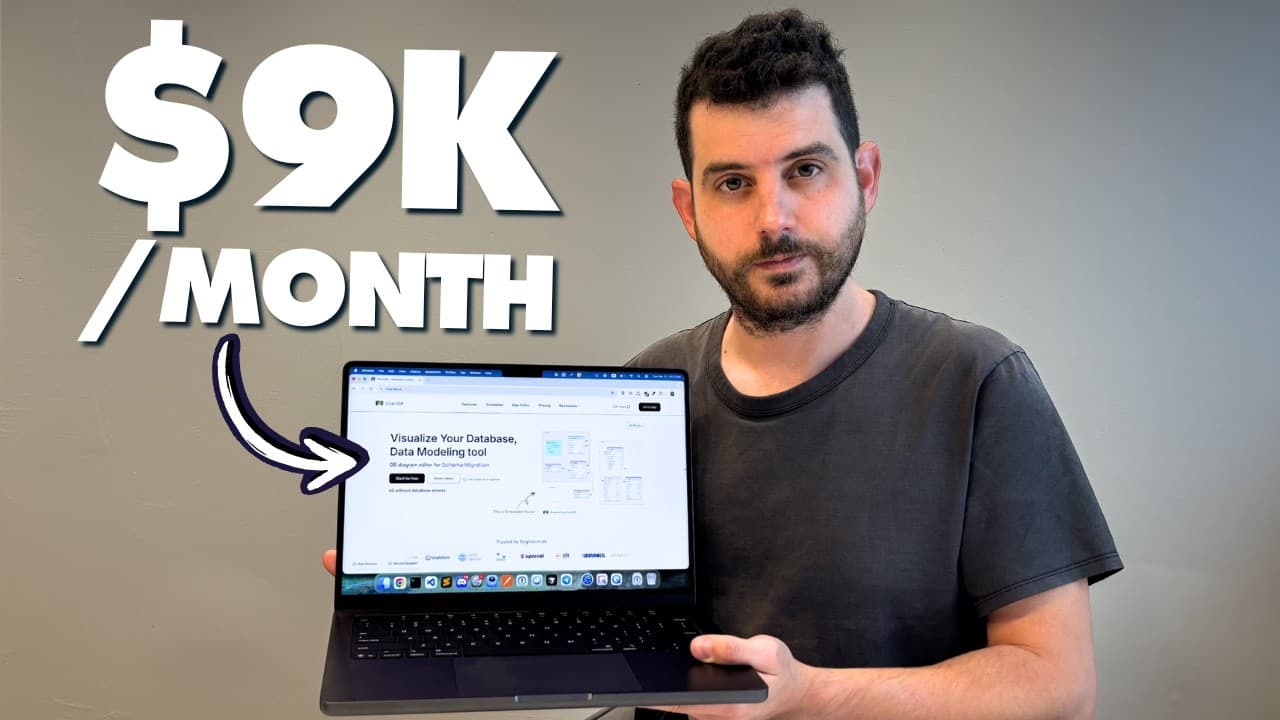
- ChartDB reported approximately $9,400 in monthly recurring revenue about 16 months after launching its open-source product. It also passed 21,000 GitHub stars and reached 250,000 developers, showing how a narrowly targeted product can develop substantial usage without attempting to serve every possible customer.
- The original product concept was an AI-enabled database client, but adoption was difficult because it required database credentials and local software installation. Without established credibility, those requirements created a trust barrier for engineers, leading the founders to pivot toward a simpler visualization product with less friction.
- ChartDB's appeal came from combining visible value with easy access. Interactive database diagrams could demonstrate their usefulness immediately and create a strong visual impression, while the absence of credential sharing and software installation made it easier for developers to evaluate and adopt the product.
- A Hacker News Show post brought thousands of engineers to ChartDB in a single day after roughly three weeks of development. The post reached the front page because developers could test an open-source product without signup friction and found its distinctive approach valuable enough to support with upvotes.
- The recommended starting point is a problem experienced personally by the builder or deeply understood through direct experience. ChartDB began with the specific need for an attractive, interactive entity relationship diagram, giving its founders a focused benefit they could recognize and develop without beginning from an expansive vision.
- Monetization should respond to demonstrated usage patterns instead of relying only on an early guess. ChartDB initially offered utility without charging, then recognized a paid opportunity when users requested team workflows and real-time collaboration, capabilities that were more complex for the company to provide and support.
- Distribution is most natural when a product appears where its ideal customer profile already spends time. ChartDB focused on GitHub, Hacker News, self-hosting and developer communities on Reddit, plus sharing inside teams, instead of attempting to invent entirely new acquisition channels.
Install to Summarize YouTube Videos and Get Transcripts
Explore YouTube Video Summarizer or Get YouTube Transcript Extractor
Questions & Answers
Q: How can developers find a profitable tool idea?
Developers should begin with a problem they experience themselves or understand through direct professional experience. The initial product should deliver one specific value that is easy to recognize immediately. ChartDB focused on producing an attractive, interactive entity relationship diagram. That narrow starting point gave the founders a clear user, a concrete need, and a manageable wedge for gathering feedback before expanding the product.
Q: Why did ChartDB pivot from an AI database client?
The AI-enabled database client required users to install unfamiliar software, provide database credentials, and allow the product to connect to sensitive systems. Engineers were reluctant to accept those requirements before the company had established credibility and trust. The founders therefore shifted toward database visualization, which offered an immediately visible benefit and allowed developers to evaluate the product without providing access credentials or completing a local installation.
Q: How did ChartDB reduce adoption friction for developers?
ChartDB removed several obstacles that could prevent developers from trying an unfamiliar tool. Its experience did not require a signup, a sales call, database credentials, or installation of new software. It also offered a self-hosted open-source version that developers could test in their preferred environment. These choices matched developer constraints and made the product's interactive visualization value available with less commitment or trust.
Q: How did Hacker News help ChartDB attract users?
After roughly three weeks of development, the founders prepared a Hacker News Show post and selected a launch day. The post reached the front page and sent thousands of engineers to ChartDB on the same day. Jonathan attributed the result to the product being open source, easy to test without signup friction, and sufficiently distinctive that developers expressed appreciation through upvotes, which increased its visibility.
Q: What makes an open-source developer tool suitable for monetization?
An open-source tool can provide a freely accessible core utility that helps developers discover, evaluate, and adopt the product. ChartDB offered its database visualization product as a self-hosted open-source application, then monetized a paid cloud version that the company hosts. The founders waited for behavior to reveal additional paid value, particularly requests for team workflows and complex real-time collaboration, instead of guessing the entire pricing boundary initially.
Q: When should a developer tool introduce paid features?
Paid features should follow observable user behavior and requests, particularly when customers need capabilities that are complex to build, host, or support. ChartDB did not monetize at the beginning. As people began asking to work with teammates, the founders identified real-time collaboration as a more demanding capability and a likely basis for charging. This approach treats monetization as a response to demonstrated demand rather than an unsupported assumption.
Q: Where should founders market a developer product?
Founders should distribute a developer product in places where its ideal customer profile already spends time. ChartDB used GitHub because the product was open source, Hacker News for its launch, and relevant developer and self-hosting communities on Reddit. Sharing among members of internal teams also supported distribution. The core principle is to make discovery feel natural instead of trying to create an unfamiliar marketing channel from scratch.
Q: What five-step playbook does the founder recommend?
The playbook begins by being the user, or deeply understanding the intended user, then designing for that persona's real constraints. Next, founders should start with a distinctive wedge instead of building the complete vision. They should let usage reveal what deserves monetization and market where the ideal customer profile already gathers. Across every step, the product should remain focused on one core value while aggressively removing adoption friction.
Summary & Key Takeaways
-
Jonathan Fishner co-founded ChartDB, an open-source database visualization tool built specifically for developers. Its self-hosted core lets developers visualize databases locally, while its paid cloud version generates revenue. About 16 months after the open-source launch, ChartDB reported roughly $9,400 in monthly recurring revenue, 21,000 GitHub stars, and 250,000 developers using the product.
-
ChartDB emerged after an AI-enabled database client met substantial adoption friction. Developers would have needed to install unfamiliar software and provide database credentials without an established foundation of trust. The founders narrowed the idea to interactive database visualization, creating a more visual product with an obvious benefit while eliminating credential access and software installation requirements.
-
The recommended playbook is to serve a persona you understand, design around its constraints, launch with one distinctive wedge, and improve through small feedback-driven iterations. Monetization should respond to observed behavior, as ChartDB did when users requested team collaboration. Marketing should occur naturally in communities where the target audience already spends time, including GitHub, Hacker News, and relevant Reddit communities.
Read in Other Languages (beta)
Share This Summary 📚
Summarize YouTube Videos and Get Video Transcripts with 1-Click
Try YouTube Summary with ChatGPT & Claude or YouTube Transcript Generator
Explore More Summaries from Starter Story 📚






Summarize YouTube Videos and Get Video Transcripts with 1-Click
Try YouTube Summary with ChatGPT & Claude or YouTube Transcript Generator