How to Express Gratitude Before It Is Too Late
TL;DR
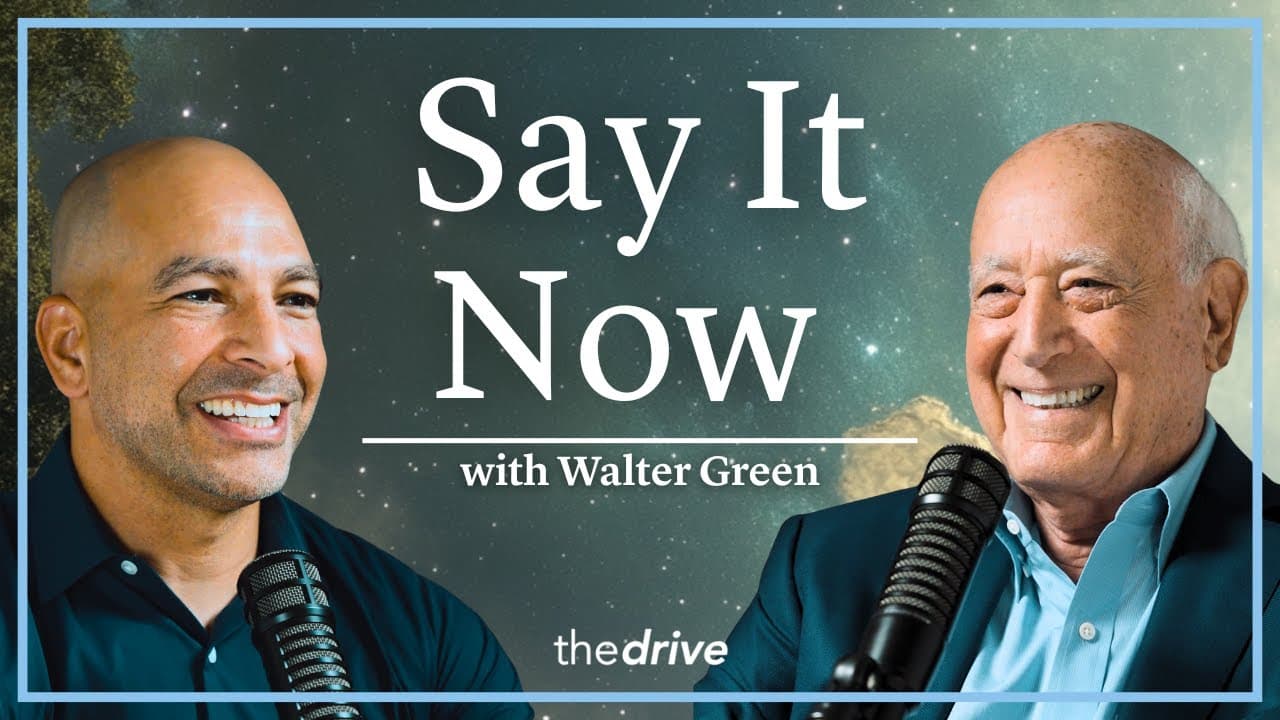
Express gratitude while people can still hear it, and make the appreciation specific rather than relying only on general declarations of love. Walter Green visited 44 important people over 11 months, discussed how they met and what they shared, explained each person's influence, and asked each person for one insight that could deepen his self-understanding.
Transcript
So you mentioned something at 70, the second sort of phase of of insight. Say a little more about that. It was Tim Russard's funeral that I saw. Tim Russard. Yeah. Died at about what 2007s. Yeah. 2007 2008 200. He was in his early 50s. I thought he was brilliant with Meet the Press. Never been a moderator. In my view, this has been better. And at h... Read More
Key Insights
- Gratitude is most meaningful when it reaches people while they can still hear and experience it. Tim Russert's funeral led Green to question the custom of reserving the fullest tributes for after someone has died.
- Green's 70th-birthday gift to himself was permission to spend as much time as necessary visiting people who had shaped his life. His wife, Lola, supported the idea, and he devoted the following 11 months to it.
- The journey included 44 meaningful visits across the United States and in Kenya, Mexico, and Canada. Green combined several meetings into some trips, and people living near his Southern California home required no significant travel.
- The process begins by asking, "What difference did this person make in my life?" Green wrote specific bullet points on a legal pad before each visit, usually filling one page and occasionally two pages.
- The first stage of each conversation is reconstructing how the relationship began. Green asked how he had the good fortune to meet the person, creating a natural starting point for reflecting on the relationship.
- The second stage is remembering shared experiences. Revisiting events that both people lived through helped establish the history and emotional context needed before Green delivered his central expression of appreciation.
- Specific gratitude is richer than a general statement of affection. Green told each person precisely why they mattered and how they had influenced his life, while also telling them that he loved them.
- The fourth stage creates a mosaic of self-understanding. Green asked each person to contribute one piece of insight about who he was from their perspective, allowing the accumulated responses to reveal something about his character.
- Recorded appreciation can preserve an experience that is difficult to absorb in the moment. Green recorded every conversation, then sent each participant a picture, a 120-word summary letter, and a framed CD at the end of the year.
Install to Summarize YouTube Videos and Get Transcripts
Explore YouTube Video Summarizer or Get YouTube Transcript Extractor
Questions & Answers
Q: Why should gratitude be expressed before someone dies?
Gratitude should be expressed while the recipient can hear it, respond to it, and share in the experience. At Tim Russert's funeral, Walter Green heard remarkable tributes but realized Russert would never hear them. That moment convinced Green that waiting until death to communicate a person's importance was customary but unwise, because the acknowledgment arrives too late for the person being honored.
Q: How did Walter Green celebrate his 70th birthday?
Walter Green chose an unusual personal gift for his 70th birthday: time to visit everyone he considered important in his life and tell them what they had meant to him. With his wife Lola's support, he spent the following 11 months meeting 44 people. His goal was not simply to see them, but to create a deliberate experience of connection, acknowledgment, and reflection.
Q: What four stages did Walter Green use in each gratitude conversation?
Green organized each conversation around four stages. First, he recalled how he had the good fortune to meet the person. Second, they discussed their shared experiences. Third, he explained specific ways the person had influenced his life. Fourth, he asked the person to offer one insight about who he was, contributing a piece to what he called a mosaic of self-understanding.
Q: How can someone prepare for a meaningful gratitude conversation?
Green prepared by writing one question on a legal pad: "What difference did this person make in my life?" He then listed concrete answers as bullet points, typically using one page and sometimes two. This preparation gave him specific memories, influences, and qualities to discuss, helping him move beyond a vague declaration of love toward detailed acknowledgment grounded in the relationship.
Q: Why is specific gratitude more powerful than saying "I love you"?
Specific gratitude tells a person exactly how they affected another life. Green did say that he loved the people he visited, but he considered detailed explanations the richest part of each conversation. Naming particular influences and experiences gives the recipient evidence of why the relationship mattered, making the appreciation clearer and more personal than a general expression of affection alone.
Q: Do you need to visit dozens of people to follow Walter Green's example?
No. Green explicitly said that people might hear about his 44 visits and conclude that they could not undertake a similar journey. His point was that a person needs only one important relationship to begin. The number of meetings, countries visited, and trips taken belonged to his personal project, while the underlying practice is simply to acknowledge someone who made a difference.
Q: Why did Walter Green ask each person for insight about his character?
Green wanted the visits to teach him something about himself as well as honor the other people. He asked each participant to provide one piece of insight about who he was from that person's perspective. Taken together, these observations would form a mosaic, using the viewpoints of people who had known him across many shared years and experiences to deepen his self-understanding.
Q: How did Walter Green preserve the gratitude conversations?
Green recorded every conversation because acknowledgment and appreciation can be difficult to absorb fully while they are happening. At the end of the year, he sent each of the 44 participants a photograph, a 120-word letter summarizing the experience, and a framed CD containing the recorded conversation. These materials created a lasting record that each person could revisit after the meeting.
Summary & Key Takeaways
-
After attending Tim Russert's funeral and hearing extraordinary tributes, Walter Green realized that the person being honored would never hear them. Approaching his 70th birthday, Green decided he did not want appreciation in his own life to arrive too late, so he chose meaningful visits as his personal birthday gift.
-
Over the following 11 months, Green visited 44 people who had been important in his life, traveling within the United States and to Kenya, Mexico, and Canada. Some visits were combined into single trips, while others required no travel because the people lived near his Southern California home.
-
Each conversation followed four stages: recalling how the relationship began, revisiting shared experiences, describing specific ways the person had influenced Green's life, and requesting one insight about his character. He recorded the conversations, then sent each participant a photograph, a 120-word letter, and a framed CD summarizing the experience.
-
Green emphasizes that the idea does not require visiting 44 people or taking extensive trips. His journey was personal, but its central practice can begin with one important person. The essential action is to communicate detailed appreciation directly, while there is still an opportunity for both people to experience the conversation.
Read in Other Languages (beta)
Share This Summary 📚
Summarize YouTube Videos and Get Video Transcripts with 1-Click
Try YouTube Summary with ChatGPT & Claude or YouTube Transcript Generator
Explore More Summaries from Peter Attia MD 📚


Summarize YouTube Videos and Get Video Transcripts with 1-Click
Try YouTube Summary with ChatGPT & Claude or YouTube Transcript Generator