How Can You 100x a Consumer Brand in India? Proven Tactics in 60 Minutes
TL;DR
To build and scale a consumer brand in India, target a large market gap, understand the customer, and develop operational excellence after product-market fit. Anand Narayanan highlights India’s manufacturing and design capabilities, calls fragrance at least a $1 billion opportunity, and says founders must understand costs such as packaging. Read on for specific lessons on market selection, global expansion, operations, hiring, and marketing.
Transcript
We need to go global. We need to think big or international [music] scale. That friends is the choice [music] before us. >> You know the government of India has been obsessed with the make in India initiative because of which today India is witnessing a manufacturing revolution like never before. In the 1990s, India embraced the IT revolution by se... Read More
Key Insights
- Large markets at an inflection point create strong conditions for scale. Narayanan chose fashion e-commerce because he believed e-commerce was taking off, fashion was a large and rapidly growing category, and modern retail remained relatively small in India at the time.
- People are a central factor in choosing where to work and build. Narayanan says founders and executives have one life, so they should genuinely enjoy their colleagues, a principle that influenced his decision to join Myntra after meeting Sachin, Binny, and Mukesh.
- India has the capabilities required to create global consumer brands. Narayanan points to domestic manufacturing, design expertise, and technology as an equalizer, while arguing that India has not yet produced a consumer company comparable in global reach to the examples discussed.
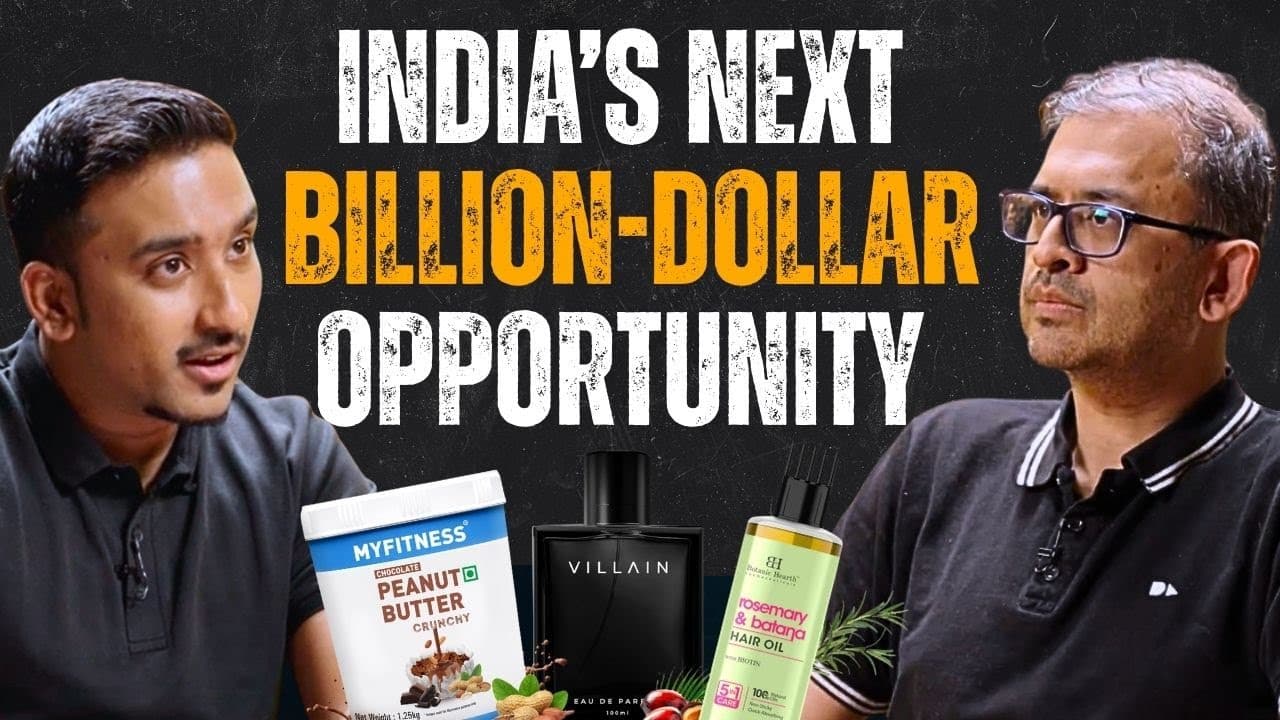
- Consumer brands can find meaningful white spaces inside competitive categories. BRND.ME entered areas such as protein, perfume, and clothing, while MyFitness became a breakout peanut butter brand with 22% of India's market share, according to the description.
- Fragrance is an underdeveloped Indian consumer category with substantial potential. Narayanan characterizes India as an infant fragrance market and describes the opportunity as at least one billion dollars, with the possibility of reaching ten billion dollars.
- Operational excellence becomes critical after product-market fit. Founders seeking to scale toward 100 crores must manage operations, technology, channel complexity, and costs, because rapid growth exposes weaknesses that may remain hidden during the earlier validation stage.
- Accurate packaging-cost knowledge is a basic requirement for sound economics. Narayanan makes the bold assessment that half of D2C founders may not truly know their packaging costs, highlighting how incomplete cost visibility can undermine operational decisions and profitability.
- Display advertising should represent 25% of marketing for brands seeking to grow from 100 crores to 1,000 crores, according to Narayanan's stated belief. The broader message is that scaling requires deliberate brand investment alongside consumer insight and operational execution.
Install to Summarize YouTube Videos and Get Transcripts
Explore YouTube Video Summarizer or Get YouTube Transcript Extractor
Questions & Answers
Q: How can founders build and scale a consumer brand in India?
Founders should identify a meaningful gap in a large consumer category, understand why customers will buy, and prepare operations for growth after product-market fit. Anand Narayanan emphasizes manufacturing, design, technology, cost visibility, early hiring, and deliberate marketing as foundations for scaling toward 100 crores and beyond.
Q: Why does Anand Narayanan believe Indian consumer brands can become global?
India has manufacturing capability and design capability, while technology acts as an equalizer. Narayanan argues that founders should think big, build for international scale, and create enduring consumer companies rather than limit their ambitions to India.
Q: Where are the biggest opportunities in India’s consumer market?
The discussion points to opportunities within protein, perfume, peanut butter, and clothing, even though these categories may look saturated or highly competitive. BRND.ME entered them through brands including MyFitness, Villain, and Dennis Lingo, showing that white spaces can remain inside crowded markets.
Q: Why is fragrance a promising consumer category in India?
Narayanan describes India as an infant fragrance market with a massive gap. He estimates it as at least a $1 billion opportunity and hopes it can become a $10 billion opportunity.
Q: What problems arise after a D2C brand reaches product-market fit?
After product-market fit, growth creates challenges involving operations, technology, quick commerce, costs, and organizational capacity. Founders need operational excellence and repeatable systems to scale toward 100 crores without allowing complexity to overwhelm the business.
Q: Why must D2C founders know their packaging costs?
Packaging costs are part of the real economics of operating and scaling a consumer brand. Narayanan makes the bold assessment that half of D2C founders may not know what their packaging costs really are, revealing a basic visibility gap that can weaken decisions.
Q: What marketing mix does Anand Narayanan recommend for scaling from 100 crores to 1,000 crores?
Narayanan says he strongly believes 25% of marketing should be display advertising for a brand seeking to grow from 100 crores to 1,000 crores. His recommendation places deliberate brand investment alongside consumer insight and operational execution.
Q: Which leadership roles should a D2C founder hire first?
The conversation identifies hiring the first five to 10 important positions as a major question for D2C founders. The excerpt does not name those roles, but it makes clear that capable early hiring is part of building the operational strength required to scale.
Summary & Key Takeaways
-
Ananth Narayanan describes his path from supply chain and product development consulting at McKinsey to leading Myntra, investing in Medlife, and founding BRND.ME. His career choices centered on large markets reaching an inflection point and on working with people he genuinely liked, two considerations he views as important for scaling.
-
BRND.ME was founded on the belief that India can produce enduring global consumer companies. India possesses manufacturing and design capabilities, while technology increasingly equalizes access and execution. Narayanan sees room to build a modern consumer brand institution that could last 50 to 100 years and operate across international markets.
-
The discussion identifies opportunities and execution challenges across Indian consumer categories, including peanut butter, fragrances, protein, and clothing. It emphasizes deep consumer insight, operational excellence after product-market fit, disciplined marketing, packaging-cost visibility, early leadership hiring, and the need to find defensible spaces even within categories that appear saturated or highly competitive.
Read in Other Languages (beta)
Share This Summary 📚
Summarize YouTube Videos and Get Video Transcripts with 1-Click
Try YouTube Summary with ChatGPT & Claude or YouTube Transcript Generator
Explore More Summaries from Think School 📚






Summarize YouTube Videos and Get Video Transcripts with 1-Click
Try YouTube Summary with ChatGPT & Claude or YouTube Transcript Generator