How to Deal With Intrusive Thoughts: A Psychologist Explains
TL;DR
You can't force intrusive thoughts to stop, but you can make them less scary and less sticky so they stop disrupting your life. The four-step approach is labeling the thought as uninvited, noticing what it wants (usually avoidance), deciding what you actually want in the moment, and moving toward your goals even while the thought follows along.
Transcript
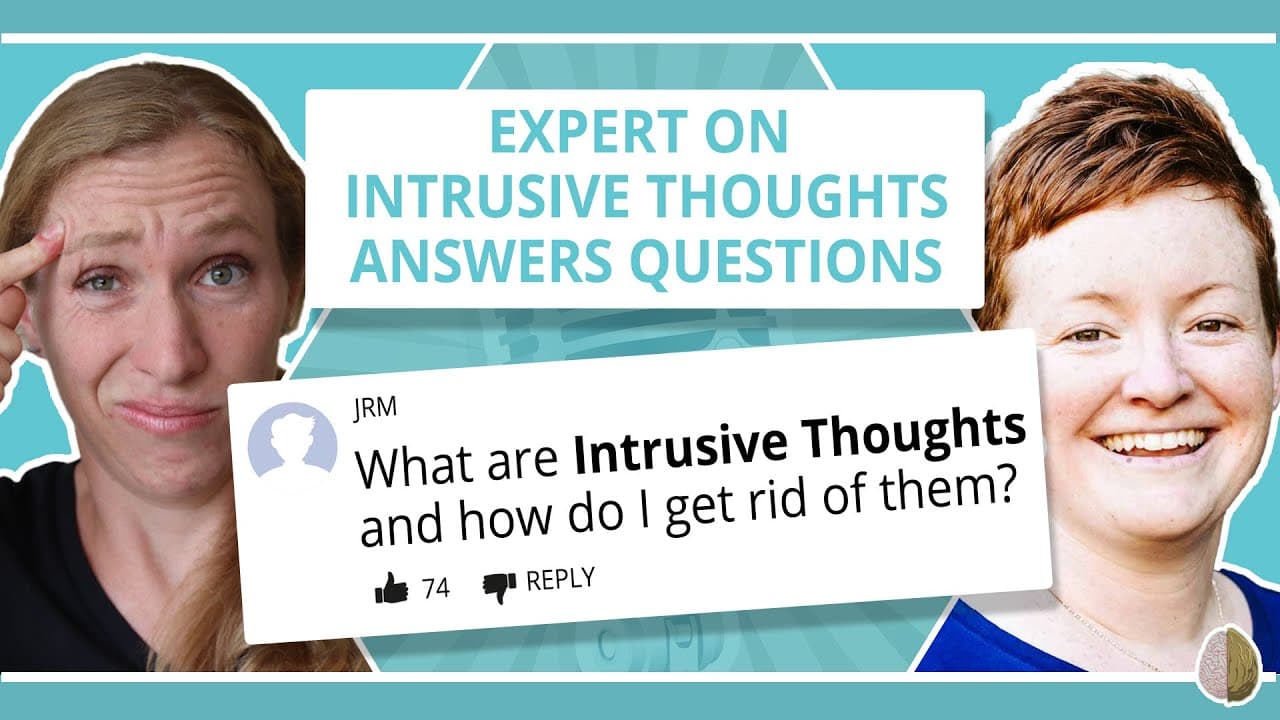
hello everyone today i'm really excited to have a special guest on the show her name is kat green she is a the only board certified child psychologist in the state of utah and she specializes in ocd adhd learning disorders and is really experienced in dealing with ocd and intrusive thoughts so today we're going to be asking her your questions a... Read More
Key Insights
- Intrusive thoughts are uninvited mental experiences that can come as images, thoughts, videos, or words. They are called intrusive because they intrude on your life, arrive out of the blue, and are associated with a lot of distress, discomfort, and bother.
- Almost everyone endorses having intrusive thoughts with similar content across the board. What differs is stickiness: higher anxiety, OCD-range tendencies, and neurobiological predisposition make thoughts stick and multiply, so it is not that some people simply are abnormal for having them.
- Intrusive thoughts typically go after what people value and care about. When you deeply value something, the idea of violating a rule around it feels horrifying, which sparks a cycle of wondering why you had the thought and what it must mean, growing the thoughts over time.
- The answer to making intrusive thoughts stop is that you don't. According to the psychologist, you cannot force the thoughts back out the door, but you can make them less scary and less sticky so they learn to wax and wane without disrupting life.
- The four-step process starts with labeling: identifying a thought as an uninvited guest you did not invite. If it feels scary to call it intrusive, treating that as an experiment to see what happens is encouraged as part of learning to label accurately.
- Most intrusive thoughts are not caused by a specific past trauma or childhood event. The exception is PTSD, where intrusive thoughts often directly relate to an accident or military action, and most people can see that connection clearly.
- Trauma elevates risk broadly rather than in a one-to-one ratio. It increases overall anxiety, hypervigilance, and sensitivity, and can interrupt developmental processes for handling thoughts, which feeds the intrusive-thought cycle without matching a single upsetting event.
- Disordered anxiety is feeling in danger when you are actually safe, while non-disordered anxiety is feeling in danger when you actually are in danger. Some intrusive-thought situations involve real threat, requiring safety training and action rather than only soothing the anxiety.
Install to Summarize YouTube Videos and Get Transcripts
Explore YouTube Video Summarizer or Get YouTube Transcript Extractor
Questions & Answers
Q: What are intrusive thoughts?
Intrusive thoughts are uninvited mental experiences that can come in many forms, including images, thoughts, videos, and words. They are called intrusive because they intrude on your life, sometimes coming out of the blue. They are associated with a lot of distress and are described as really uncomfortable and bothersome. The course Dr. Green built covers what they encompass and how they show up differently for different people.
Q: Why do I have intrusive thoughts and why are they so prevalent for me?
Almost everyone endorses having intrusive thoughts, even with similar content across the board, so having them is not unusual. What makes them prevalent for some people is stickiness. People with higher anxiety, or who run in the OCD realm, tend to get thoughts stuck for a number of reasons, partly neurobiological predisposition. They may get more thoughts and stickier thoughts to begin with, and the thoughts target what they value most.
Q: How do I make intrusive thoughts stop?
According to Dr. Green, the delightful answer is that you don't make them stop. You cannot force the thoughts back out the door. The good news is you can make them less scary and less sticky over time. Eventually they learn to wax and wane and stop disrupting your life as much. The approach uses four steps: labeling, noticing what the thought wants, choosing what you want, and moving toward your goals anyway.
Q: What are the four steps for handling intrusive thoughts?
The first step is identifying and labeling a thought as an uninvited guest, saying it is not something you invited. The second is figuring out what the thought or feelings want, which is almost always for you to avoid or to engage and leave your life to focus on them. The third is taking a step back and asking what you want in this moment. The fourth is moving toward your goal even as the thought follows along complaining, in small steps at a time.
Q: Are intrusive thoughts caused by trauma?
It depends, but most of the time intrusive thoughts are not related to a specific past event or trauma. There are two caveats. In PTSD, intrusive thoughts are obviously associated with a specific trauma and often directly relate to an accident, military action, or similar event, and most people can see that connection. More broadly, childhood trauma or trauma in general elevates risk for anxiety, depression, and intrusive thoughts, but typically not in a one-to-one ratio.
Q: Why do intrusive thoughts happen even when unrelated to a traumatic experience?
Trauma increases people's overall anxiety and hypervigilance, making them more sensitive to intrusive thoughts and anxiety in general, which can trigger the intrusive-thought cycle. There is also data that trauma can interrupt developmental processes for figuring out how to process thoughts and sensitivity. So even when a thought is not directly related to the traumatic experience, the elevated baseline anxiety and disrupted processing can produce intrusive thoughts that seem unconnected to the original event.
Q: How do you deal with intrusive thoughts based on a real problem or past threat?
Part of it is understanding whether the event was merely unpleasant or actually threatening. For example, contamination-related OCD thoughts about vomiting connect to past experiences, but thinking about vomiting is embarrassing and awful, not actually dangerous, and the thought will not hurt you. When there is an actual physical threat, treatment includes safety training. You practice how to respond and face fears, but also identify boundaries where real physical danger begins and action is needed.
Q: What is the difference between disordered and non-disordered anxiety?
Disordered anxiety at its essence is feeling in danger when you are actually safe. Non-disordered anxiety is feeling in danger when you are actually in danger, where soothing the anxiety is not the goal; instead you should choose to escape, fight off an attacker, or hide, taking action rather than trying to make the anxiety go away. There is also a middle ground of acceptable risk, recognizing that living your life inherently involves some risk you choose to accept.
Summary & Key Takeaways
-
Emma McAdam interviews Dr. Kat Green, described as a board-certified child psychologist in Utah who specializes in OCD, ADHD, learning disorders, and intrusive thoughts. They answer audience questions, referencing a course they built together that teaches four main steps for taking charge of intrusive thoughts.
-
Intrusive thoughts are uninvited images, thoughts, videos, or words that intrude on life and cause distress. Nearly everyone has them, but anxiety, OCD tendencies, and neurobiology make them sticky. They target what people value, sparking a cycle of questioning why the thought occurred and what it means.
-
The four steps are labeling the thought as an uninvited guest, noticing what it wants (usually avoidance or engagement), choosing what you want in the moment, and moving toward your goals even as the thought follows along complaining. Trauma raises risk broadly, but real-threat situations require safety action, not just soothing.
Read in Other Languages (beta)
Share This Summary 📚
Summarize YouTube Videos and Get Video Transcripts with 1-Click
Try YouTube Summary with ChatGPT & Claude or YouTube Transcript Generator
Explore More Summaries from Therapy in a Nutshell 📚





Summarize YouTube Videos and Get Video Transcripts with 1-Click
Try YouTube Summary with ChatGPT & Claude or YouTube Transcript Generator