Why Haven't We Found Aliens Yet: Are We Early In Space-faring?
TL;DR
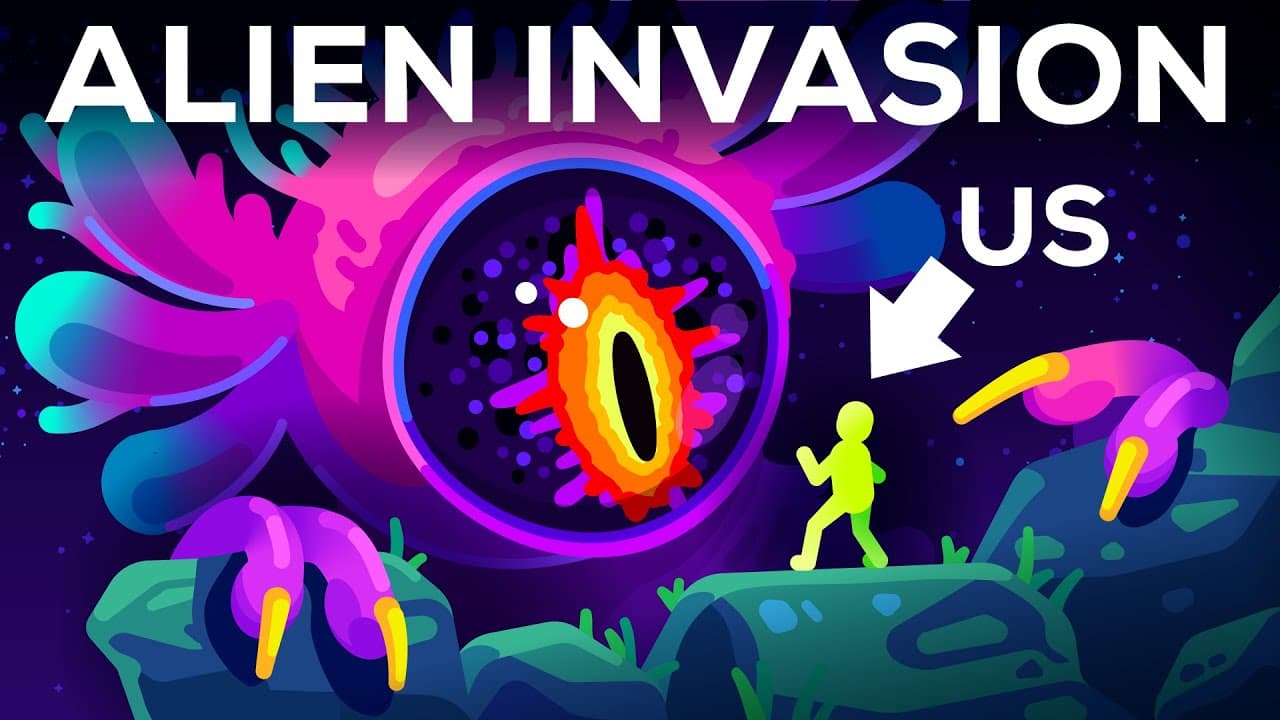
Humanity may be among the first technological civilizations in the Milky Way, as earlier cosmic conditions were largely hostile to life. As the universe becomes increasingly favorable, a potential deadline might limit the expansion of future civilizations, creating competition for resources. If we're early, we have the unique opportunity to shape the galaxy before others catch up.
Transcript
the universe is magnificent and vast hundreds of billions of galaxies trillions of stars and even more planets if even the tiniest fraction are habitable then the universe should be teeming with life and yet we see nothing only vast emptiness where is everyone else the answer to this riddle could be as exciting as it is creepy we are early born bef... Read More
Key Insights
- 🌌 Only one species on Earth builds spaceships, suggesting that the process of developing a technological civilization may be rare and time-consuming.
- 🌍 Life on our planet progressed from single cells to complex organisms that use tools and language relatively quickly. However, we don't know how many steps life needs to take to form a civilization. ⏳ Humanity exists at a convenient time in the universe's history, as earlier eras were hostile to life. This suggests that we may be among the first technological civilizations in the Milky Way.
- ☀️ The sun's lifespan is relatively short compared to most stars in the galaxy, potentially limiting the time window for life to appear and develop advanced civilizations.
- 🔊 A loud civilization, one that expands into space and modifies planets, would be detectable through its energy emissions. This could potentially create a deadline for new civilizations to emerge.
- 🌍 Quiet civilizations, which may be limited to one star system, are not a concern. However, humans are on the path to becoming a loud civilization.
- 💫 If we are early in the development of technological civilizations, others will eventually emerge and face the decision of staying quiet or expanding to claim their own space in the galaxy.
- 🌌 The consequences of these ideas could include a race for resources and territories in space, with civilizations potentially being enveloped by more powerful empires. Humanity must take action to secure a place in the galactic community.
Install to Summarize YouTube Videos and Get Transcripts
Explore YouTube Video Summarizer or Get YouTube Transcript Extractor
Questions & Answers
Q: How fast did life on Earth progress through various evolutionary steps compared to potential alien civilizations?
Life on Earth evolved from single cells to multicellular organisms in billions of years, with the development of culture and civilization occurring rapidly in comparison. However, the timeline for other alien civilizations is uncertain, as there may be many steps to pass through before achieving technological advancements.
Q: Why is humanity existing now considered significant in the quest for life in the universe?
Humanity's existence at this point in time may be significant because the universe is currently more conducive to the emergence and development of life, with decreased hostile conditions. This makes it a favorable time for life to thrive, and we may be among the few early technological civilizations in the Milky Way.
Q: How does the future of space-faring civilizations depend on the behavior of loud and quiet aliens?
A loud civilization, which expands and modifies its environment, can potentially prevent the emergence of new civilizations by crowding out their chances of expansion. On the other hand, quiet civilizations that stay within their star system may not have a noticeable impact on their surroundings and will not be a concern for other expanding civilizations.
Q: What are the consequences if we are early in the quest for life?
If we are indeed early in the quest for life, other civilizations will eventually catch up, and a race to the stars may ensue. New civilizations would need to decide whether to stay quiet or expand before other civilizations arrive, leading to the potential formation of borders and limits that could persist indefinitely. It is essential for humanity to act now to secure our place in the galactic community.
Summary & Key Takeaways
-
Life on Earth took billions of years to evolve from single cells to multicellular organisms, but the development of culture, civilization, and space travel occurred relatively quickly.
-
The timing of humanity's existence is significant, as the universe is now more welcoming to life than in the past due to a decrease in hostile conditions.
-
The future of space-faring civilizations may be limited by a potential deadline, as expansion will become increasingly challenging as more civilizations emerge.
Read in Other Languages (beta)
Share This Summary 📚
Summarize YouTube Videos and Get Video Transcripts with 1-Click
Try YouTube Summary with ChatGPT & Claude or YouTube Transcript Generator
Explore More Summaries from Kurzgesagt – In a Nutshell 📚





Summarize YouTube Videos and Get Video Transcripts with 1-Click
Try YouTube Summary with ChatGPT & Claude or YouTube Transcript Generator