How Do Delhi's Welfare Claims Stand Up to Scrutiny?
TL;DR
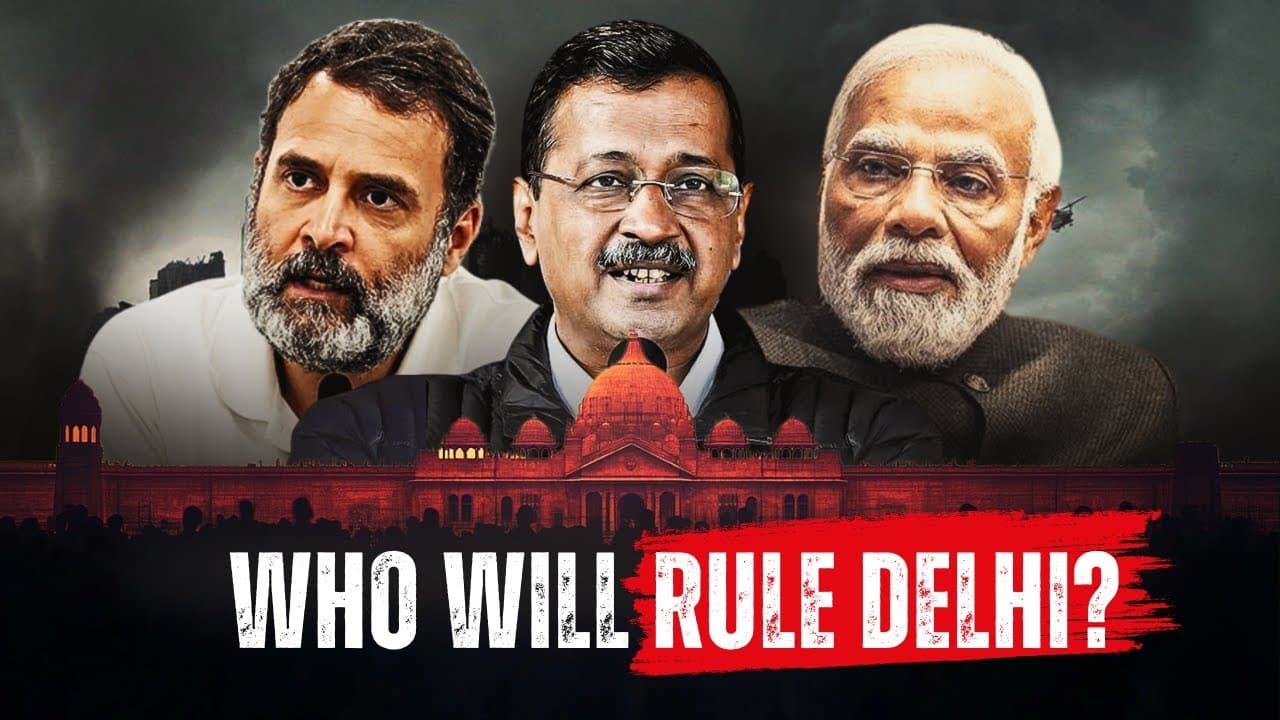
Delhi’s welfare programs can be economically defensible when essential services reduce household hardship and help residents become healthier, better educated, and more productive. The presented evidence credits the Aam Aadmi Party with expanding subsidized utilities, healthcare, and education while maintaining comparatively restrained public finances, but it also acknowledges unfinished promises, environmental failures, corruption allegations, and the risk of poorly controlled giveaways.
Transcript
hi everyone the Delhi elections are here and the capital of India is all set for the most intense and aggressive political Battle of the Year because this election is a clash between three of the biggest political parties of the country people this isn't just another election it's a battle to decide whether the Amad party's 10year rule will continu... Read More
Key Insights
- Delhi’s governance record is presented as a mixture of expanded public services and unfinished commitments. Subsidized utilities, healthcare access, and improved government schooling are cited as achievements, while polluted water, the unclean Yamuna, severe air pollution, and political controversy remain central weaknesses.
- The freebie debate reflects two competing economic philosophies. One view treats giveaways as a burden that disrupts merit, productivity, and incentives, while the other considers essential public support an investment that enables disadvantaged households to participate more fully in education, employment, and economic activity.
- The bottom-up approach works by removing barriers that prevent poorer households from becoming productive. Affordable water, electricity, education, and healthcare can reduce financial distress, save time, support school attendance, and allow family members to pursue employment rather than spending scarce resources meeting basic needs.
- Essential services are distinguished from unrestricted cash or poorly designed electoral giveaways. The analysis supports public spending on schools, hospitals, water, and electricity when it expands productive capacity, but warns that uncontrolled promises can strain Delhi’s finances and encourage similar spending by other state governments.
- Delhi’s reported debt position is used to challenge the claim that welfare programs automatically bankrupt governments. The transcript argues that outstanding debt grew in absolute terms but fell substantially relative to the city’s economic output, making the debt burden more manageable than the headline amount alone suggests.
- Fiscal balance is presented as an important test of whether welfare policies are sustainable. Delhi reportedly maintained a small fiscal deficit and recorded a fiscal surplus in a recent period, suggesting that public services can coexist with restrained borrowing when revenue and expenditure remain adequately managed.
- Public investment can create a cycle of growth when healthier and better-educated residents become more productive. Greater productivity can support business output and tax revenue, which can then finance further improvements, although the transcript does not establish that every promised benefit produces this outcome equally.
- Independent scrutiny is necessary because both political messaging and media coverage can distort evaluations of government performance. The analysis says it compared party claims with resident interviews and research, but its conclusions should still be read as an argument based on the evidence presented rather than a complete audit.
Install to Summarize YouTube Videos and Get Transcripts
Explore YouTube Video Summarizer or Get YouTube Transcript Extractor
Questions & Answers
Q: What did the Aam Aadmi Party promise Delhi residents?
The Aam Aadmi Party’s major promises covered clean and free water, subsidized electricity, free healthcare, free education, and cleaning the Yamuna. The analysis groups these commitments into social improvement, welfare benefits, and environmental performance. It concludes that several public-service programs expanded significantly, but promises involving water quality, river cleanup, and pollution cannot be described as fully achieved.
Q: How does the bottom-up economic approach justify welfare programs?
The bottom-up approach argues that economic growth improves when people at the base of the income pyramid receive essential resources. Affordable water, electricity, education, and healthcare can save time, reduce household expenses, prevent medical distress, and improve access to work and schooling. These effects may allow more residents to produce income, develop skills, and contribute taxes to the economy.
Q: Why do critics oppose government freebies?
Critics argue that government giveaways transfer costs to productive citizens, weaken incentives to work, and consume funds that could be used elsewhere. From the capitalist perspective described in the transcript, rewards should follow merit and economic contribution. Critics also warn that expanding electoral promises without limits could damage public finances and encourage competing parties or states to offer similarly unsustainable benefits.
Q: Are free water and electricity presented as wasteful spending?
Free or subsidized water and electricity are not automatically presented as wasteful. The analysis treats them as potentially productive when they provide basic security, reduce household costs, and free residents to work or educate their children. However, it also signals that agreement with welfare has limits. A program’s value depends on whether it meets essential needs, produces broader benefits, and remains financially controlled.
Q: How does Delhi’s debt affect the argument about welfare?
Delhi’s debt is used to argue that welfare spending has not necessarily produced fiscal collapse. According to the transcript, outstanding debt increased in absolute terms while declining sharply as a share of the city’s economic output. That distinction matters because debt relative to the size of the economy can offer a more useful picture of affordability than the total amount viewed without context.
Q: What does the fiscal deficit reveal about Delhi’s finances?
A fiscal deficit occurs when government expenditure exceeds revenue, excluding borrowed funds, while a fiscal surplus means regular revenue exceeds regular expenditure. The transcript says Delhi recently maintained a relatively small deficit and also recorded a surplus in another period. The analysis interprets this as evidence that welfare programs and public investment can coexist with comparatively disciplined finances.
Q: Which Aam Aadmi Party achievements does the analysis recognize?
The analysis recognizes broader access to subsidized water and electricity, free treatment through public healthcare initiatives, and improvements in government education that have helped schools produce strong students. It describes these changes as significant for poorer residents. At the same time, it avoids treating those achievements as a complete verdict because environmental failures, unfinished promises, and corruption allegations remain relevant.
Q: What problems remain unresolved after AAP’s rule in Delhi?
The unresolved issues include cleaning the Yamuna, ensuring clean water, controlling dangerous air pollution, and addressing concerns about whether every welfare promise is fiscally or economically justified. The transcript also notes political controversy surrounding corruption allegations connected to the Delhi liquor policy case. These issues complicate claims that expanded public services alone represent complete or uniformly successful governance.
Summary & Key Takeaways
-
The analysis evaluates the Aam Aadmi Party’s record through its promises concerning social improvement, welfare benefits, and the environment. It credits the government with expanding access to subsidized water, electricity, healthcare, and education, while stressing that governance must also be judged by unfinished commitments, political controversy, public opinion, and measurable financial consequences.
-
The economic case for welfare rests on a bottom-up approach. Essential services can free household time and income for employment, schooling, and productive investment. The opposing view argues that government giveaways burden productive citizens, weaken incentives, and distort economic activity. The appropriate judgment therefore depends on each program’s design, purpose, and fiscal sustainability.
-
Delhi’s debt burden relative to its economy reportedly declined despite welfare spending, while its recent fiscal position compared favorably with several states cited in the analysis. These indicators support investment in schools, hospitals, and essential services, but they do not prove that every subsidy is beneficial or excuse unresolved pollution, water quality, and governance problems.
Read in Other Languages (beta)
Share This Summary 📚
Summarize YouTube Videos and Get Video Transcripts with 1-Click
Try YouTube Summary with ChatGPT & Claude or YouTube Transcript Generator
Explore More Summaries from Think School 📚



Summarize YouTube Videos and Get Video Transcripts with 1-Click
Try YouTube Summary with ChatGPT & Claude or YouTube Transcript Generator