How to Structure Facebook Ads Campaigns for Scaling
TL;DR
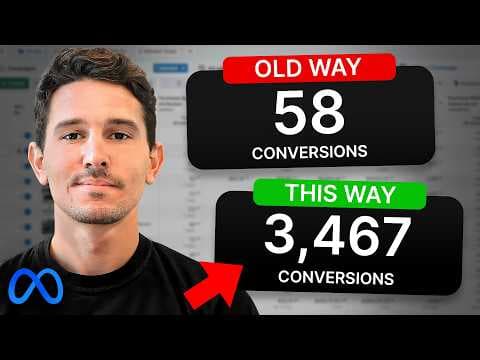
Separate new customer acquisition, engaged audiences, and retention into distinct campaigns, then put roughly 80% of total ad spend into a prospecting CBO campaign built from dated, modular creative packs. A second scale campaign holds duplicates of only the top ads, identified by high spend plus high incremental attribution. This structure took one brand from $56,000 to $250,000 per month in 90 days.
Transcript
Today, I'm going to walk you through the exact Facebook ads campaign structure that is directly responsible for taking this brand from $56,000 in net sales all the way to $250,000 per month. And all of this was done in just 90 days. I've been running ads for over 10 years, and one of the highest impact things that I see across 7, eight, and even ni... Read More
Key Insights
- A proper campaign structure is one of the highest impact levers across seven, eight, and nine figure brands, according to a media buyer with over 10 years of experience running ads. Structure is what allows a brand to scale predictably and to build creative systems that work outside of Facebook itself.
- The prospecting CBO campaign is the most important scaling campaign in the account and generally represents 80% of total ad spend. On a $1,000 per day budget, that means setting the campaign daily budget to $800, using campaign budget optimization and the highest volume or value bid strategy.
- The core organizing principle is separating new customer acquisition, engaged customer acquisition, and retention into different campaigns. Audience segment reporting must be configured in advertiser settings first so that engaged and existing customer definitions exist before campaigns are built.
- Engaged audiences are defined as site visitors 30 days and add to cart 90 days. Existing customers are defined as purchasers 180 days from the pixel plus all-time purchasers pulled from a Klaviyo or CRM list, and these same lists become the exclusions on prospecting ad sets.
- A modular pack-based ad set system is recommended for about 95% or more of brands. Ad sets are named broad pack one, broad pack two, and so on, with each pack holding one round of creatives, and a pro tip is appending the launch date to the pack name.
- Packs exist purely as organization so new creative does not interfere with the learning phase. Throwing every ad into a single ad set means each new ad disrupts what is already running there, which is exactly what the multiple pack setup prevents.
- The scale campaign is not special by itself and does nothing unless the right ads are placed in it. It is simply a reserved place for the best of the best ads, with its budget started at no less than 1x cost per acquisition, so a $100 CPA means a $100 starting budget.
- Top performing ads are identified using incremental attribution rather than standard reporting. In the example account, one ad spent $7,500 at 2.6 ROAS and 2.3 incremental, while another spent $5,500 at 3.6 ROAS and 3.0 incremental, making the second the one to duplicate into the scale campaign.
Install to Summarize YouTube Videos and Get Transcripts
Explore YouTube Video Summarizer or Get YouTube Transcript Extractor
Questions & Answers
Q: How to structure a Facebook ads account for scaling
Start in a blank ad account with a sales objective campaign called prospecting CBO, which uses campaign budget optimization and only acquires net new customers. It carries roughly 80% of total ad spend and holds multiple broad packs of creative. Then create a second sales campaign, the scale campaign, which houses duplicates of the top performing ads. The organizing theme is separating new customer acquisition, engaged customer acquisition, and retention rather than mixing them together in one place.
Q: What is a creative pack in Facebook ads
A pack is an ad set that groups together one round of creatives, labeled broad pack one, broad pack two, broad pack three, and so on. Packs are organization pieces and do nothing unique on their own. Their purpose is to stop new creative from interfering with the learning phase of ads that are already running. If every ad went into one campaign and one ad set, each new creative launch would disturb everything already in that single pack, which is why a modular setup is used instead.
Q: What budget should the prospecting CBO campaign get
The prospecting CBO campaign generally represents about 80% of total ad spend regardless of the account size, whether the budget is $100, $1,000, or $10,000 per day. In the walkthrough example, a $1,000 per day total budget means setting the prospecting campaign to $800 per day. It is described as the most important scaling campaign in the account, which is why the majority of the budget is concentrated there rather than spread evenly across campaigns.
Q: Which audiences should be excluded from a prospecting campaign
Prospecting ad sets exclude purchase 180 day from the pixel, add to cart 90 days, site visitors 30 days, and a customer list of all-time past purchasers imported from Klaviyo. These exclusions are applied under show more controls and exclude custom audiences within the audience section. The point is to guarantee the campaign is only targeting new prospects, so anyone who has already visited, added to cart, or bought is filtered out and handled by the engaged and retention parts of the structure.
Q: How do you identify top performing Facebook ads to scale
Set columns to show amount spent, purchases, purchase conversion value, ROAS, and cost per purchase. Then open the column set, click compare attribution, and select incremental attribution, which shows the purchases Facebook believes it actually drove because someone saw or clicked the ad. Sort all ads by most spend and look for ads with both high spend and high incremental attribution. In the example, an ad at $5,500 spend with 3.6 ROAS and 3.0 incremental beat an ad at $7,500 spend with 2.6 ROAS and 2.3 incremental.
Q: What settings should Facebook prospecting ad sets use
Conversion location is website, performance goal is maximize number of conversions, the data set is the correct pixel, and the conversion event is purchase. Cost per result goal and value rules are skipped. Under more settings, attribution stays standard at 7-day click, 1-day engaged, 1-day view. Languages stay on all languages. For the first pack, budget and schedule is left untouched with no ad set spending limits, letting everything run daily.
Q: Should Facebook ads run on all placements
Yes in almost every case. The recommendation is to keep all placements on unless there is a strong data indication otherwise or a legal or platform reason preventing delivery somewhere. About 99% of the brands worked with in the agency run all placements, and this is found to work better, with refinements made only when key data points show they are necessary. Advantage plus placements will typically show as on by default.
Q: What results did this campaign structure produce
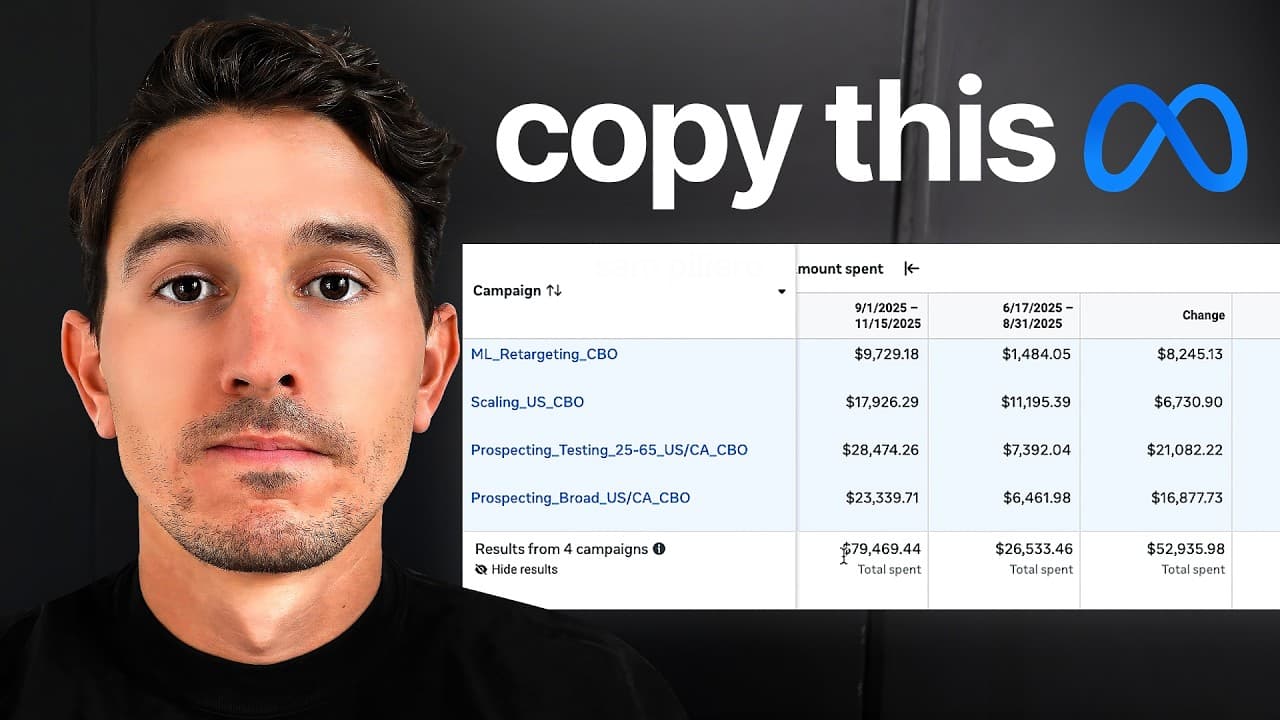
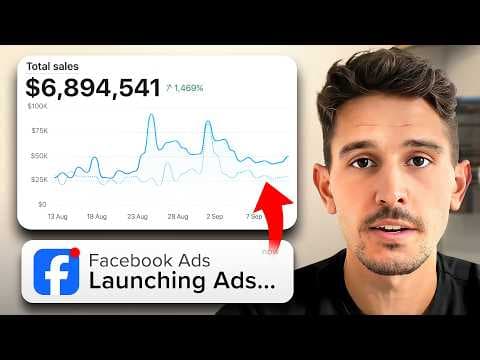
One brand went from $56,000 in net sales to $250,000 per month within 90 days, with the strategies implemented starting September 1st after a flat trajectory from June through September. From September 1 to November 15 versus the previous period, gross sales rose 143%, net sales 120%, total sales 120%, and sessions 77%, while conversion rate improved 19%. In Facebook ads, spend rose 199% from $26,000 to $79,000 and purchase conversion value rose 205%, with ROAS flat at 1.9.
Summary & Key Takeaways
-
The brand had been flat from June to September before the structure was implemented on September 1st. Comparing September 1 to November 15 against the previous period, gross sales rose 143%, net sales 120%, total sales 120%, and sessions 77%, while conversion rate still improved 19%, meaning both traffic volume and traffic quality went up at once.
-
Inside Facebook ads for the same period, spend increased 199% (from $26,000 to $79,000) and purchase conversion value increased 205%, with ROAS holding flat at 1.9. That flat return alongside a near tripling of spend is the definition of scaling effectively, since the account absorbed far more budget without degrading efficiency.
-
The account uses two campaigns. Prospecting CBO carries about 80% of spend and holds modular broad packs, each pack being one round of creative labeled with its launch date. A separate scale campaign is a reserved home for duplicates of the best ads, selected by sorting all ads by spend and reading incremental attribution.
Read in Other Languages (beta)
Share This Summary 📚
Summarize YouTube Videos and Get Video Transcripts with 1-Click
Try YouTube Summary with ChatGPT & Claude or YouTube Transcript Generator
Explore More Summaries from Sam Piliero 📚

Summarize YouTube Videos and Get Video Transcripts with 1-Click
Try YouTube Summary with ChatGPT & Claude or YouTube Transcript Generator