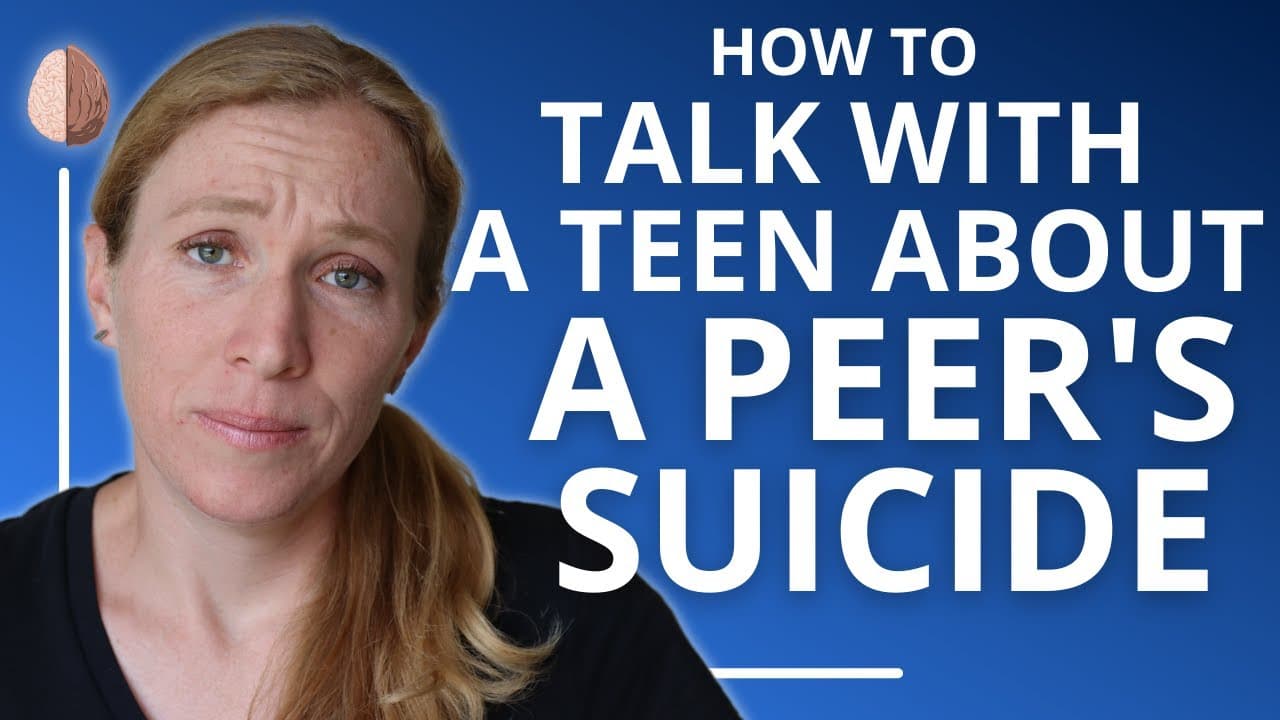
How to Talk to Your Teen About a Peer's Suicide
TL;DR
After a suicide in their community, teens face higher risk of depression, anxiety, and suicide themselves, so parents should start the conversation rather than avoid it. Notice your own reactions first, then listen more than you talk, ask open-ended questions, remind your teen it isn't their fault, and ask directly whether they are having suicidal thoughts.
Transcript
hi everyone Emma McAdam here I'm a licensed Marriage and Family Therapist and today we are going to talk about something that I wish we didn't have to talk about but you know recently in my local school one of the kids took their own lives and I have seen this happening in schools all throughout my state and I think it's really important that paren... Read More
Key Insights
- Teens are at higher risk of depression, anxiety, and suicide after someone in their community dies by suicide, which is why parents need to start these conversations rather than wait or avoid them.
- Noticing your own reactions comes first: get centered, name what you feel, and share a little vulnerability so your teen feels safer being open about their own emotions.
- Listening matters more than talking: prepare to do more listening than talking, allow long silences, and accept 'I don't know' as a valid answer from your teen.
- Open-ended questions work better than direct ones: ask what they've heard, what they think, and how their friends are reacting rather than asking if they personally have had suicidal thoughts.
- At least thirty percent of teenagers experience a mental health challenge during high school, so a teen will likely have friends dealing with this even if they aren't struggling themselves.
- Teens are egocentric and may wrongly blame themselves for a friend's suicide, so parents should reassure them it was not their responsibility and that people commonly hide what they feel.
- Asking a teen directly whether they feel suicidal does not plant the idea; it opens a chance to express love, strengthen connection, and get them outside help if needed.
- Adding barriers to means, like locking up guns and medication, slows access to suicide methods and can buy time to get a person support before they act.
Install to Summarize YouTube Videos and Get Transcripts
Explore YouTube Video Summarizer or Get YouTube Transcript Extractor
Questions & Answers
Q: Why is it important to talk to your teen after a classmate's suicide?
After someone in a community dies by suicide, all the teens in that community become at higher risk of depression, anxiety, and suicide themselves. Because of this elevated risk, parents need to know how to talk with their teenager and actually have those conversations. Avoiding the topic does not make a teen feel better, so opening the discussion, while also working with a therapist or doctor, is important for keeping them safe.
Q: How should a parent prepare before talking to their teen about suicide?
The first step is to notice your own reactions, since you may feel strong sadness, worry, or uncertainty about raising the topic. Take a minute to get centered, notice what you are feeling, and notice what you are worried about. When you talk to your teen, being a little vulnerable by saying you feel worried or sad can help them feel safer being open about their own feelings in return.
Q: What kinds of questions should parents ask their teen about a peer's suicide?
Parents should ask open-ended questions rather than direct ones. Helpful examples include what they have heard about the person, what they think about the situation, and how their friends are reacting and what those friends are worried about. Asking how friends are reacting can feel less threatening than asking teens directly whether they personally have experienced mental illness or had thoughts of suicide, which can make them more comfortable opening up.
Q: How common are mental health challenges among high school teens?
At least thirty percent of teenagers experience a mental health challenge during high school, so it is really common. This means a teenager will very likely have friends who are experiencing a mental health challenge even if they are not experiencing it themselves. Understanding how common this is helps parents approach the conversation without alarm and recognize that struggles among a teen's peer group are normal and widespread.
Q: Why do teens blame themselves for a friend's suicide, and how can parents respond?
Teenagers are egocentric, which does not mean prideful but that they think the world revolves around them and that events in their world relate to them. This makes them more likely to believe a friend's suicide is their fault. Parents should remind them it was not their responsibility, and normalize that people commonly hide what they think and feel, so a teen could not have known or prevented it.
Q: Does asking a teen directly about suicidal thoughts put the idea in their head?
No. Asking directly whether a child is feeling suicidal, depressed, or having thoughts or plans of suicide will not plant the idea in their mind. If they are thinking about suicide, they are already thinking about it, and you will not create a new idea. Instead, asking directly becomes an opportunity to express love and concern, strengthen your connection, and take action to access outside help if needed.
Q: What warning behaviors should parents watch for in grieving teens?
Sometimes teens respond to painful emotions by engaging in risk-taking behaviors such as drinking, drug use, or other teenage risk-taking. Because of this, it is valuable to talk with your child about healthy strategies to work through emotions, like talking with others, writing about it, and getting healthy physical activity. Parents should also check in weekly for a while, at least for the next couple of weeks, and stay attentive over the course of perhaps a year.
Q: How can parents reduce a teen's access to means of suicide?
Parents can add barriers to a child's access to means of suicide. For example, Utah has a high suicide rate partly because many people have access to guns, so making sure guns are locked up helps. Parents can also lock up medication or take other preventive steps. This does not guarantee prevention, but slowing access to means can buy time to help a person get support before they take any action.
Summary & Key Takeaways
-
Emma McAdam, a licensed Marriage and Family Therapist, explains how parents can talk with teenagers after a classmate's suicide. Because a community suicide raises every teen's risk of depression, anxiety, and suicide, avoiding the topic does not help, so parents should have the conversation while working alongside professional support.
-
Parents should first notice their own reactions and get centered, then listen more than they talk. Using open-ended questions about what teens have heard or how friends are reacting is gentler than direct questions. Parents should avoid speculating on reasons or methods and reassure teens the death was not their fault.
-
Parents should help teens process emotions by naming and exploring them, check in weekly for at least a couple of weeks, and create safe time together. Ask directly about suicidal thoughts, watch for risk-taking behaviors, lock up guns and medication, and call a therapist, hospital, or 911 for immediate danger.
Read in Other Languages (beta)
Share This Summary 📚
Summarize YouTube Videos and Get Video Transcripts with 1-Click
Try YouTube Summary with ChatGPT & Claude or YouTube Transcript Generator
Explore More Summaries from Therapy in a Nutshell 📚






Summarize YouTube Videos and Get Video Transcripts with 1-Click
Try YouTube Summary with ChatGPT & Claude or YouTube Transcript Generator