How to Structure Google Ads for Ecommerce Growth
TL;DR
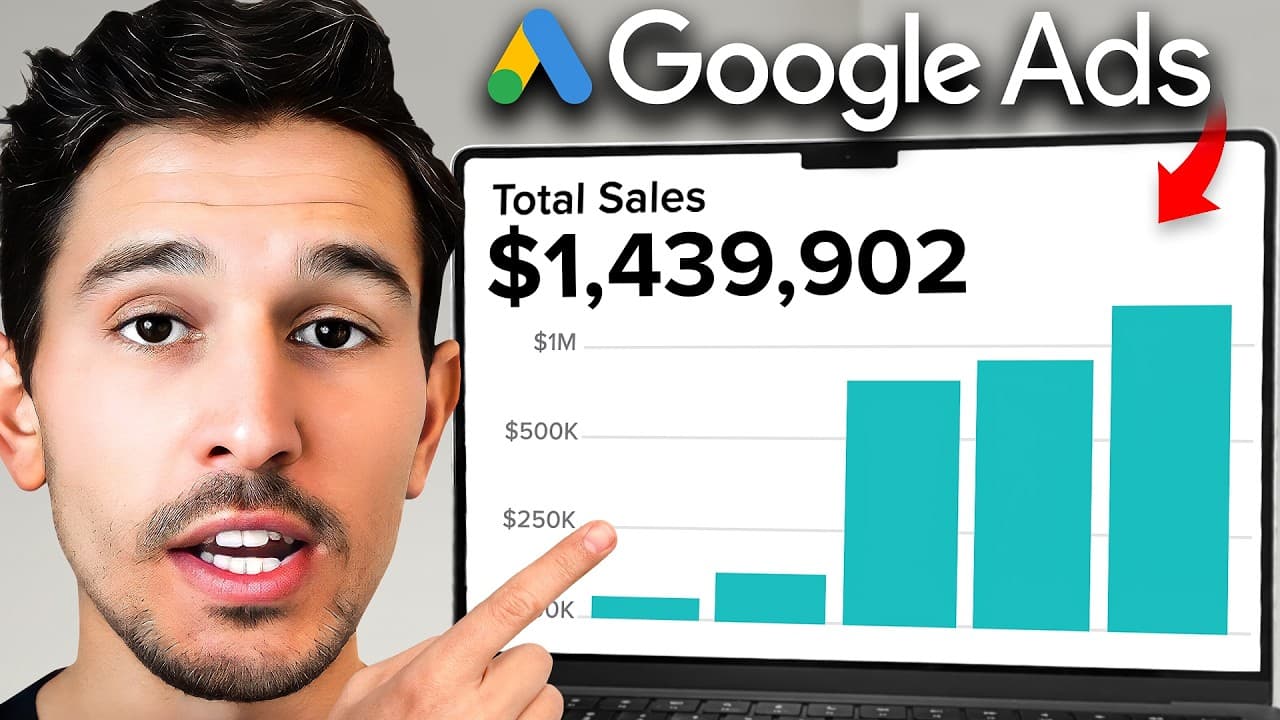
Use several coordinated Google Ads campaigns, each with a distinct role, instead of relying on a single campaign type. Separate new-customer acquisition, branded shopping, core brand search, and non-brand search so the algorithm receives useful signals while branded demand does not inflate acquisition performance or conceal problems when spending increases.
Transcript
over the past 10 years I've helped dozens of e-commerce Brands scale from 7 to eight figures using Google ads and I've always done this without using strategies that only last one or 2 weeks everything we are focused on is feeding the algorithm with the exact killer system that I'm going to go through today in this video I will reveal my exact Goog... Read More
Key Insights
- A strong Google Ads account is a coordinated collection of campaigns with distinct purposes. Performance Max, Shopping, and Search can all contribute because each reaches or captures high-intent purchasers differently while supplying the algorithm with useful signals across Google's advertising environment.
- The primary Performance Max campaign is designed to acquire incremental customers. Brand exclusions and new-customer bidding prevent existing branded demand from dominating results, which makes the campaign's reported performance a more meaningful indicator of genuine customer acquisition.
- Branded demand can make Performance Max appear stronger than it really is. When branded conversions are mixed into acquisition reporting, increased spending may produce weaker returns because additional traffic cannot match the value of customers who were already searching for the business.
- A feedless Performance Max campaign can serve as a dynamic search hybrid. It uses headlines, descriptions, long headlines, and search themes without a Shopping feed, allowing the campaign to discover relevant search traffic as traditional dynamic search ads are being phased out.
- A standard Shopping campaign can isolate branded product searches. This campaign typically receives a higher return-on-ad-spend target than new-customer Performance Max because people searching for branded products already demonstrate stronger intent and should not inflate prospecting results.
- A core exact-match brand campaign protects the business's essential brand name searches. It should focus on the most critical branded terms rather than every phrase related to the company, helping prevent competitors from capturing people explicitly seeking the brand.
- A non-brand Search campaign provides direct control over chosen keywords. Broad and exact match terms can remain in the same campaign because broad keywords help feed the algorithm, while valuable exact-match keywords anchor activity around proven, specific searches.
- Accurate conversion tracking is a prerequisite for reliable optimization. The purchase goal should not contain duplicate purchase events, tracking should show a healthy status, and UTM parameters should be included when results need to be analyzed in Google Analytics or other advertising platforms.
Install to Summarize YouTube Videos and Get Transcripts
Explore YouTube Video Summarizer or Get YouTube Transcript Extractor
Questions & Answers
Q: How should an ecommerce Google Ads account be structured?
An ecommerce account should use several campaigns with clearly separated responsibilities. A primary Performance Max campaign acquires new customers, a feedless Performance Max campaign acts as a dynamic search hybrid, standard Shopping captures branded product demand, exact-match Search protects core brand queries, and non-brand Search targets selected generic keywords. Together, these campaigns cover different types of purchase intent without mixing every objective into one campaign.
Q: How can Performance Max focus on new customers?
Configure the main Performance Max campaign around the purchase conversion goal, then optimize customer acquisition for new customers when the account has a sufficiently useful audience segment. Apply a campaign-specific brand exclusion list so branded searches cannot enter the campaign. This combination limits dependence on existing demand and makes the campaign concentrate more directly on incremental customers who have not previously purchased from the business.
Q: Why should branded searches be excluded from Performance Max?
Branded searches often convert more efficiently because those users already know the business and may already intend to buy. If those conversions remain inside Performance Max, they can raise reported returns and hide the true economics of prospecting. Excluding the brand routes branded demand into dedicated campaigns, allowing Performance Max results to reflect new-customer acquisition more accurately when the business increases spending.
Q: How does a feedless Performance Max campaign replace dynamic search ads?
A feedless Performance Max campaign can operate as a dynamic search hybrid by omitting the Shopping feed and supplying headlines, descriptions, long headlines, and relevant search themes. It can bid across available placements for both new and existing customers while excluding branded searches. The setup gives Performance Max the creative and thematic information required to discover relevant search demand without relying on a traditional dynamic search campaign.
Q: What is the purpose of a branded Shopping campaign?
A branded Shopping campaign captures product searches associated with the business's brand while keeping those conversions outside the new-customer Performance Max campaign. This separation prevents strong branded intent from overstating prospecting performance. It also allows the advertiser to use a more demanding return target for branded traffic because these shoppers are already closer to purchasing than people reached through non-brand acquisition campaigns.
Q: What keywords belong in a core brand search campaign?
A core brand search campaign should contain the business's most important branded search terms, particularly the brand name that customers use when intentionally looking for the company or product. It does not need every descriptive phrase connected to the catalog. Keeping the campaign focused helps capture the large share of explicit brand searches and reduces the chance that competitors intercept those users.
Q: Should broad and exact keywords share a non-brand campaign?
Broad and exact match keywords can be placed in the same non-brand Search campaign. A small selection of broad terms supplies the algorithm with room to find relevant demand, while the most valuable exact-match terms provide tighter control around specific searches. The strategy accepts some overlap because both match types contribute different signals and can work together under the campaign's non-brand acquisition objective.
Q: Which settings matter most in a Performance Max campaign?
The purchase conversion goal must be accurate, active, and free from duplicated purchase events. The Merchant Center feed should match the correct country of sale, the budget should be sufficient to generate regular conversions, and the return target should reflect acceptable customer-acquisition economics. Location targeting should use physical presence, brand exclusions should remove branded queries, and tracking parameters should support analysis in connected measurement platforms.
Summary & Key Takeaways
-
The recommended account structure combines Performance Max, standard Shopping, and Search campaigns. Each campaign has a defined responsibility, such as acquiring new customers, capturing branded product searches, protecting core brand queries, or finding non-brand demand. This separation makes performance easier to interpret and gives the algorithm varied, purposeful conversion signals.
-
The primary Performance Max campaign should focus on incremental customer acquisition. Purchase tracking must be configured correctly, the Merchant Center feed must match the intended country, and branded queries should be excluded. Its budget should support regular conversions, while the return-on-ad-spend target should reflect what the business can accept for new customers.
-
A feedless Performance Max campaign can function as a dynamic search hybrid by using headlines, descriptions, long headlines, and search themes instead of a Shopping feed. Standard Shopping handles branded product demand, while exact brand search protects essential brand terms. Non-brand Search combines selected broad and exact keywords for controlled prospecting.
Read in Other Languages (beta)
Share This Summary 📚
Summarize YouTube Videos and Get Video Transcripts with 1-Click
Try YouTube Summary with ChatGPT & Claude or YouTube Transcript Generator
Explore More Summaries from Sam Piliero 📚

Summarize YouTube Videos and Get Video Transcripts with 1-Click
Try YouTube Summary with ChatGPT & Claude or YouTube Transcript Generator