What Is the Jung Tolkien Red Book Connection?
TL;DR
The core claim is that Jung and Tolkien produced strikingly similar imagery and archetypal patterns in their Red Book and Middle Earth legends, suggesting a shared inner source. The discussion analyzes eye symbolism, archetypes like the wise old man, and how both authors describe inner experiences as emerging from within, not merely invented.
Transcript
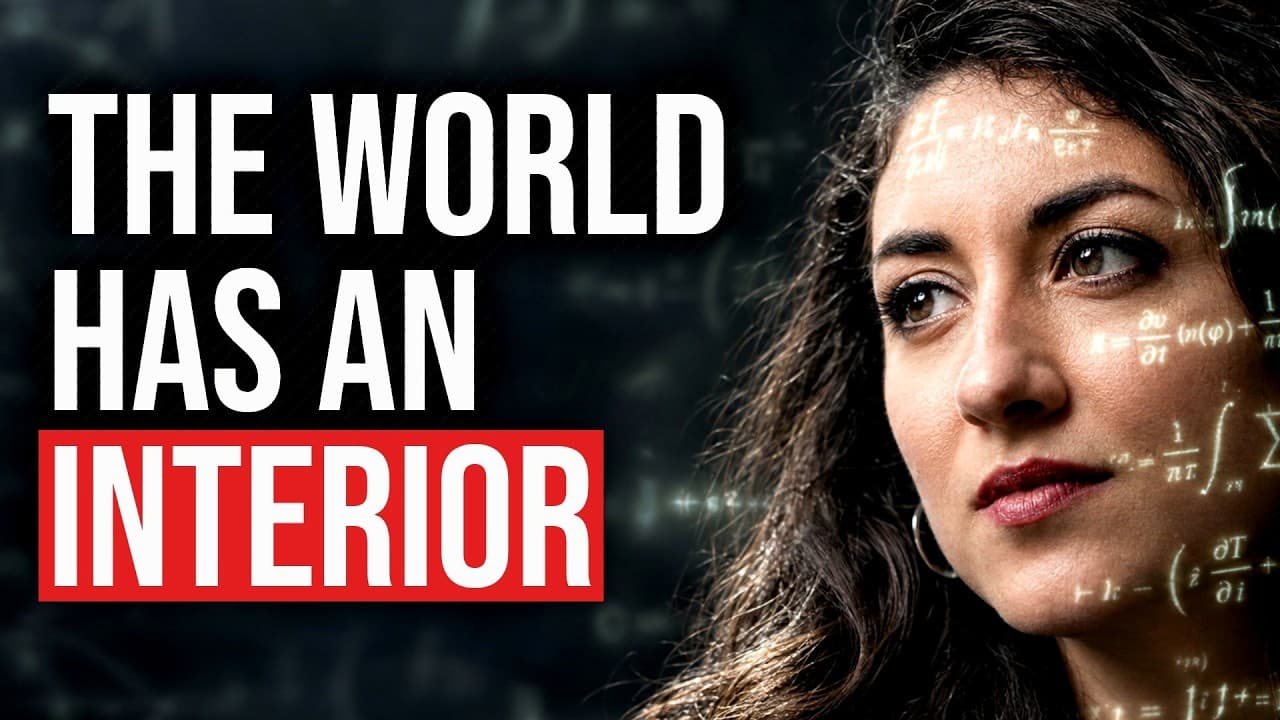
Becca: I was blown away. Jung said, “You are symbols.” And they say, “We are real, and we are not symbols.” Curt: This is Becca Tarnas, assistant professor at the California Institute of Integral Studies. Her dissertation was about the phenomenal connection between The Red Books of Carl Jung and the lesser-known Red Books of J.R.R. Tolkie... Read More
Key Insights
- Jung and Tolkien show parallel eye symbolism, with Jung describing the Eye of the Evil One and Tolkien describing the Eye of Sauron.
- The key to their connection lies in archetypes like the wise old man, which appear in both Jung and Gandalf or Philemon.
- Both authors describe their material as arising from within, not purely invented, indicating an inner source for their visions.
- The concept of active imagination is central to Jung and contrasts with Tolkien which is less explicit but similarly internal in origin.
- There is a third option to describe creativity, a co-creation between the thinker and the material being explored.
- The parallels extend beyond imagery to story patterns and character interactions, suggesting deeper structural similarities.
- Tolkien acknowledges external myths while Jung emphasizes internal experiences as the source of material.
- The debate touches on whether math and imagination reveal fixed structures or are enacted through engagement with material.
- More videos from this channel:
- More from this channel: Curt Jaimungal
Install to Summarize YouTube Videos and Get Transcripts
Explore YouTube Video Summarizer or Get YouTube Transcript Extractor
Questions & Answers
Q: What is the main claim about Jung and Tolkien in this discussion?
The main claim is that Jung and Tolkien produced strikingly similar imagery and archetypal patterns in their Red Book and Middle Earth writings, suggesting their material emerged from a shared inner source rather than being purely coincidental creations. This is supported by parallels in eye symbolism, archetypal figures like Gandalf and Philemon, and the way both describe inner experiences as arising from within.
Q: How do the Eye of the Evil One and the Eye of Sauron relate in the analysis?
The discussion notes that both authors use a red eye as a powerful symbol, with Jung calling it the Eye of the Evil One and Tolkien describing the Eye of Sauron. The parallel prompts questions about common symbolic meanings such as fear, control, and vision, and it serves as a concrete example of the deep structural parallels the researchers see between the two works.
Q: What role do archetypes play in the Jung Tolkien connection?
Archetypes are central to the connection, with the wise old man appearing as Gandalf in Tolkien and as Philemon in Jung. The speakers argue that archetypes operate as enduring psychic patterns that manifest in both authors, helping explain why similar figures recur across their works and how they guide characters and inner experiences.
Q: How is the concept of inner emergence described?
Both authors describe their material as emerging within rather than being invented from external sources. The conversation suggests that imagination arises from internal processes and is then shaped into narrative form, indicating that creativity involves an agential role for the creator while still being influenced by deeper structures and visions.
Q: What is active imagination and how does it relate to the discussion?
Active imagination is described as Jung’s method for engaging with inner visions and fantasies. The discussion uses this as a basis to compare Jung’s inner process with Tolkien’s more veiled but internally sourced storytelling, arguing that both writers draw from experiences that feel internal and authentic even if the explicit methods differ.
Q: Do the speakers think the parallels prove coincidence or something more?
The speakers argue that the sheer volume and consistency of parallels go beyond coincidence. They point to timing, imagery, and narrative patterns, as well as the way both writers describe inner experiences, to support the idea that a substantive connection exists that reflects shared psychic or imaginal processes.
Q: How do Tolkien and Jung view the origin of their material?
Jung describes his material as emerging from within through active imagination and psychological exploration, while Tolkien, though less explicit, describes his work as arising from within and feeling given rather than invented. Both imply a source beyond conscious calculation, pointing to an inner landscape that gives rise to their stories and symbols.
Q: What broader questions does this discussion raise about imagination and reality?
The conversation expands beyond the two authors to ask how imagination interacts with reality, whether archetypal imagery reflects universal psychic structures, and how to balance integrating inner experiences with objective understanding. It explores whether imagination reveals a third way of knowing that is neither purely invented nor purely discovered.
Summary & Key Takeaways
-
Becca and Curt explore the parallel between Jung and Tolkien, focusing on how inner experiences and archetypes shape their work.
-
The speakers discuss timing, imagery, and the concept of inner emergence, arguing for a co-creative process between psyche and imagination.
-
The conversation questions whether these parallels reflect real psychic structures or selective interpretation, and examines how each author frames inspiration and invention.
Read in Other Languages (beta)
Share This Summary 📚
Summarize YouTube Videos and Get Video Transcripts with 1-Click
Try YouTube Summary with ChatGPT & Claude or YouTube Transcript Generator
Explore More Summaries from Curt Jaimungal 📚


Summarize YouTube Videos and Get Video Transcripts with 1-Click
Try YouTube Summary with ChatGPT & Claude or YouTube Transcript Generator