How does process philosophy link consciousness and reality?
TL;DR
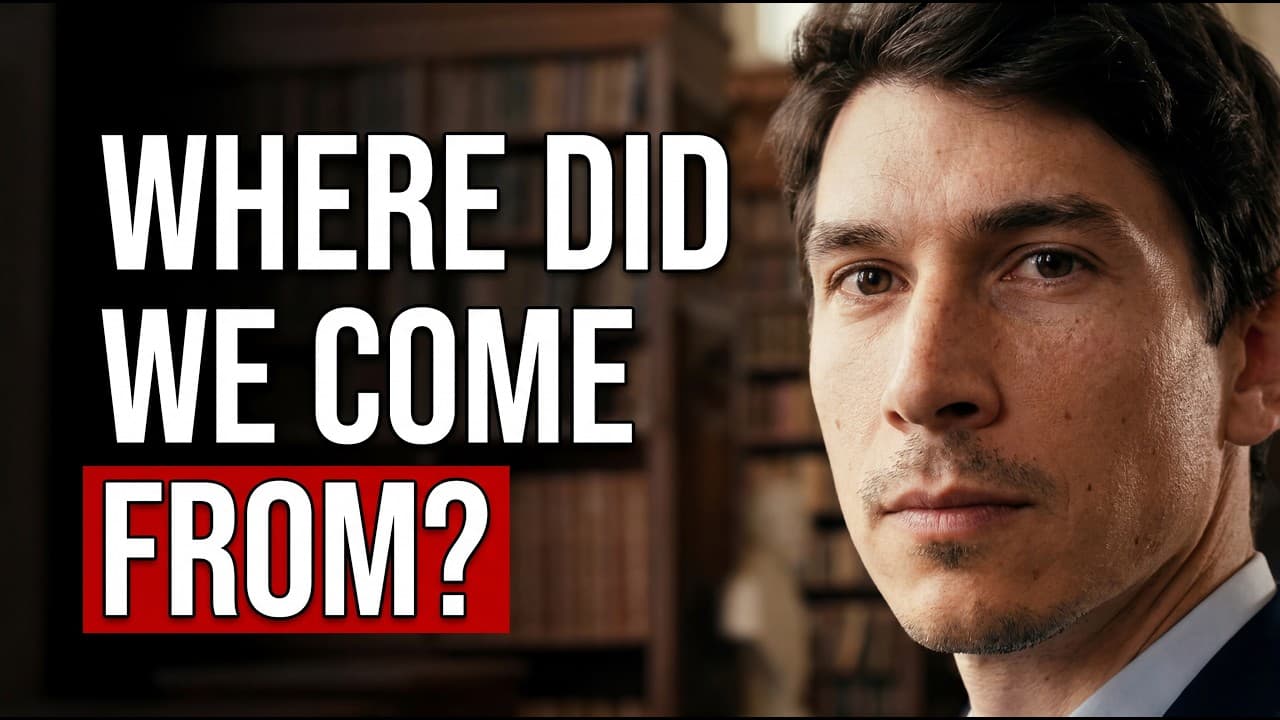
The video argues that the standard physical view of reality is limited like the Ptolemaic model and suggests mortality awareness can deepen meaning. It traces thought from Plato to Whitehead, showing how process philosophy reframes substances, universals, and God, and proposes that process thinking could help society navigate existential challenges.
Transcript
I really have a strong suspicion that our current understanding of the physical world as this gargantuan space, mostly empty, is just as short-sighted as the Ptolemaic conception of the solar system was 500 years ago. To live your life backwards from the perspective of death affords you the greatest possibility of living a meaningful life. ... Read More
Key Insights
- Consciousness and reality are linked through process philosophy, not just through physical substance.
- The shift from Platonic universals to nominalist concepts changes how we understand math, logic, and science.
- Aristotle’s substance with a dynamic potential contrasts with later static scientific models.
- Descartes and Newton moved toward viewing truths as divine commands rather than intrinsic structure, affecting modern science.
- The rise of nominalism weakens the idea of independent universals and elevates human concepts as contingent.
- Modern science challenges traditional substance ontology by highlighting relations and processes over fixed entities.
- Plato’s aporia in dialogues signals limits of rational resolution, inviting imaginative or mythical insights.
- Whitehead’s process philosophy emphasizes becoming and interrelation as a framework for understanding reality.
Install to Summarize YouTube Videos and Get Transcripts
Explore YouTube Video Summarizer or Get YouTube Transcript Extractor
Questions & Answers
Q: How can mortality awareness influence the way we live, according to the video?
Mortality awareness is presented as a catalyst for living more meaningfully by reframing daily decisions through the lens of finitude. The discussion argues that facing death can sharpen priorities, encourage self-inquiry, and motivate a shift from passive acceptance of the given world to an active exploration of how our lives connect with larger processes. This perspective ties personal meaning to evolving understanding rather than fixed outcomes, urging deliberate attention to how we develop as beings within ongoing relations.
Q: What is the core distinction between Platonic universals and nominalist thought described?
The core distinction is that Platonism posits independent, timeless universals that exist beyond minds, giving form to particulars. Nominalism denies this independent existence, treating universals as names or concepts derived from our experiences of many particulars. This shift alters how we view math, logic, and the possibility of universal truths, aligning more with contingent, human-centered interpretations.
Q: How does Aristotle’s view of substance differ from modern science’s view, as explained in the transcript?
Aristotle’s substance is dynamic, featuring potentiality and a developmental process where things become more fully what they are. Modern science, by contrast, emphasizes mathematical relations and often static descriptions that may overlook potentiality and purpose. The transcript suggests modern science sometimes fails to capture the full richness of substance because it prioritizes relations and equations over evolving becomings.
Q: Why are Descartes and Newton mentioned in relation to divine power and truth, and what shift do they illustrate?
Descartes and Newton are cited to show a shift where truth is anchored in divine power, with mathematical truths seen as true because God ordains them. This marks a break from Aristotelian substance and a move toward a theologically framed certainty. The shift illustrates how science can carry forward or depart from earlier metaphysical commitments about necessity, truth, and the role of God in governing universal laws.
Q: What problem arises with a strict Platonic view when relativity and quantum theory are considered?
A strict Platonic view, with independent universals and fixed forms, struggles to account for the relational and probabilistic aspects of relativity and quantum theory. The transcript notes that the classical substance-property framework becomes inadequate, as modern physics reveals that what exists cannot be fully captured by timeless forms alone, necessitating a more dynamic, process-oriented understanding.
Q: How does the nominalist turn affect our view of mathematics according to the talk?
Nominalism reduces universals to mental constructs derived from experience, implying that mathematical objects do not exist independently. This makes mathematics seem like a human-made system of categorization rather than an access point to a transcendent order. The talk suggests this reframing preserves divine sovereignty while making abstract truths contingent on human inquiry and perspective.
Q: What is Whitehead’s influence on the discussion of reality in this video?
Whitehead is presented as a key figure who shifts focus from static substances to dynamic processes and relations. His process philosophy describes reality as becoming and interconnected events rather than isolated objects. This framework is proposed as a way to reconcile ancient intuitions about consciousness with modern scientific insights, offering a practical lens for living with uncertainty and change.
Q: What practical implications does process thinking offer for civilizational crisis, as argued in the interview?
Process thinking offers a way to navigate civilizational crisis by emphasizing becoming, interconnection, and ongoing inquiry. It encourages self-inquiry, humility before complex systems, and a philosophy that adapts to new information. The approach seeks to foster resilience, ethical reflection, and a more integrated view of humanity with its environment, reducing dogmatic certainty and promoting thoughtful action in the face of uncertainty.
Summary & Key Takeaways
-
The discussion argues that modern science mirrors an outdated model and that a mortality-aware approach can expand our understanding of reality and life. It uses historical transitions from Plato to Aristotle, Kant and Whitehead to illustrate a shift toward processes and relations over static substances. The result is a call for introspection and renewed inquiry.
-
The conversation connects ancient ideas about universals and particulars with modern science, showing how nominalism and realism influence how we conceive mathematics and logic. It highlights how process thinking and a focus on becoming rather than fixed being can illuminate living with mortality.
-
The episode culminates in a vision where process thinking informs civilizational choice, proposing self-inquiry and philosophical clarity as tools to address contemporary crises and to re-enchant our sense of meaning and duty in everyday life.
Read in Other Languages (beta)
Share This Summary 📚
Summarize YouTube Videos and Get Video Transcripts with 1-Click
Try YouTube Summary with ChatGPT & Claude or YouTube Transcript Generator
Explore More Summaries from Curt Jaimungal 📚
Summarize YouTube Videos and Get Video Transcripts with 1-Click
Try YouTube Summary with ChatGPT & Claude or YouTube Transcript Generator