How Does Cancer Metabolism Shape Treatment?
TL;DR
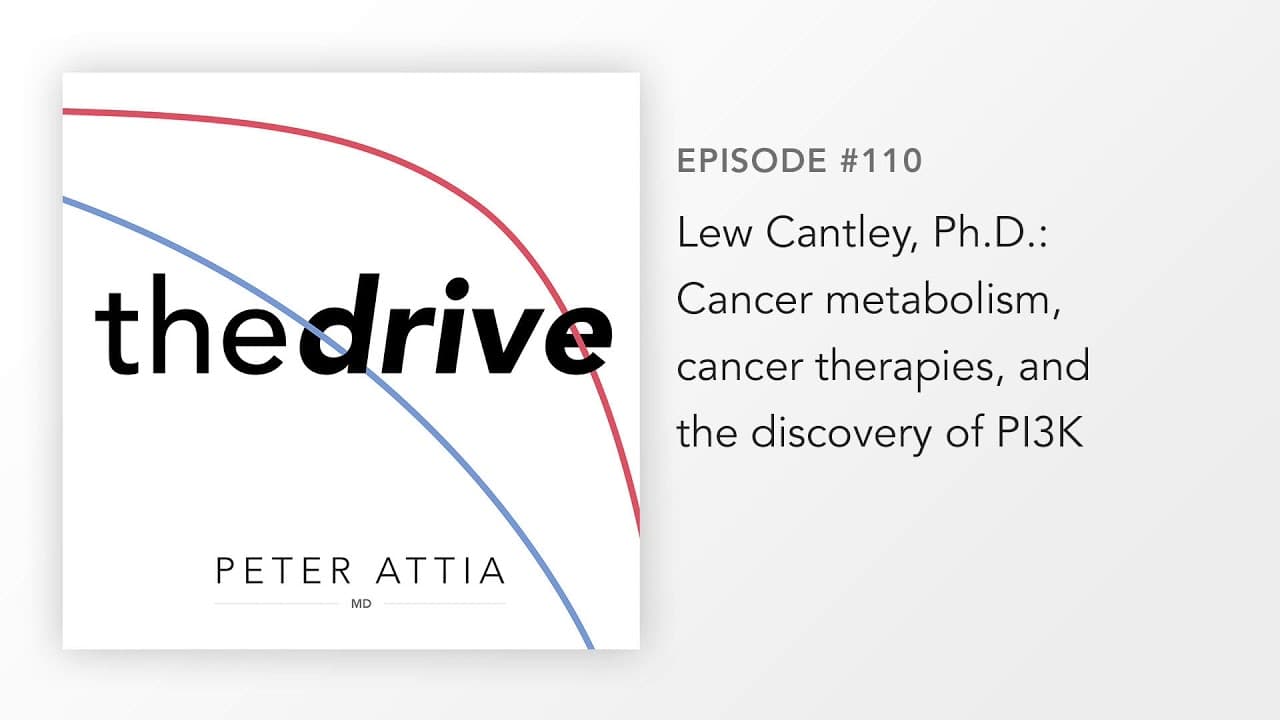
Cancer treatment may become more effective when drugs are paired with carefully prescribed nutritional strategies that address tumor metabolism and insulin signaling. Lew Cantley connects PI3K, glucose metabolism, obesity, insulin resistance, and tumor growth while emphasizing that proposed combinations of cancer drugs, diabetes drugs, and dietary interventions require clinical testing and physician supervision.
Transcript
Hey, everyone. Welcome to the "Drive" podcast. I'm your host, Peter Attia. This podcast, my website, and my weekly newsletter all focus on the goal of translating the science of longevity into something accessible for everyone. Our goal is to provide the best content in health and wellness, full stop, and we've assembled a great team of analysts to... Read More
Key Insights
- Cancer has a metabolic dimension involving glucose metabolism, mitochondria, insulin signaling, and tumor growth. Cantley presents this perspective as more nuanced than a simple description of the Warburg Effect and uses his research to connect cellular metabolism with questions about cancer treatment.
- PI3K is a signaling pathway discovered through Cantley’s research in the mid-1980s. The discovery produced implications across cancer, diabetes, and autoimmune disease, and it provides a foundation for discussing how metabolic signals can affect cancer biology and therapeutic responses.
- Obesity and insulin resistance are connected to cancer within the research framework discussed. The conversation examines how insulin responses and sugar consumption may relate to tumor growth, while avoiding the claim that these factors alone explain every cancer or determine an individual patient’s outcome.
- Prescriptive nutrition may increase the efficacy of certain cancer drugs. Cantley’s work explores pairing nutritional interventions with pharmaceuticals, including PI3K inhibitors, but the discussion explicitly states that combinations involving diets, diabetes drugs, and cancer drugs must be considered with a treating physician.
- Sugar sources can produce meaningfully different questions about metabolism. The episode distinguishes natural sugar, high-fructose corn syrup, whole fruit, and fruit juice while examining insulin response and cancer growth, rather than treating every sugar-containing food as biologically or nutritionally identical.
- Unexpected experimental findings can reveal more important biology than results that fit a simple explanation. Cantley argues that researchers should investigate surprising outcomes at the biochemical and chemical levels because resolving the contradiction can expose complexity and open an entirely new field.
- Scientific discovery depends on curiosity, persistence, collaboration, and serendipity. Cantley’s account emphasizes noticing results that do not make sense, refusing to dismiss them, and using experiments to determine why the original explanation failed rather than relying primarily on rote memorization.
- Clinical evidence is necessary before experimental combinations become personal treatment advice. The episode discusses an enrolling trial involving stage 4 breast cancer and endometrial cancer, while clearly warning that detailed conversations about drugs and nutritional therapies cannot replace an established doctor-patient relationship.
Install to Summarize YouTube Videos and Get Transcripts
Explore YouTube Video Summarizer or Get YouTube Transcript Extractor
Questions & Answers
Q: How does cancer metabolism affect treatment strategies?
Cancer metabolism creates potential treatment opportunities because tumor growth is connected to glucose metabolism, insulin signaling, mitochondria, and pathways such as PI3K. The discussion considers whether changing the metabolic environment through carefully prescribed nutrition could improve pharmaceutical efficacy. These strategies remain matters for research, clinical trials, and consultation with a physician rather than self-directed treatment.
Q: What is PI3K and why is it important in cancer research?
PI3K is a signaling pathway discovered through Lew Cantley’s research in the mid-1980s. Its significance extends primarily to cancer but also reaches diabetes and autoimmune disease. In cancer research, the pathway helps connect cellular signaling with metabolism and therapeutic response, creating a basis for developing inhibitors and studying combinations that might improve their effectiveness.
Q: How are obesity and insulin resistance connected to cancer?
Obesity and insulin resistance are discussed as metabolic conditions connected with cancer and tumor growth. The proposed framework focuses on how insulin responses and glucose metabolism can influence the environment in which tumors grow. The source does not reduce cancer to obesity or insulin resistance, but presents their relationship as an important subject for mechanistic research and treatment studies.
Q: Can eating sugar cause tumors to grow faster?
Cantley discusses research into the relationship between sugar consumption, insulin response, and tumor growth, including findings from a 2019 paper. The source supports a metabolic connection worth investigating, but it does not establish that sugar alone causes every tumor to grow faster. Any dietary response should therefore reflect medical guidance and evidence relevant to the patient’s specific cancer.
Q: Are fruit and fruit juice equivalent for insulin response?
The episode treats whole fruit and fruit juice as distinct subjects when considering sugar, insulin response, and cancer growth. It also distinguishes natural sugar from high-fructose corn syrup instead of grouping all sources together. The supplied material does not provide a detailed quantitative comparison, so it supports recognizing the distinction without assigning specific effects or numerical differences.
Q: Can a ketogenic diet improve PI3K inhibitor efficacy?
A ketogenic dietary strategy is discussed as a possible way to increase the efficacy of PI3K inhibitors by pairing nutrition with pharmaceutical treatment. It is presented as a research and clinical-testing question, not as an established universal treatment. Patients should not combine a restrictive diet with cancer medication without discussing the plan with the physician managing their care.
Q: Why are unexpected results important in scientific discovery?
Unexpected results can indicate that the simplest explanation is incomplete and that more complicated biology is operating. Cantley argues that researchers should focus closely on why such results occurred at the biochemical and chemical levels. Explaining the discrepancy can overturn an assumption, expose a new mechanism, and sometimes open a new field of investigation.
Q: What cancers are included in the clinical trial discussed?
The clinical trial described in the supplied material is enrolling patients with stage 4 breast cancer and endometrial cancer. It is connected to Cantley’s work on pairing treatment approaches, including nutrition and pharmaceuticals. The source provides no further eligibility criteria, treatment protocol, or outcome data, so interested patients would need formal trial information and physician guidance.
Summary & Key Takeaways
-
Lew Cantley describes cancer as a metabolic as well as genetic disease, examining mitochondria and a nuanced interpretation of the Warburg Effect. His research connects glucose metabolism and PI3K signaling with tumor biology, providing a framework for investigating how sugar consumption, insulin responses, obesity, and insulin resistance may influence cancer growth.
-
The discussion explores whether prescriptive nutritional therapies could improve the efficacy of cancer drugs, particularly PI3K inhibitors. Ketogenic dietary strategies and combinations involving diabetes or cancer medications are presented as subjects of research and clinical testing, not as general medical advice or treatments that patients should undertake without their physicians.
-
Cantley recounts the discovery process behind PI3K and argues that unexpected experimental results often open productive scientific directions. His experience illustrates how curiosity, biochemical investigation, collaboration, and attention to findings that contradict simple explanations can produce breakthroughs with implications for cancer, diabetes, autoimmune disease, and patient care.
Read in Other Languages (beta)
Share This Summary 📚
Summarize YouTube Videos and Get Video Transcripts with 1-Click
Try YouTube Summary with ChatGPT & Claude or YouTube Transcript Generator
Explore More Summaries from Peter Attia MD 📚

Summarize YouTube Videos and Get Video Transcripts with 1-Click
Try YouTube Summary with ChatGPT & Claude or YouTube Transcript Generator