What Is SB 1047? California's AI Legislation Debate
TL;DR
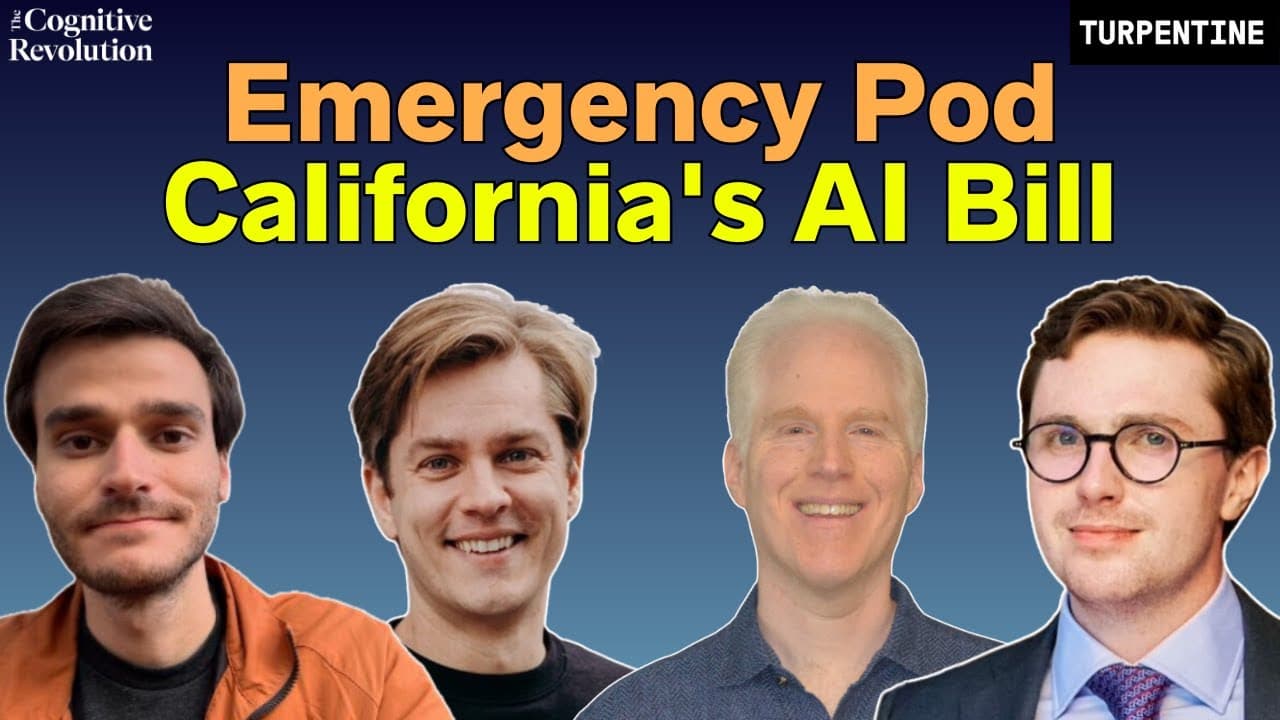
SB 1047 is a proposed AI legislation in California aimed at regulating large-scale AI models to prevent potential catastrophic risks. It mandates safety standards and testing for AI models with significant computational power, focusing on preventing mass casualties or major infrastructure damage. The bill has sparked debate over its potential impact on innovation and regulation, with experts discussing its implications and suggesting improvements.
Transcript
hello and welcome to the cognitive Revolution where we interview Visionary researchers entrepreneurs and Builders working on the frontier of artificial intelligence each week we'll explore their revolutionary ideas and together we'll build a picture of how AI technology will transform work life and Society in the coming years I'm Nathan lens joined... Read More
Key Insights
- SB 1047 targets AI models capable of causing mass casualties or $500 million in damages.
- The bill sets a threshold of 10^26 flops for AI models to be regulated, aligning with the executive order.
- It requires safety standards during training and testing to ensure AI models are not hazardous.
- The legislation aims to prevent the release of AI models with latent dangerous capabilities.
- There is debate over whether the bill favors large companies and stifles open-source development.
- The bill includes provisions for third-party testing and whistleblower protection.
- Critics argue the bill may hinder innovation and set a precedent for regulating software.
- Supporters believe the bill addresses urgent risks and promotes responsible AI development.
Install to Summarize YouTube Videos and Get Transcripts
Explore YouTube Video Summarizer or Get YouTube Transcript Extractor
Questions & Answers
Q: What is the main goal of California's SB 1047 AI legislation?
The main goal of California's SB 1047 AI legislation is to regulate large-scale AI models to prevent potential catastrophic risks, such as mass casualties or significant infrastructure damage. The bill mandates safety standards and testing for AI models with substantial computational power, aiming to ensure that these models do not pose significant threats to society.
Q: How does SB 1047 define the threshold for AI models to be regulated?
SB 1047 sets a threshold of 10^26 flops for AI models to be regulated, which aligns with the executive order. This threshold is intended to identify AI models with substantial computational power that could potentially cause mass casualties or $500 million in damages. The bill requires such models to adhere to safety standards and undergo thorough testing.
Q: What are the safety requirements for AI models under SB 1047?
Under SB 1047, AI models that meet the threshold of 10^26 flops must implement safety standards during the training process to prevent the release of models with hazardous capabilities. This includes ensuring the ability to perform a full shutdown and conducting extensive testing to verify that the models do not pose significant risks before deployment.
Q: Why is there controversy over SB 1047's impact on open-source AI development?
There is controversy over SB 1047's impact on open-source AI development because the bill holds developers accountable for any dangerous capabilities that could be exposed through downstream modifications. Critics argue that this could stifle open-source innovation and favor large companies that have the resources to comply with the bill's requirements.
Q: What role does third-party testing play in SB 1047?
Third-party testing plays a role in SB 1047 by providing an additional layer of scrutiny to ensure AI models do not exhibit hazardous capabilities. The bill mentions third-party audits as appropriate, allowing independent testers to assess the models' safety and verify compliance with the legislation's standards before deployment.
Q: How does SB 1047 address the potential for AI models to cause mass casualties?
SB 1047 addresses the potential for AI models to cause mass casualties by setting a high threshold for regulation and requiring rigorous safety standards and testing. Developers must ensure that their models do not have latent dangerous capabilities that could be exploited to cause significant harm, such as mass casualties or infrastructure damage.
Q: What are some suggested improvements to SB 1047?
Some suggested improvements to SB 1047 include creating clearer definitions of what constitutes a derivative model versus a non-derivative model, implementing a sunset provision for the bill to allow for updates and improvements, and enhancing third-party testing to provide more transparency and accountability in the AI development process.
Q: What are the potential consequences of SB 1047 for AI innovation?
The potential consequences of SB 1047 for AI innovation include the risk of stifling open-source development and favoring large companies that can comply with the bill's requirements. Critics argue that the legislation could create new regulatory risks and hinder the rapid advancement of AI technology, while supporters believe it is necessary to address urgent safety concerns.
Summary & Key Takeaways
-
SB 1047 is California's proposed AI legislation focused on regulating AI models with significant computational power to prevent catastrophic risks. It mandates safety standards and testing to ensure these models do not pose threats such as mass casualties or infrastructure damage. The bill has sparked a debate over its potential impact on innovation and regulation, with experts discussing its implications and suggesting improvements.
-
The legislation sets a threshold of 10^26 flops for AI models to be regulated, aligning with the executive order. It requires developers to ensure safety during training and testing phases, preventing the release of models with latent dangerous capabilities. The bill aims to address urgent risks while promoting responsible AI development.
-
Critics argue that SB 1047 may favor large companies and stifle open-source development, while supporters believe it addresses pressing risks in AI development. The discussion highlights the need for a balance between innovation and regulation, with suggestions for improvements such as clearer definitions and sunset provisions.
Read in Other Languages (beta)
Share This Summary 📚
Summarize YouTube Videos and Get Video Transcripts with 1-Click
Try YouTube Summary with ChatGPT & Claude or YouTube Transcript Generator
Explore More Summaries from Cognitive Revolution "How AI Changes Everything" 📚





Summarize YouTube Videos and Get Video Transcripts with 1-Click
Try YouTube Summary with ChatGPT & Claude or YouTube Transcript Generator