What Is Daniel Miessler's PAI, and How Does Personal AI Infrastructure Activate Human Agency and Creativity?
TL;DR
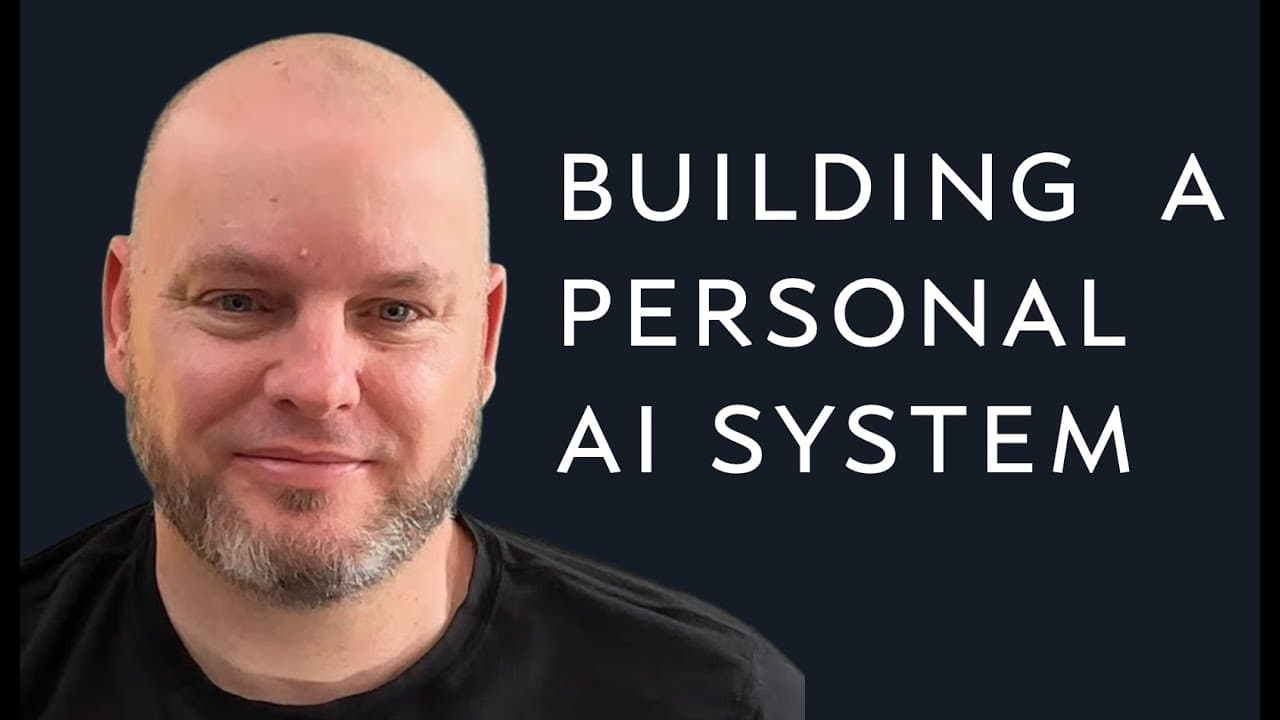
Daniel Miessler's PAI, or Personal AI Infrastructure, is an integrated AI system built around one person and focused on that person's goals. It uses the TLOS framework for rich context, a file-system approach to memory, multiple model providers, subagents, hooks, and skills. Miessler designed it to automate routine work and increase human activation, making the architecture and lessons behind PAI worth exploring.
Transcript
Hello and welcome back to the cognitive revolution. Today my guest is Daniel Mesler, a cyber security veteran, founder of the unsupervised learning newsletter and creator of PI P AI, the personal AI infrastructure framework. With the recent explosion of interest in Anthropics Cloud Code and this week's release of Claude Codework, the timing of this... Read More
Key Insights
- Daniel Miessler's Personal AI Infrastructure (PAI) aims to enhance human creativity and agency by integrating AI into personal workflows.
- PAI uses the TELOS framework to define purpose, goals, and strategies, providing AI with rich context to assist users effectively.
- Miessler envisions a future where single human owners are supported by AI agents, automating routine tasks and focusing on personal goals.
- AI is transforming cybersecurity by enabling rapid testing and personalized spear-phishing attacks, necessitating continuous defensive monitoring.
- Scaffolding is crucial for turning frontier models into true digital assistants, making AI more contextually aware and user-focused.
- Miessler's work highlights the potential for AI to reshape individual working habits, making them more efficient and goal-oriented.
- With AI's advancement, corporations might reduce human headcount, relying more on adaptable AI knowledge workers.
- Miessler believes in the importance of giving AI permission to fail, reducing undesirable behaviors like hallucination and task faking.
Install to Summarize YouTube Videos and Get Transcripts
Explore YouTube Video Summarizer or Get YouTube Transcript Extractor
Questions & Answers
Q: What is Daniel Miessler's PAI?
Daniel Miessler's PAI is a Personal AI Infrastructure framework built around a single person and focused on that person's goals. It combines structured context, memory, model providers, subagents, hooks, and skills to turn a frontier model into a more capable digital assistant.
Q: How does Personal AI Infrastructure support human agency and creativity?
PAI supports what Miessler calls human activation, helping people recognize that they can be more than cogs in a machine and that their ideas are worth developing and sharing. By automating routine work, the system is intended to let its owner focus more directly on personal goals.
Q: What is the TLOS framework in PAI?
The TLOS framework helps individuals or organizations articulate their purpose, mission, goals, problems, strategies, and more. This material gives PAI rich context at the start of every session.
Q: How does PAI handle memory?
PAI uses a file-system approach to memory. Multiple levels of summarization and abstraction help the AI navigate the user's history.
Q: How does PAI evaluate whether it is helping its user?
The system tracks sentiment and proactively assesses its own performance. It uses those assessments to gauge how well it is helping Miessler make progress toward his goals.
Q: How does PAI use multiple models and subagents?
Miessler integrates multiple model providers and orchestrates subagents within PAI. Those subagents handle tasks ranging from security tests to deep research.
Q: What do hooks and skills do in PAI?
Hooks and skills allow the system to review and evaluate its own work. They can also enable it to upgrade itself based on new feature releases.
Q: Why does Daniel Miessler give AI permission to fail?
Miessler uses permission to fail as a principle for reducing undesirable AI behavior. The transcript specifically connects it with reducing hallucination and task faking.
Summary & Key Takeaways
-
Daniel Miessler's Personal AI Infrastructure (PAI) aims to activate human creativity by integrating AI into personal workflows. Using the TELOS framework, PAI helps define purpose and goals, enabling AI to assist effectively. Miessler envisions AI agents supporting single human owners, automating routine tasks and focusing on personal goals.
-
AI's role in cybersecurity is transforming, with capabilities for rapid testing and personalized spear-phishing attacks. Continuous defensive monitoring is necessary to counter these threats. Scaffolding is crucial for turning frontier models into digital assistants, making AI more contextually aware and user-focused.
-
Miessler's work suggests AI can reshape individual working habits, making them more efficient and goal-oriented. As AI advances, corporations might reduce human headcount, relying on adaptable AI knowledge workers. Giving AI permission to fail is important to reduce undesirable behaviors like hallucination and task faking.
Read in Other Languages (beta)
Share This Summary 📚
Summarize YouTube Videos and Get Video Transcripts with 1-Click
Try YouTube Summary with ChatGPT & Claude or YouTube Transcript Generator
Explore More Summaries from Cognitive Revolution "How AI Changes Everything" 📚

Summarize YouTube Videos and Get Video Transcripts with 1-Click
Try YouTube Summary with ChatGPT & Claude or YouTube Transcript Generator