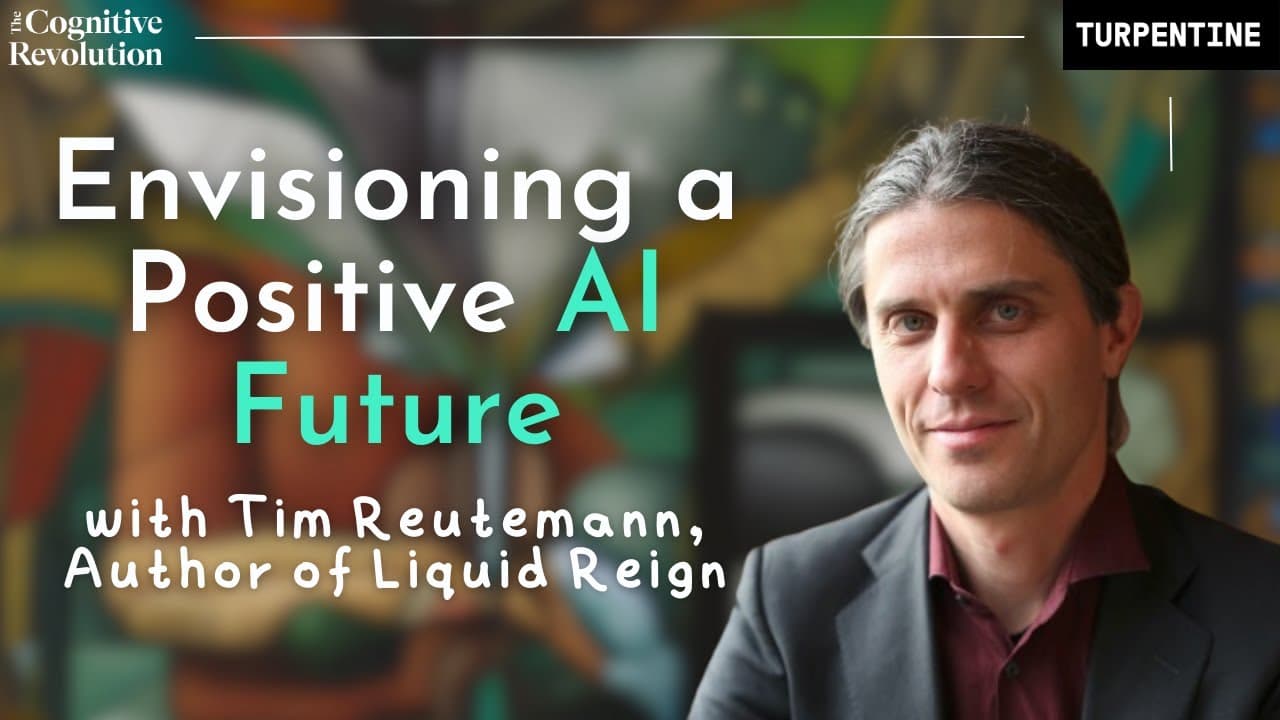
How AI Shapes a Positive Future: Insights from Liquid Reign
TL;DR
AI can reshape political participation through liquid democracy, where votes are dynamic and can be delegated to trusted individuals or algorithms. Advanced AI systems paired with biometric identity verification can automate and enhance governance, ensuring fair distribution of resources and creating a more engaged society. This vision includes AI-assisted rehabilitation and immersive gaming experiences, demonstrating technology's potential to improve lives.
Transcript
your vote is basically like this pool of energy that you can distribute to different topics and you can distribute it through other people say food price regulation then I see a cybernetic algorithm that AI manage that just makes sure everybody always has enough to eat and it's always nutritious a relatively stable AI that just does that and I can ... Read More
Key Insights
- Liquid democracy allows votes to be redistributed to trusted individuals or AI, enhancing political participation.
- AI-managed systems can ensure equitable distribution of resources, such as food, contributing to societal stability.
- Biometric identity verification, like using retina or DNA, enhances security and personal agency in AI systems.
- Advanced AI can assist in rehabilitation, providing personalized recovery programs through VR and neurosimulation.
- Immersive VR experiences offer new ways to engage with content, from gaming to therapy, with potential risks of addiction.
- Open source AI models require robust security measures to prevent malicious use and ensure trust.
- Privacy and surveillance in AI systems must balance security with autonomy, using encryption and controlled access.
- A positive AI future involves decentralized, community-driven governance, leveraging technology for societal benefit.
Install to Summarize YouTube Videos and Get Transcripts
Explore YouTube Video Summarizer or Get YouTube Transcript Extractor
Questions & Answers
Q: How does liquid democracy work with AI?
Liquid democracy allows individuals to delegate their votes to trusted people or AI systems, enhancing political participation. In an AI-integrated system, votes can be dynamically assigned based on expertise or preference. This flexibility encourages informed decision-making and more equitable representation, as individuals can choose the best representatives for specific issues.
Q: What role does AI play in resource distribution?
AI-managed systems can ensure equitable resource distribution by monitoring and adjusting supply based on needs. For example, a stable AI could manage food distribution, ensuring everyone has access to nutritious meals. This automation reduces inequality and improves societal stability by addressing resource scarcity efficiently and fairly.
Q: How is biometric identity verification used in AI systems?
Biometric identity verification in AI systems uses unique physical characteristics, such as retina patterns or DNA, to verify identity. This method enhances security and personal agency, allowing individuals to interact with AI systems confidently. It ensures that personal data is protected and transactions are secure, fostering trust in digital interactions.
Q: What are the benefits and risks of VR in rehabilitation?
VR in rehabilitation provides personalized recovery programs that can improve physical and cognitive functions. Through immersive experiences, patients engage in exercises tailored to their needs, enhancing motivation and outcomes. However, the risk of addiction to hyper-stimulating environments is a concern, necessitating careful management and regulation to ensure responsible use.
Q: How can open source AI models be secured?
Securing open source AI models involves implementing robust security measures, such as encryption and controlled access. Ensuring transparency in development and maintaining logs of access can prevent malicious use. Collaboration among developers to identify vulnerabilities and establish best practices is crucial for maintaining trust and reliability in open source AI.
Q: What challenges exist in managing privacy and surveillance in AI systems?
Managing privacy and surveillance in AI systems requires balancing security with individual autonomy. Encryption and controlled access to data are essential to protect privacy. Establishing clear guidelines for data use and ensuring that surveillance is transparent and accountable can prevent misuse and maintain public trust in AI technologies.
Q: How can AI support decentralized governance?
AI can support decentralized governance by facilitating community-driven initiatives and decision-making processes. Through platforms that enable liquid democracy and direct participation, AI helps aggregate preferences and streamline communication. This approach empowers local communities to address their unique needs and fosters a more responsive and adaptable governance structure.
Q: What measures can prevent addiction to immersive technologies?
Preventing addiction to immersive technologies involves setting usage limits and creating awareness of potential risks. Implementing regulatory frameworks that require warning labels and default settings to limit exposure can help. Encouraging responsible use and providing support for individuals struggling with addiction are essential to mitigate the negative impacts of immersive technology use.
Summary & Key Takeaways
-
Liquid democracy, facilitated by AI, transforms political engagement by allowing dynamic vote delegation to trusted individuals or algorithms. This system enhances participation and decision-making, promoting a fairer distribution of resources. AI's role extends to identity verification through biometrics, ensuring secure and autonomous interactions.
-
Advanced technologies like VR and neurosimulation aid in rehabilitation and provide immersive experiences, though they pose risks of addiction. The integration of AI in daily life requires careful management of privacy and surveillance, emphasizing encryption and controlled access to protect individual autonomy.
-
A future shaped by AI envisions decentralized governance and community-driven initiatives, leveraging technology for societal benefit. Open source AI models must implement robust security measures to prevent misuse and maintain trust, ensuring a positive and equitable technological landscape.
Read in Other Languages (beta)
Share This Summary 📚
Summarize YouTube Videos and Get Video Transcripts with 1-Click
Try YouTube Summary with ChatGPT & Claude or YouTube Transcript Generator
Explore More Summaries from Cognitive Revolution "How AI Changes Everything" 📚





Summarize YouTube Videos and Get Video Transcripts with 1-Click
Try YouTube Summary with ChatGPT & Claude or YouTube Transcript Generator