How to Find Peace by Living in the Present
TL;DR
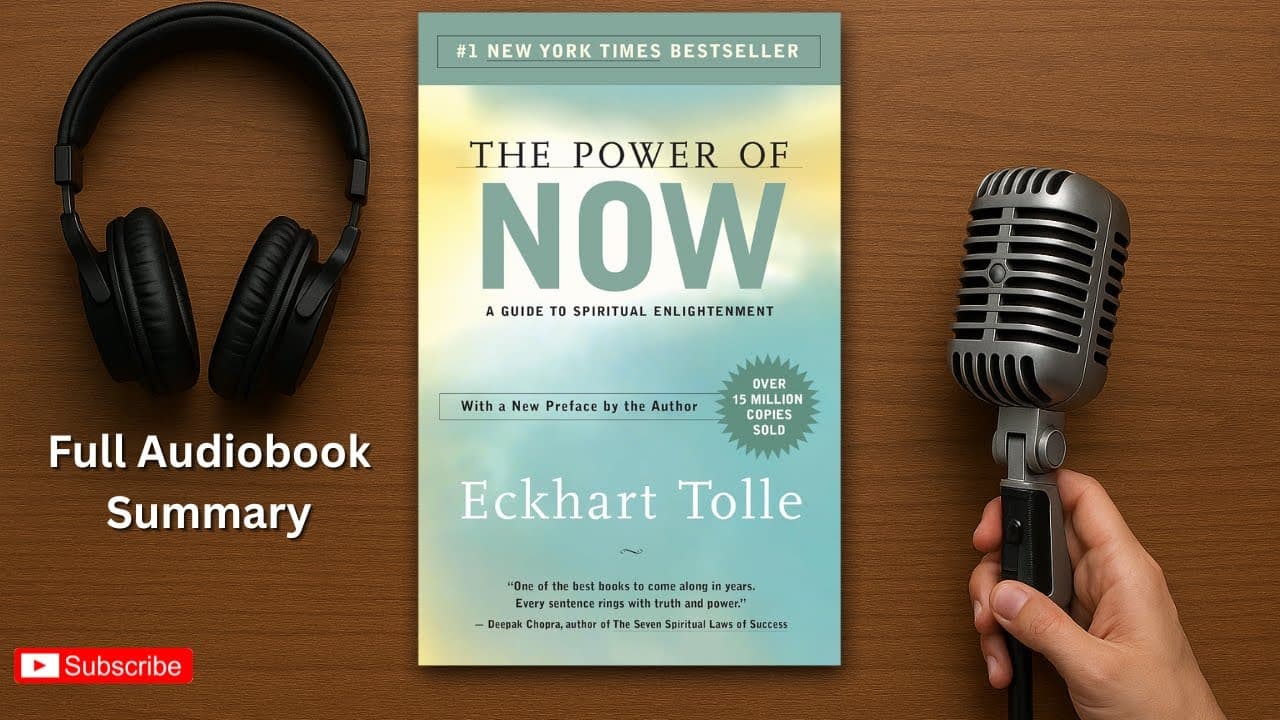
Freedom from psychological suffering begins by observing thoughts and emotions instead of treating them as your identity. Returning attention to the present moment creates space around compulsive thinking, reduces resistance to what is, and weakens accumulated emotional pain. Thought remains useful, but it serves awareness rather than controlling it.
Transcript
Introduction. Thank you for listening to this audiobook summary. Your time is precious and I'm grateful you chose to spend it here. If you find value in this journey, please subscribe and share it with someone who may also need it. Now, let us begin. Have you ever felt trapped in a storm of thoughts, carried away by worries of the future or memorie... Read More
Key Insights
- Identification with the mind is presented as the primary obstacle to enlightenment because it reduces identity to an incessant stream of opinions, memories, judgments, doubts, and fears. Recognizing thoughts as mental events rather than the self is described as the first step toward freedom.
- Awareness is the consciousness that perceives thinking, not another thought produced by the mind. When a person watches the thinker as an observer, a gap can appear in mental activity, providing a direct experience of silent presence and separation from compulsive thought.
- Thinking is a useful tool rather than an enemy that must be eliminated. The problem begins when it operates continuously and leaves no room for awareness. In a more balanced state, thought serves consciousness and can be used when necessary without defining or controlling the person.
- The present moment is the only place where being can be accessed. Enlightenment is therefore described not as a future accomplishment, but as recognition of the awareness already present beneath mental noise. Rooting attention in the now allows thought to operate with greater clarity.
- Emotions are bodily reflections of mental activity. Threatening thoughts may produce fear and contraction, judgmental thoughts may produce anger and tension, and painful memories may produce heaviness. These emotions can then reinforce the thoughts that generated them, sustaining a recurring cycle of suffering.
- Direct observation changes a person's relationship with emotion. Feeling fear, sadness, or tension as energy in the body allows the emotion to be seen without resistance or explanation. The feeling may remain temporarily, but it is no longer treated as a permanent identity.
- Resistance to the present creates unnecessary psychological pain by setting reality against the mind's demand that circumstances should be different. Accepting what is does not erase physical pain, but it can prevent worry, anger, guilt, regret, and fearful projection from adding further suffering.
- The pain body is described as accumulated emotional pain that can be activated by present circumstances. Once triggered, it seeks reinforcement through drama, conflict, and negative thinking. Conscious recognition separates the observer from this old pattern, and continued presence gradually weakens its hold.
- Related book: The Power of Now
- Export your Kindle highlights to Glasp: How to Download Highlights and Notes from Kindle
- More videos about this book:
- More videos with Eckhart Tolle:
Install to Summarize YouTube Videos and Get Transcripts
Explore YouTube Video Summarizer or Get YouTube Transcript Extractor
Questions & Answers
Q: How can I stop identifying with my thoughts?
Begin by watching thoughts as they arise instead of automatically following or believing them. Listen to the voice in your head as an observer, without becoming a participant in every judgment, memory, or worry. Even a brief gap between thoughts can reveal that you are the awareness noticing mental activity. Repeating this practice allows presence to replace compulsive thinking gradually.
Q: What does it mean to watch the thinker?
Watching the thinker means noticing the mind's internal voice from the position of an observer. Rather than becoming absorbed in each story, doubt, fear, or opinion, you recognize it as a passing thought. This observation creates space between awareness and mental activity. Within that space, silent presence becomes noticeable, and the mind begins to lose its role as master.
Q: Does living in the present require eliminating thought?
Living in the present does not require eliminating thought. Thinking remains essential for daily life and can function as a useful tool. The difficulty arises when thought becomes compulsive and occupies all attention. Presence allows a person to use the mind when needed while remaining rooted in awareness, so thought serves consciousness instead of controlling identity and experience.
Q: How do thoughts and emotions reinforce each other?
Thoughts create bodily reactions, and those reactions can strengthen the thoughts that caused them. A threatening thought may generate fear and physical contraction, while a judgment may produce anger and tension. The resulting emotion then gives the mental story additional force, creating a repeating loop. Awareness interrupts this cycle by observing both the thought and its bodily expression.
Q: How should difficult emotions be handled in the present moment?
Difficult emotions can be met by feeling them directly in the body without resistance or excessive explanation. Notice where fear, sadness, anger, or tension appears, such as the belly, chest, or shoulders. Treat the feeling as temporary energy rather than personal identity. Presence may not remove it immediately, but it reduces identification and allows unconscious patterns to become visible.
Q: Why does resistance to the present cause suffering?
Resistance creates an internal conflict between what is happening and what the mind believes should be happening. The mind may replay injustice, regret the past, or project fear into the future, adding psychological distress to the current situation. Allowing the present moment to exist without this mental opposition removes fuel from suffering and prevents additional layers of pain from forming.
Q: What is the pain body and how is it triggered?
The pain body is described as accumulated emotional pain left by unresolved hurts. Present events can awaken this stored pattern, causing anger or despair that is much stronger than the immediate circumstance appears to justify. Once active, it seeks more negativity, drama, and conflict. Recognizing it as an old energy pattern prevents it from being mistaken for the self.
Q: How can awareness weaken the pain body?
Awareness weakens the pain body by observing it without identifying with its reactions or feeding it through further negative thinking. When the pattern appears, remaining present establishes a distinction between consciousness and accumulated pain. The reaction is then seen as something occurring within awareness, not as personal identity. Each episode of conscious observation gradually reduces the pattern's power and grip.
Summary & Key Takeaways
-
The central teaching is that thoughts are not the self. People suffer when they identify completely with the voice in their head and accept its memories, judgments, and worries as reality. Observing the thinker creates a silent gap in mental activity, revealing the awareness that notices every thought without being controlled by it.
-
Present awareness offers a path out of unnecessary psychological pain. Resistance arises when the mind insists that the current moment should be different, adding worry, anger, guilt, or regret to existing difficulty. Allowing the present to exist without mental opposition removes fuel from suffering and changes a person's relationship with discomfort.
-
Old emotional pain can persist as a recurring pattern called the pain body. Present events may activate this stored pain and provoke reactions that exceed the immediate situation. Watching the pattern without identifying with it separates awareness from the reaction. Repeated observation weakens its influence and prevents additional conflict from feeding it.
Read in Other Languages (beta)
Share This Summary 📚
Summarize YouTube Videos and Get Video Transcripts with 1-Click
Try YouTube Summary with ChatGPT & Claude or YouTube Transcript Generator