How to Live in the Present and Quiet Your Mind
TL;DR
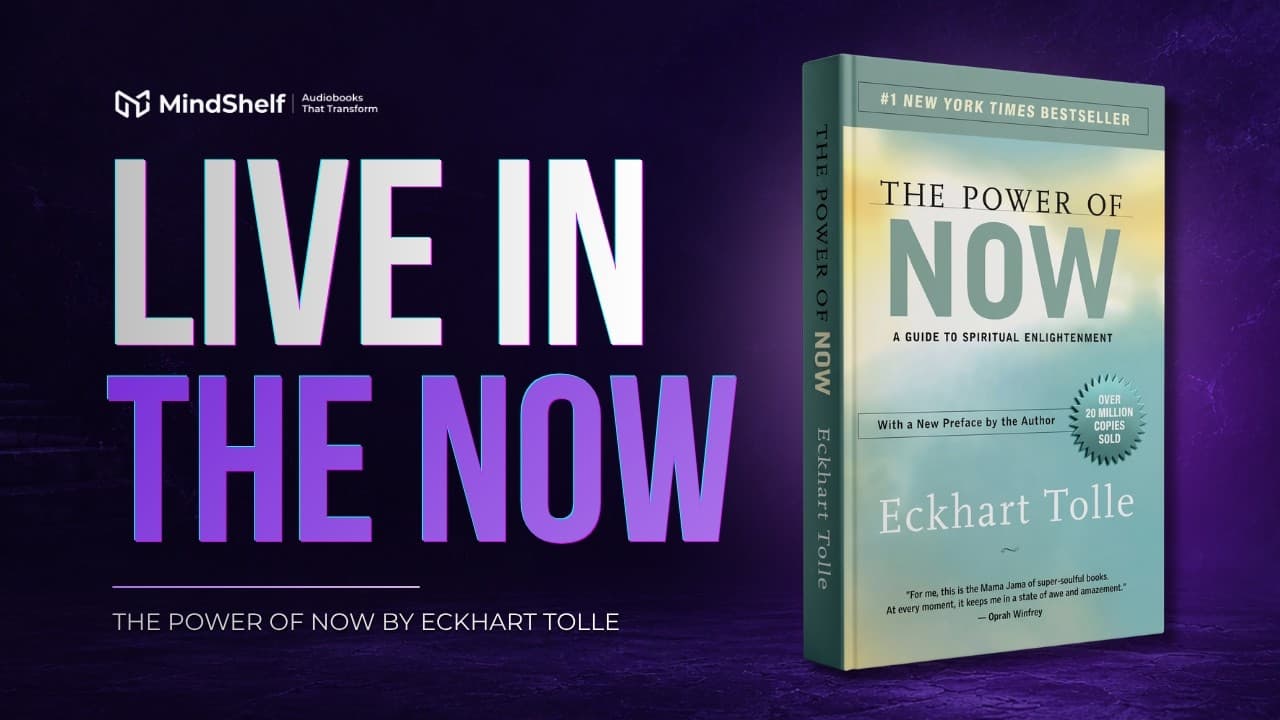
Peace begins by recognizing that you are the awareness observing your thoughts, not the thoughts themselves. Returning attention to present sensations, accepting reality without mental resistance, and observing emotional pain without feeding it can weaken compulsive thinking. The mind then becomes a practical tool instead of a source of anxiety, guilt, conflict, and dissatisfaction.
Transcript
Earla begins the power of now with a simple but profound realization that most of humanity lives in a state of unconsciousness. We are constantly thinking, worrying, remembering, planning, but rarely being. Our minds have become prisons and we mistake the endless stream of thoughts for life itself. Tol explains that his own awakening began during a... Read More
Key Insights
- You are the awareness observing your thoughts, not the stream of thoughts itself. Recognizing this distinction creates space between consciousness and mental activity, allowing thoughts to lose their automatic authority and revealing a quieter sense of presence beneath them.
- Psychological time is the mental habit of living through past regrets or imagined futures. Unlike practical clock time, it produces anxiety, guilt, stress, and fear by diverting attention from the present moment, which is the only place where life actually unfolds.
- The mind is a useful instrument when it serves awareness. It becomes a tyrant when its continuous judging, comparing, planning, and remembering is mistaken for personal identity, causing people to react automatically and repeat familiar patterns of dissatisfaction.
- The egoic mind is a false identity constructed from memories, labels, achievements, wounds, and possessions. It seeks reinforcement through comparison, validation, conflict, and separation, framing experience through oppositions such as success and failure or being right and wrong.
- The pain body is accumulated emotional pain from unresolved experiences. It becomes active when present events resemble earlier wounds, producing reactions that may feel much stronger than the immediate situation and encouraging further anger, sadness, conflict, or self-pity.
- Awareness weakens the pain body by observing its physical and emotional energy without resistance, judgment, justification, or additional stories. This conscious attention interrupts impulsive reactions and reveals that painful emotion is an experience within awareness rather than a person's essential identity.
- Acceptance means recognizing present reality without adding mental struggle. It does not require approving of harmful circumstances or abandoning action. Instead, it ends internal conflict so that a person can respond from clarity rather than fear, hostility, or the desire for control.
- Surrender is active cooperation with the reality of the current moment. By stopping the inner argument that circumstances should be different, a person conserves energy, becomes more centered, and creates the conditions for intelligent action rather than unconscious reaction.
- Related book: The Power of Now
- Export your Kindle highlights to Glasp: How to Download Highlights and Notes from Kindle
- More videos about this book:
Install to Summarize YouTube Videos and Get Transcripts
Explore YouTube Video Summarizer or Get YouTube Transcript Extractor
Questions & Answers
Q: How can I live more fully in the present moment?
Living in the present begins by directing attention away from repetitive memories and imagined futures and toward what is happening now. Notice your breathing, bodily sensations, sounds, and immediate surroundings without judging them. Past experience can still inform decisions, and future planning remains useful, but neither should replace direct contact with the current moment, where life is actually unfolding.
Q: What is the difference between clock time and psychological time?
Clock time is practical and supports activities such as scheduling meetings, catching flights, remembering birthdays, learning from yesterday, and planning for tomorrow. Psychological time is the compulsive mental habit of replaying regrets or anticipating future problems. It becomes harmful when imagined past and future experiences dominate attention, producing stress, guilt, anxiety, and fear while obscuring the present.
Q: How do I stop identifying with my thoughts?
Observe thoughts as events appearing in awareness instead of treating every thought as truth or identity. Notice the mind judging, comparing, planning, or remembering without trying to force it into silence. This observation creates space between awareness and mental activity. Within that space, thoughts can continue, but they become less able to control reactions, emotions, and behavior automatically.
Q: Why can the mind become a source of suffering?
The mind becomes a source of suffering when a person mistakes its constant commentary for the self and believes every story it produces. Repeated judgments, comparisons, regrets, and predictions then shape automatic reactions. The problem is not thought itself, because thought supports creativity and problem-solving. The problem is unconscious identification, which allows mental activity to dominate awareness.
Q: What is the pain body in The Power of Now?
The pain body is described as emotional residue accumulated from childhood pain, heartbreak, disappointment, trauma, and other unresolved experiences. It can become active when a present event resembles an earlier wound. A comment, rejection, or fear may then provoke anger, sadness, or despair that seems disproportionate to the situation, reinforcing familiar patterns of conflict and suffering.
Q: How can awareness reduce emotional pain?
Awareness reduces emotional pain by allowing it to be felt without resistance, judgment, justification, or additional negative thinking. When painful energy arises, notice its weight, tension, or restlessness in the body rather than reacting impulsively. Conscious observation separates the emotion from personal identity, interrupts the cycle that feeds it, and gradually weakens its control over behavior.
Q: Does accepting the present mean giving up?
Accepting the present does not mean approving of harmful conditions, abandoning goals, or refusing to act. It means acknowledging what is already happening without adding an internal argument that reality should be different. Once resistance subsides, energy previously spent fighting the moment becomes available for clear, intelligent action. Acceptance therefore supports effective response rather than passive resignation.
Q: How does surrender help someone respond instead of react?
Surrender ends the internal struggle against present reality, creating a pause between an event and the person's response. Without that struggle, fear, hostility, and the need for control become less dominant. A person can assess what the situation requires and act from greater clarity. Surrender changes the quality of action while still allowing necessary decisions, boundaries, and practical steps.
Summary & Key Takeaways
-
The central teaching is that identification with thought creates unnecessary suffering. People frequently become absorbed in memories, worries, judgments, and plans, overlooking the present moment where life actually occurs. By watching thoughts without automatically believing them, a person creates inner space and discovers an awareness that remains peaceful beneath mental activity.
-
The distinction between clock time and psychological time clarifies how time affects well-being. Clock time supports practical activities such as planning and remembering appointments. Psychological time traps attention in regret about the past or fear of the future. Presence allows someone to use practical time without sacrificing direct experience of current life.
-
Acceptance and conscious observation provide a practical response to difficult emotions. Resistance intensifies suffering, while acknowledging present reality creates room for clear action. When emotional pain is felt without judgment, justification, or additional negative thinking, old reactive patterns gradually weaken. A person can then experience emotion without becoming completely identified with it.
Read in Other Languages (beta)
Share This Summary 📚
Summarize YouTube Videos and Get Video Transcripts with 1-Click
Try YouTube Summary with ChatGPT & Claude or YouTube Transcript Generator