How to Live in the Present and Quiet Your Mind
TL;DR
You can reduce unnecessary suffering by observing thoughts instead of identifying with them and by returning attention to your body, breath, and senses. The past survives as memory and the future as imagination, while life is experienced only now. When difficulty arises, change the situation, leave it, or accept the present reality without adding mental resistance.
Transcript
Imagine living your entire life as a prisoner. But the prison has no walls, no bars, and no guards. The only thing keeping you locked up, your own mind. What if I told you that right now, in this very moment, you're carrying the weight of a thousand yesterdays and worrying about a hundred tomorrows, but you're missing the only thing that actually e... Read More
Key Insights
- You are not your mind because you can notice thoughts as they arise. The awareness observing a racing or repetitive mind is distinct from the mental activity being observed, and recognizing that distinction is presented as the first step toward freedom.
- The present moment is the only time directly experienced. The past exists as memory and the future as imagination, while guilt, regret, worry, and fear arise when attention becomes absorbed in these mental representations instead of current reality.
- A problem is described as a situation combined with mental judgment and emotional reaction. Practical circumstances may still demand attention, but separating the facts from the accompanying story can reveal how much suffering is being added by the mind.
- The three responses to an unacceptable present situation are to leave it, change it, or accept it completely. Continuing to resist reality mentally without taking one of these paths creates additional distress while leaving the actual circumstances unchanged.
- The body is a doorway into presence because bodily sensation occurs now. Directing attention toward the subtle feeling of aliveness in the hands, arms, or legs interrupts mental preoccupation and reconnects awareness with immediate experience.
- The breath anchors attention in the present because every inhalation and exhalation happens now. Observing even one complete breath provides a simple practice that does not require special equipment, extended preparation, or years of meditation.
- Full sensory attention can quiet mental labeling and make ordinary activities more vivid. Seeing colors and light, hearing sounds, or feeling warm water while washing dishes changes the quality of experience even though the external activity remains the same.
- The ego depends on memories, identity stories, and future projections to maintain a separate sense of self. It therefore treats the present as a means to an end and promises fulfillment after a promotion, relationship, physical change, retirement, or another future event.
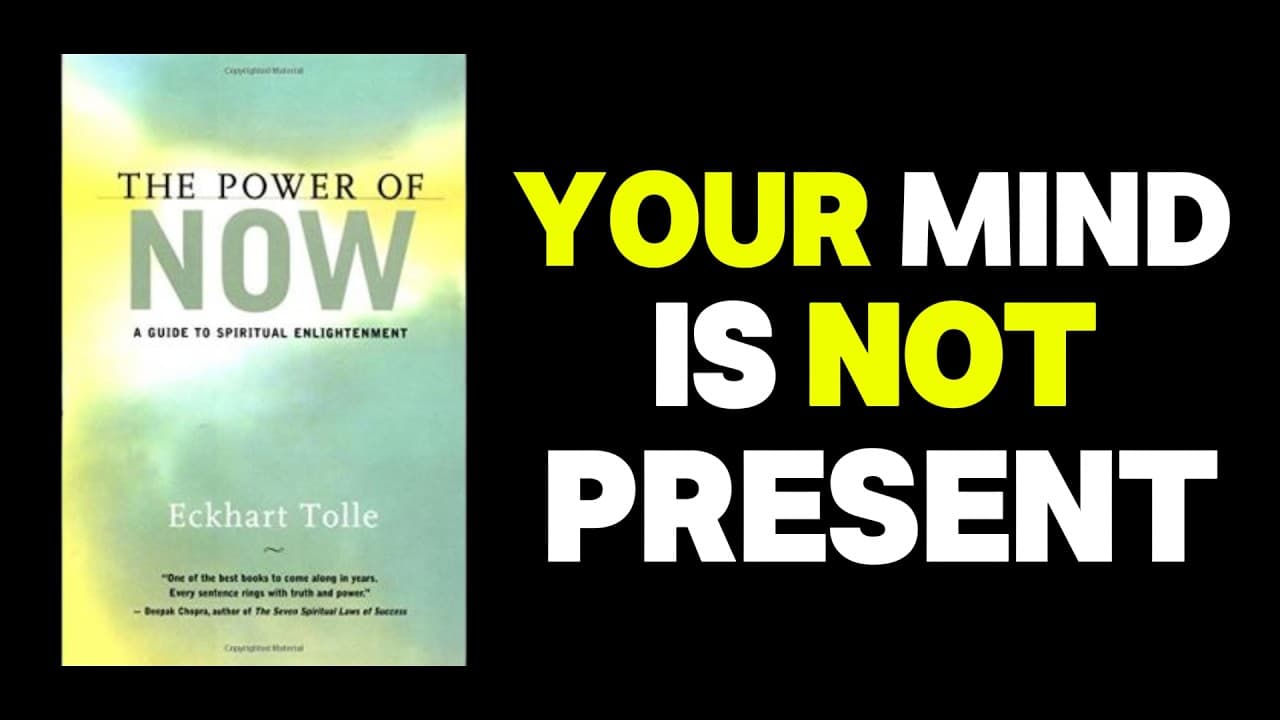
- Related book: The Power of Now
- Export your Kindle highlights to Glasp: How to Download Highlights and Notes from Kindle
- More videos about this book:
Install to Summarize YouTube Videos and Get Transcripts
Explore YouTube Video Summarizer or Get YouTube Transcript Extractor
Questions & Answers
Q: How can I stop identifying with my thoughts?
Begin by observing thoughts without treating them as your identity or unquestioned truth. Notice the voice commenting, planning, remembering, or worrying, then recognize that the awareness noticing this activity is not identical to it. Even discovering that thoughts appear when you try not to think demonstrates this separation. Repeated observation weakens compulsive identification and creates space between consciousness and mental noise.
Q: Why does focusing on the present reduce suffering?
Focusing on the present reduces unnecessary suffering because guilt, regret, grievance, worry, and fear depend largely on thoughts about the past or future. The past is encountered as memory, while the future is encountered as imagination. Returning to immediate reality helps distinguish an actual situation requiring action from judgments, predictions, and emotional reactions that the mind has added to it.
Q: What is the difference between a situation and a problem?
A situation is the set of facts that exists and may require a practical response. A problem is described as that situation plus mental judgment and emotional reaction. Someone can be physically safe at a desk while suffering through memories of criticism and imagined future disasters. Removing the story does not erase responsibilities, but it allows current circumstances to be handled without unnecessary psychological distress.
Q: How can I return to the present moment quickly?
Bring attention to an experience that can only occur now. Feel the aliveness in your hands, arms, or legs, observe one complete breath, or notice nearby colors, shapes, sounds, and textures without immediately labeling them. These practices redirect attention away from remembered events and imagined outcomes. They can be used during ordinary activities and require no equipment or lengthy meditation session.
Q: How can everyday chores become mindfulness practices?
Give the activity your full sensory attention instead of treating it as an obstacle before the next event. While washing dishes, feel the warm water, observe the bubbles, notice the plate’s texture, and hear the running water. Do not rehearse the day or plan what comes next. The chore remains unchanged, but complete attention makes the experience richer and more alive.
Q: Does accepting the present mean giving up on change?
Accepting the present does not mean abandoning practical action or approving every circumstance. It means acknowledging what already exists without adding mental resistance and emotional suffering. If the current situation is unacceptable, the summary presents three choices: remove yourself, change the situation, or accept it completely. Action can still occur, but it begins from a clear relationship with reality rather than resentment.
Q: Why does the mind keep avoiding the present moment?
The mind supports an ego built from memories, stories about personal identity, and projections of who someone may become. Because this constructed self depends on past and future, full presence threatens its continuity. It therefore turns the current moment into a means to an end, promising happiness after a promotion, weight loss, love, retirement, or some other imagined future achievement.
Q: What is the pain body in The Power of Now?
The pain body is described as accumulated old emotional pain that has formed a negative energy field. It behaves like a partly autonomous emotional pattern with a drive to survive, feeding on painful reactions and helping create more of them. A comment, memory, or other trigger can activate it during an otherwise normal day, producing a sudden shift into negative emotion.
Summary & Key Takeaways
-
The central teaching is that consciousness is distinct from the mind’s continuous stream of thought. Noticing mental noise proves that an observing awareness exists behind it. This recognition loosens identification with memories, judgments, fears, and personal stories, creating the first opening toward freedom from compulsive thinking and avoidable emotional suffering.
-
Psychological time produces much unnecessary distress because the past appears through memory and the future through imagination. Present circumstances may require practical action, but a problem also includes mental judgment and emotional reaction. Asking what is wrong at this exact moment helps separate manageable situations from suffering manufactured by thought.
-
Presence can be practiced through ordinary experience rather than complicated techniques. Feeling the body’s inner aliveness, observing one complete breath, or attending closely to sights, sounds, and textures brings attention into the present. Acceptance does not prohibit change. It means responding without adding resentment, resistance, victimhood, or another layer of unhappiness.
Read in Other Languages (beta)
Share This Summary 📚
Summarize YouTube Videos and Get Video Transcripts with 1-Click
Try YouTube Summary with ChatGPT & Claude or YouTube Transcript Generator