Why Does India Still Face a Power Crisis?
TL;DR
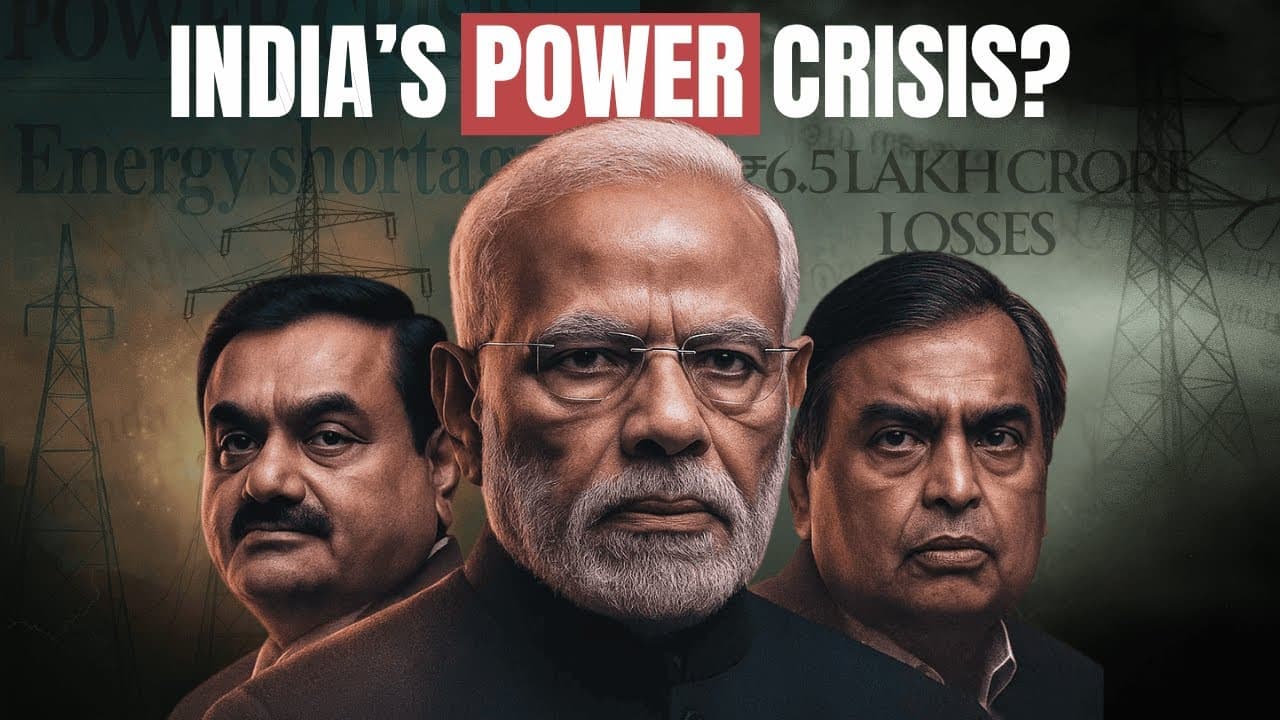
India still faces a power crisis because village electrification has not ensured universal, reliable delivery, while coal constraints, weak grid infrastructure, and transmission and distribution losses undermine the system. The discussion reports that 67 lakh people lacked electricity access in 2023 and that India loses roughly 15 to 16% through transmission and distribution. Read on to see how smart meters, grid digitization, entrepreneurs, and investors could contribute to solutions.
Transcript
Modu in 2018 said that we have electrified all villages in India. We have also achieved the historic milestone of connecting every village to electricity. India is staring at a possible power crisis. Massive power blackout in India's financial capital Mumbai. Even today millions of Indians still live in darkness. Why is India the fourth largest eco... Read More
Key Insights
- Village electrification is not the same as universal, reliable electricity access. Although India announced that every village had been connected in 2018, the discussion states that 67 lakh people still lacked access in 2023, while households and industries continued to experience outages.
- India’s power challenge has three main components: inadequate coal output, weak grid infrastructure, and high transmission and distribution losses. These problems affect electricity generation, delivery, and financial viability, so increasing generation alone cannot create a dependable power system.
- Coal supply constraints can make electricity generation more expensive. The discussion says power plants were built while coal output growth remained restricted by policy problems, forcing some plants to import coal and preventing them from producing power at their intended cost.
- Transmission and distribution losses are described as the sector’s largest problem. India reportedly loses about 15 to 16% through the system, compared with 2% in China, meaning substantial value disappears before electricity revenue can support utilities and future investment.
- Distribution leakage can erase the operating margin available in a commodity business. The guests compare losses of roughly 15% with a typical cited margin of 14 to 15%, arguing that this imbalance makes profitability difficult across the electricity ecosystem.
- Smart meters are tools for digitizing the energy grid and improving electricity measurement. Kimbal built its business around products designed in India for domestic and global markets, showing how a focused technology company can address infrastructure inefficiencies without being a large power generator.
- India’s power crisis can create opportunities for entrepreneurs and investors. The discussion frames smart metering, solar energy, grid modernization, recycling, and related infrastructure as growing areas where companies can solve measurable problems while participating in the sector’s expansion.
- Specialized capital can help energy companies grow despite perceived sector risks. Niveshaay describes connecting fast-growing founders with investors, family offices, mentors, and other resources, particularly in sectors that banks or equity investors may approach cautiously because of lending restrictions or risk concerns.
Install to Summarize YouTube Videos and Get Transcripts
Explore YouTube Video Summarizer or Get YouTube Transcript Extractor
Questions & Answers
Q: Why does India still face a power crisis?
Connecting every village did not guarantee dependable electricity for every person or business. The discussion identifies constrained coal output, inadequate grid infrastructure, and transmission and distribution losses as the three underlying problems. It also reports that 67 lakh people lacked electricity access in 2023 while industries continued to face outages.
Q: What are the main problems in India’s power sector?
The three main problems identified are insufficient coal output, inadequate grid infrastructure, and high transmission and distribution losses. Together, they affect electricity generation, reliable delivery, and the financial viability of the distribution system.
Q: What is the difference between village electrification and reliable electricity access?
Village electrification means connecting a village to electricity infrastructure, but it does not ensure that every resident receives dependable power. India announced that every village had been connected in 2018, yet the discussion says 67 lakh people still lacked electricity access in 2023. Households remained in darkness and industries continued experiencing outages.
Q: Why are transmission and distribution losses so damaging in India?
The discussion describes transmission and distribution losses as the sector’s biggest problem because electricity value disappears before utilities can collect revenue. India reportedly loses roughly 15 to 16%, compared with 2% in China. A loss near 15% is especially damaging when the cited margin in this commodity business is about 14 to 15%.
Q: Why did coal constraints create problems for Indian power plants?
The discussion says policy problems restricted coal-output growth while additional power plants were being established. Some plants consequently had to import coal, preventing them from producing electricity at the intended cost and adding financial pressure to the power sector.
Q: How can smart meters help address India’s electricity problems?
Smart meters can digitize the grid and improve how electricity consumption is measured in houses, industries, and schools. The discussion presents better measurement as a way to identify leakage and strengthen accountability and distribution economics. Kimbal built an Indian energy-technology business around these devices.
Q: How can entrepreneurs build businesses by solving India’s power crisis?
Entrepreneurs can target specific infrastructure problems without becoming large power generators like Tata Power or Adani Power. Kimbal, founded in 2011, focused on smart meters and grid digitization, building products in India for domestic and global markets. The broader opportunities discussed include measurement, distribution, solar energy, recycling, and grid modernization.
Q: How can investors identify opportunities in India’s power sector?
Investors can examine growing companies that directly address metering, grid, distribution, solar, and related infrastructure constraints. The discussion recommends focusing on capable founders and connecting them with capital, family offices, mentors, and operational resources. It also notes that energy companies may need specialized funding because banks and equity investors can approach the sector cautiously.
Summary & Key Takeaways
-
India’s electricity problem persists despite the 2018 claim that every village had been electrified. The discussion distinguishes nominal electrification from dependable access, noting that 67 lakh people reportedly lacked electricity in 2023. Industries also continue to experience outages, creating a major obstacle to India’s economic ambitions and international competitiveness.
-
The guests identify three central weaknesses: insufficient coal output, inadequate grid infrastructure, and high transmission and distribution losses. Power plants historically had to import coal when domestic output failed to match capacity. Meanwhile, losses of roughly 15 to 16% remove value from an already difficult commodity business and weaken the entire distribution ecosystem.
-
Smart meters and grid digitization are presented as practical ways to measure consumption, reduce leakage, and improve the economics of electricity distribution. Kimbal, founded in 2011, built an Indian energy-technology product business around this need. The broader opportunity includes entrepreneurs, investors, capital providers, mentors, and established energy companies working on scalable solutions.
Read in Other Languages (beta)
Share This Summary 📚
Summarize YouTube Videos and Get Video Transcripts with 1-Click
Try YouTube Summary with ChatGPT & Claude or YouTube Transcript Generator
Explore More Summaries from Think School 📚



Summarize YouTube Videos and Get Video Transcripts with 1-Click
Try YouTube Summary with ChatGPT & Claude or YouTube Transcript Generator