What Do Ancient Cave Paintings Reveal About Early Humans?
TL;DR
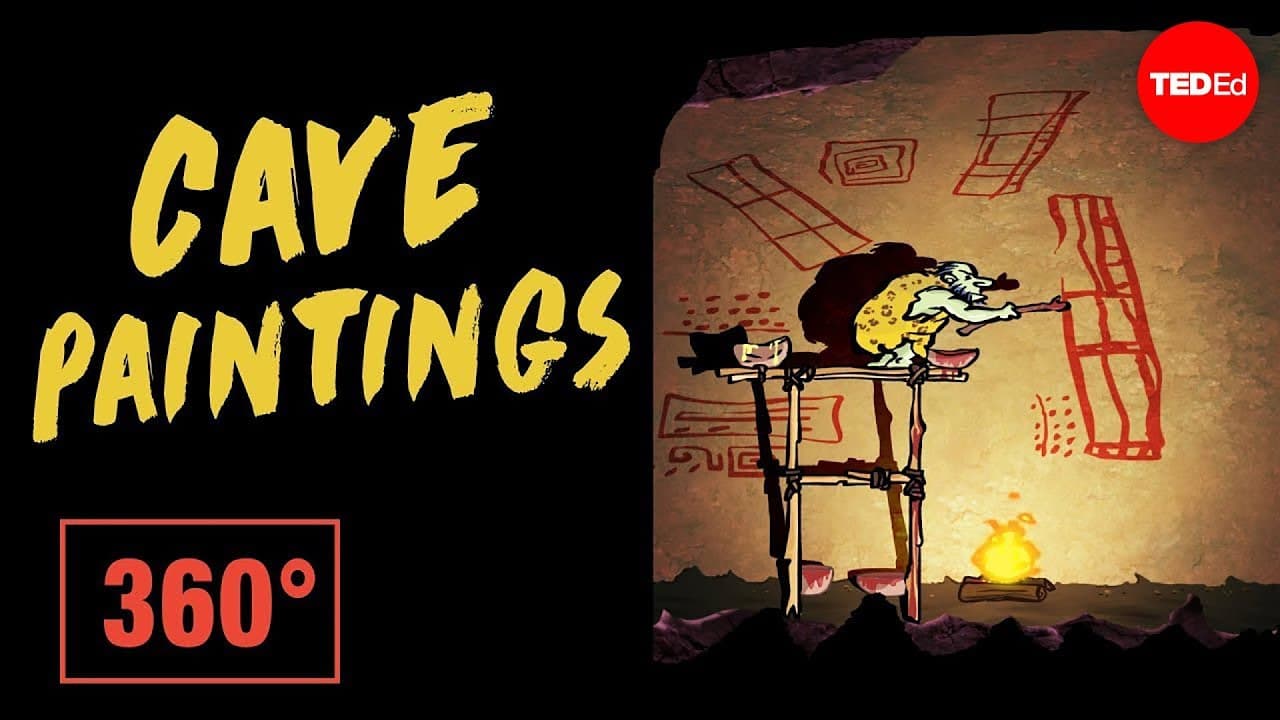
Ancient cave paintings, dating between 19,000 and 35,000 years ago, display early human creativity and communication. These artworks, created with natural materials using hands and tools, predominantly depict geometric shapes and large mammals, suggesting they served as a visual language reflecting the human experience and the natural world.
Transcript
In 1879, amateur archaeologist Marcelino Sanz de Sautuola and his young daughter Maria explored a dark cave in Northern Spain. When Maria wondered off by herself, she made an amazing discovery. They were standing inside a site of ancient art, the walls and roofs decorated with prehistoric paintings and engravings, ranging from 19,000 to 35,000 yea... Read More
Key Insights
- 🥰 Ancient cave art dates back 19,000 to 35,000 years, providing evidence of early human communication and creativity.
- 🫶 The art was created using natural materials and a combination of hands and various tools.
- 🌥️ Geometric shapes and large mammals were the most commonly depicted subjects.
Install to Summarize YouTube Videos and Get Transcripts
Explore YouTube Video Summarizer or Get YouTube Transcript Extractor
Questions & Answers
Q: Who discovered the ancient cave art?
The art was discovered by Marcelino Sanz de Sautuola and his daughter Maria in 1879.
Q: What materials were used to create the cave art?
The ancient artists used minerals, clay, charcoal, ochre, spit, and animal fat to create the paintings.
Q: What are the most common depictions in the cave art?
Geometric shapes and large mammals like bison, horses, mammoths, deer, and boars are the most common subjects.
Q: What are some theories about why the ancient humans created the cave art?
The cave art could have been created as a way to document knowledge about the natural world, mark tribal territory, or serve as part of sacred rituals or spiritual journeys.
Summary & Key Takeaways
-
In 1879, Marcelino Sanz de Sautuola and his daughter Maria discovered a cave in Northern Spain with prehistoric paintings and engravings dating back 19,000 to 35,000 years.
-
The art was created using natural materials mixed with spit or animal fat and drawn with hands and various tools.
-
The most common depictions are geometric shapes and large mammals, with rare appearances of human figures and handprints.
Read in Other Languages (beta)
Share This Summary 📚
Summarize YouTube Videos and Get Video Transcripts with 1-Click
Try YouTube Summary with ChatGPT & Claude or YouTube Transcript Generator
Explore More Summaries from TED-Ed 📚






Summarize YouTube Videos and Get Video Transcripts with 1-Click
Try YouTube Summary with ChatGPT & Claude or YouTube Transcript Generator