How Did a Ukrainian Bayraktar TB2 Drone Stop a Russian Landing?
TL;DR
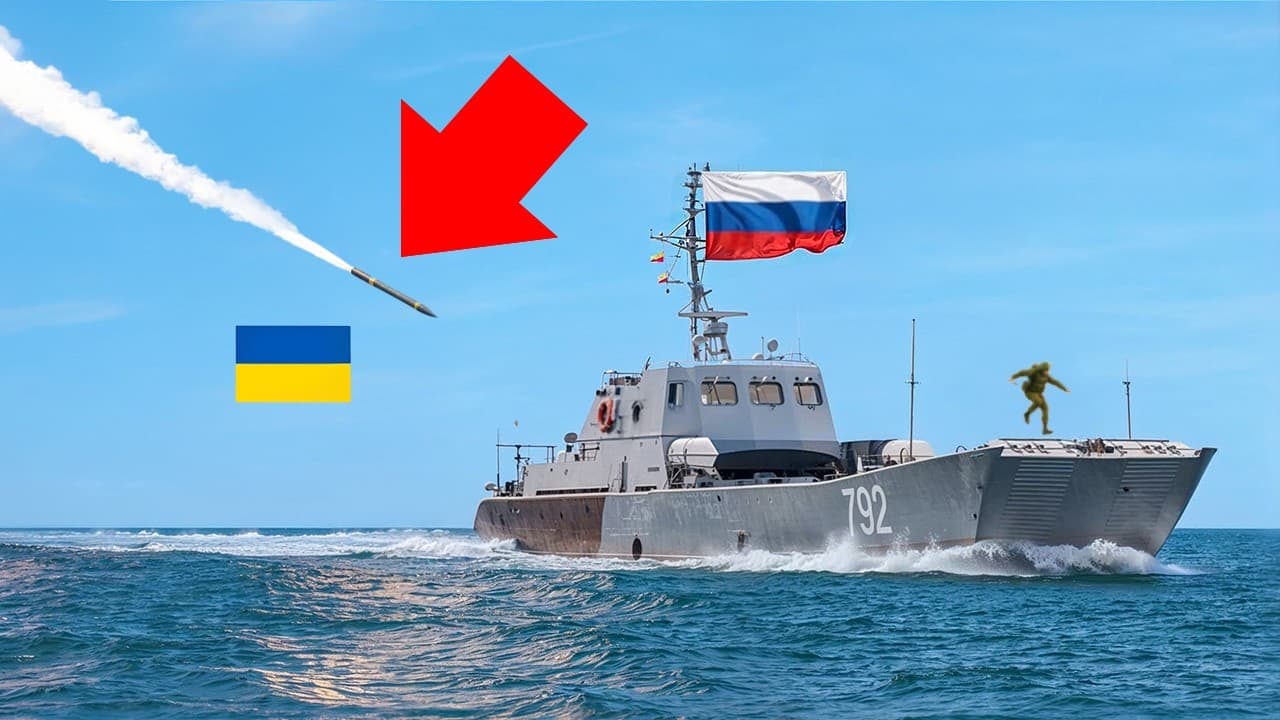
A Ukrainian Bayraktar TB2 disrupted a Russian landing operation by tracking a Serna-class craft for 27 minutes and attacking it with a laser-guided MAM-L missile before it reached the Kherson shore. The drone detected the convoy from 18,000 feet, maneuvered behind it, and overcame a laser malfunction before firing. Read on for the mission timeline, targeting method, and reported aftermath.
Transcript
At 0414 local time on June 24th, 2025, a Russian Cerna class landing craft with 30 troops was heading for the western shore of Kersonen, completely unaware they'd been tracked for the past 27 minutes by a Turkish-made drone lurking at 18,000 ft. In exactly 90 seconds, a seemingly routine combat operation would turn into one of the most critical tur... Read More
Key Insights
- The TB2 mission began at 0200 from a concealed position near Mykolaiv, using an indirect route that stayed at least 50 kilometers from known Russian S-300 sites and reduced the risk of turning the roughly $5 million aircraft into an air-defense casualty.
- The Bayraktar TB2 is described as a surveillance and strike platform capable of remaining airborne for 27 hours. Its Rotax 912 engine carried it through the night at about 70 knots while its autonomous flight program handled the patrol pattern.
- The Westcam MX-15D sensor provided visual, thermal, and multispectral surveillance from 18,000 feet. At 0347, it detected a moving heat source and warm wake, allowing the operator to identify a Serna-class landing craft traveling west at about 30 knots.
- The Russian convoy consisted of a lead landing craft and two vessels following about 5 kilometers behind. Thermal imagery showed at least two dozen people aboard the lead boat, while their tactical vests, helmets, assault rifles, and movement patterns indicated an infantry operation rather than ordinary transport.
- The engagement decision balanced tactical value against limited weapons and operational secrecy. Each MAM-L missile was said to cost $70,000, the TB2 carried only four, and firing would reveal that Ukraine maintained drone coverage this far south.
- The MAM-L attack required continuous laser designation throughout its 43-second flight. The 22-kilogram weapon carried a 10-kilogram warhead, while the operator waited until approximately 8 kilometers to improve accuracy and aligned the attack with the vessel's direction of movement.
- The strike was briefly threatened by a laser-designator malfunction at 0446. The operator cycled the system off and on, waited through its self-test, restored operation, redesignated the landing craft, and released the missile at 0447 from 7.8 kilometers downrange.
- The strike reportedly revealed a concealed sabotage mission rather than a routine landing. The description identifies the passengers as a special operations team carrying demolition gear and says the discovery led Russian vessels to retreat, missions to be canceled, and encrypted orders to flood the airwaves.
Install to Summarize YouTube Videos and Get Transcripts
Explore YouTube Video Summarizer or Get YouTube Transcript Extractor
Questions & Answers
Q: How did a Ukrainian TB2 drone stop a Russian landing?
The Bayraktar TB2 tracked a Serna-class landing craft and two accompanying vessels as they approached a beach west of Kherson. After receiving clearance to engage, the operator maneuvered behind the convoy and struck the lead craft with a laser-guided MAM-L missile, disrupting the reported operation before it reached shore.
Q: How did the TB2 find the Russian landing craft?
At 0347, the drone's Westcam MX-15D thermal sensor detected a hot spot moving west at about 30 knots and leaving a warm wake. Magnification identified it as a Project 11770 Serna-class landing craft, with two more vessels following about 5 kilometers behind.
Q: Why did the TB2 take an indirect route to the patrol area?
The route was designed to exploit radar gaps and remain at least 50 kilometers from known Russian S-300 sites. Operators considered the air defenses a serious threat because losing the TB2 would sacrifice an aircraft valued at roughly $5 million.
Q: What indicated that the boats were conducting a military operation?
Thermal imagery showed at least two dozen people aboard the lead craft, and closer observation revealed tactical vests, helmets, and assault rifles. The convoy headed toward a beach linked to earlier suspicious activity, while the two trailing boats separated north and south to establish a perimeter.
Q: Why did the operator target the lead Serna-class craft?
The operator selected the lead vessel to create maximum confusion within the convoy. It carried armed personnel, followed a predictable course toward shore, and appeared central to the landing operation.
Q: How did the MAM-L missile hit the moving boat?
The MAM-L used semi-active laser homing, requiring the TB2 to illuminate the target continuously during the missile's flight. The operator approached from behind, waited until the range was about 8 kilometers, and kept the stabilized laser aimed at the craft during the approximately 43-second flight.
Q: What malfunction nearly prevented the TB2 strike?
At 0446, the laser designator malfunctioned and required recalibration. The operator switched it off and back on, waited for the self-test, restored target designation, and released the missile at 0447 from 7.8 kilometers away.
Q: What reportedly happened after the Russian landing craft was struck?
According to the description, debris exposed elite personnel and demolition equipment associated with a sabotage mission rather than a routine supply run. Russian vessels reportedly retreated, planned missions were canceled, and encrypted orders increased across intercepted communications.
Summary & Key Takeaways
-
A Bayraktar TB2 launched near Mykolaiv at 0200 and followed a route designed to remain at least 50 kilometers from known Russian S-300 sites. From 18,000 feet, its multispectral sensor detected a warm wake at 0347 and identified a Russian Project 11770 Serna-class landing craft leading two additional vessels.
-
Thermal imagery showed at least two dozen armed personnel aboard the lead craft, while the convoy headed toward a beach west of Kherson. After receiving authorization, the operator maneuvered behind the vessels, waited for an accurate firing range, and observed the trailing boats separate north and south to establish a perimeter.
-
A temporary laser malfunction delayed the attack, but recalibration restored the designator. The TB2 released a MAM-L missile at 0447 and maintained laser illumination until impact at 0448. According to the description, the strike exposed demolition equipment and elite personnel, disrupted the suspected sabotage mission, and caused wider Russian operational withdrawals.
Read in Other Languages (beta)
Share This Summary 📚
Summarize YouTube Videos and Get Video Transcripts with 1-Click
Try YouTube Summary with ChatGPT & Claude or YouTube Transcript Generator
Explore More Summaries from Beyond Military 📚

Summarize YouTube Videos and Get Video Transcripts with 1-Click
Try YouTube Summary with ChatGPT & Claude or YouTube Transcript Generator