How Did Ukraine Strike a Russian Ammo Depot?
TL;DR
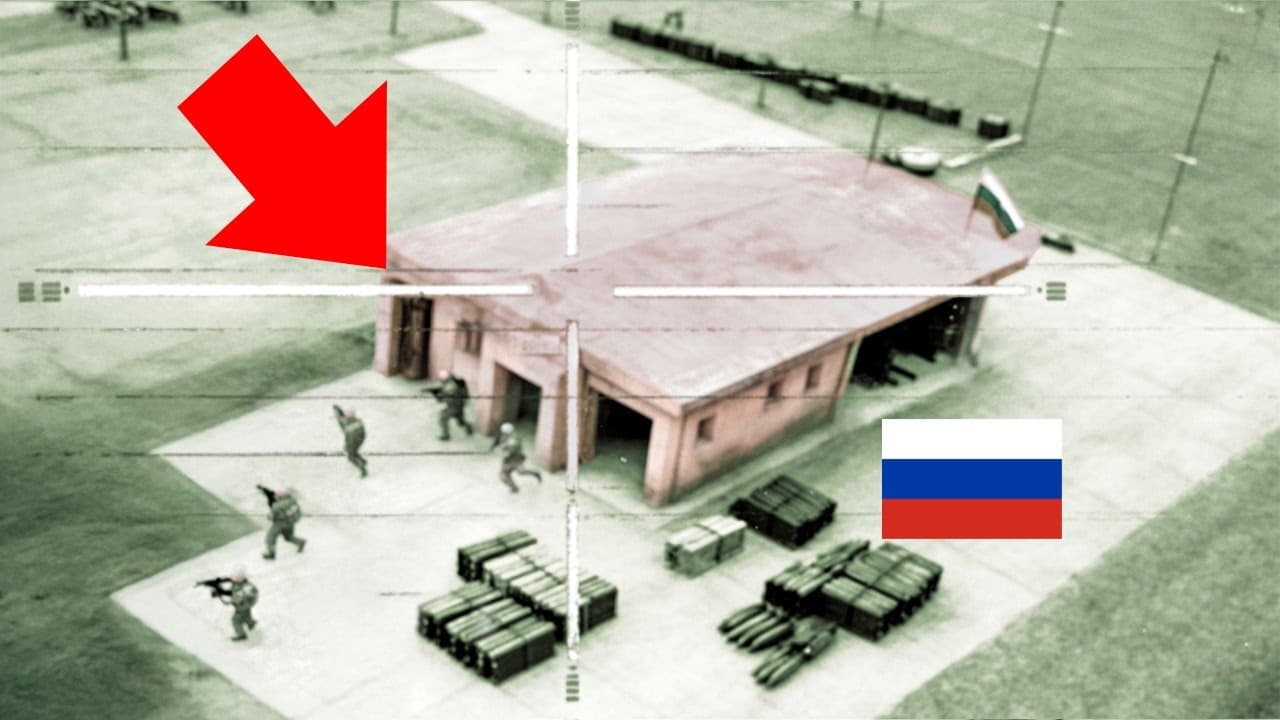
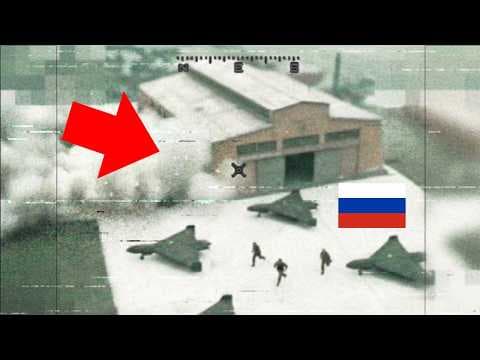
Four Ukrainian Vilkha-M missiles reportedly reached a fortified Russian ammunition depot despite counter-battery fire, satellite-navigation jamming, and layered air defenses. The crew launched under severe time pressure, while the missiles shifted to inertial guidance, used programmed maneuvers, survived proximity detonations, and approached at low altitude through terrain masking before striking the facility.
Transcript
At 22:30 local time on July 2nd, 2025, a Ukrainian Vila M crew knew Pocarosk was gearing up to fire at a Russian ammunition depot when suddenly they detected electromagnetic emissions from a Russian Zupark M1 counter battery radar 38 km away. This was about to change a routine strike into a bite for survival. The radar operator's first indication o... Read More
Key Insights
- The Vilkha-M crew faced a six-minute counter-battery deadline after passive receivers detected the search signature of a Zoopark-1M radar 38 km away. The radar could calculate artillery launch positions within 30 seconds, while Russian multiple-launch rocket crews were already hunting the Ukrainian position.
- The Vilkha-M is described as an 800 kg missile carrying a 170 kg warhead capable of penetrating reinforced concrete. Its combined GPS, GLONASS, and inertial guidance package reportedly provides 10–30 m accuracy at maximum range when navigation signals and targeting data remain usable.
- Russian jamming forced the gunner to abandon GPS verification and enter previously surveyed coordinates manually. The crew normally needed three minutes to upload targeting data through an encrypted link, but the approaching counter-battery threat reduced the available preparation window to about 90 seconds.
- The four-missile launch sequence exceeded normal operating doctrine because the crew fired at roughly 30-second intervals instead of waiting 45 seconds between launches. Rapid firing produced stress fractures in the launcher's thermal coating, but allowed all four missiles to leave before Smerch rockets bracketed the former position.
- The Vilkha-M guidance system switched from GPS to GLONASS and then to pure inertial navigation after both satellite systems became degraded. Fiber-optic gyroscopes maintained the course, while the onboard computer processed navigation updates 50 times per second and corrected deviations detected by its accelerometers.
- Programmed maneuvers disrupted the Tor-M2 system's predicted intercept points by changing the missile's course during descent. A 15-degree left bank and a later 20-degree right adjustment forced repeated recalculation, demonstrating how modest changes could invalidate solutions against an otherwise predictable ballistic target.
- Russian air defenses struggled when several high-speed missiles entered overlapping engagement zones. Tor-M2 concentrated on the closest threat, Pantsir-S1 needed to traverse its turret and overcome ground clutter, and the appearance of another Vilkha-M caused the Pantsir crew to divide its missile fire between targets.
- Terrain masking reduced the defenders' terminal interception window as the lead Vilkha-M followed a ridgeline at about 400 m altitude. Radar systems struggled to separate the target from background returns, leaving the depot's Shilka gunner only a very short opportunity to engage the approaching missile.
Install to Summarize YouTube Videos and Get Transcripts
Explore YouTube Video Summarizer or Get YouTube Transcript Extractor
Questions & Answers
Q: How did the Ukrainian crew launch before counter-battery fire arrived?
The crew compressed a normally three-minute targeting process into about 90 seconds after detecting a Zoopark-1M counter-battery radar 38 km away. When Russian jamming disrupted satellite lock, the gunner manually entered previously surveyed coordinates. The crew then fired four Vilkha-M missiles at roughly 30-second intervals, started the transporter, and moved as Smerch rockets began striking around the former launch position.
Q: What guidance systems did the Vilkha-M missiles use?
Each Vilkha-M used a triple-redundant guidance arrangement incorporating GPS, Russia's GLONASS satellite system, and inertial navigation. After GPS signals degraded, the onboard computer attempted to use GLONASS, but Russian forces were also jamming that system. The missile consequently relied on fiber-optic gyroscopes and inertial navigation, processed updates 50 times per second, and corrected deviations detected during flight.
Q: Why did Russian jamming fail to stop the Vilkha-M strike?
Russian jamming degraded both GPS and GLONASS, but the missiles were designed to continue through inertial navigation when satellite signals became unusable. The gunner had also entered previously surveyed target coordinates before launch. Although losing satellite verification increased the risk of error, the onboard guidance computer maintained course with fiber-optic gyroscopes and corrected a two-degree deviation after a nearby interceptor detonation.
Q: How did the Vilkha-M evade Tor-M2 interceptors?
The lead missile performed programmed course changes while descending, including a 15-degree bank to the left and a later 20-degree adjustment to the right. These maneuvers shifted it outside the Tor-M2 system's calculated intercept zones and forced new firing solutions. Later interceptors detonated within 50 m, but their fragments did not penetrate the warhead casing or disable critical guidance equipment.
Q: Why did Russian air defenses struggle with multiple missiles?
The defenses faced several fast targets arriving close together, while individual systems had limited time and competing priorities. The Tor-M2 crew focused on the nearest missile and did not immediately anticipate the second. The Pantsir-S1 had to traverse its turret, search through ground clutter, and later split its fire between targets, a decision that violated the described doctrine of concentrated engagement.
Q: What made the Ukrainian launch sequence dangerous?
The crew launched while Russian counter-battery radar tracked its position and Smerch rockets were already inbound. GPS jamming forced manual coordinate entry, while the launcher fired more rapidly than the standard 45-second interval intended to prevent thermal damage. The launch signature exposed the position to nearby sensors, the thermal coating developed stress fractures, and the final missile departed as explosions began landing nearby.
Q: How did terrain masking help the missiles approach the depot?
The lead Vilkha-M descended to roughly 400 m and followed a small ridgeline that concealed part of its terminal approach. Russian radars had difficulty separating the low-flying target from ground clutter, and the Pantsir-S1 could not establish a solid lock. When the missile crested the ridge, it was already descending toward the depot, leaving only seconds for terminal interception attempts.
Q: What happened after the Vilkha-M missiles reached the target area?
According to the description, the maneuvering Vilkha-M rockets penetrated the layered defenses and struck the heavily fortified ammunition depot. Footage reportedly showed an inferno and a rising thermal column, while satellite imagery revealed burn patterns. The stated strategic consequences included ammunition dispersal and a realignment of Russian stockpiles, reflecting efforts to reduce vulnerability after the depot attack.
Summary & Key Takeaways
-
A Ukrainian Vilkha-M crew detected emissions from a Russian Zoopark-1M counter-battery radar while preparing to attack an ammunition depot. Expecting incoming Smerch rockets, the crew accelerated coordinate entry and launched four missiles despite intensified GPS jamming, shortened launch intervals, equipment stress, and explosions landing near its position.
-
The missiles entered a contested electronic environment where both GPS and GLONASS signals were degraded. Their guidance systems switched to inertial navigation, processed frequent updates, and executed programmed course changes. These maneuvers repeatedly disrupted Tor-M2 interception calculations, while proximity detonations damaged the lead missile's skin without disabling its warhead or guidance components.
-
Russian Tor-M2, Pantsir-S1, and Shilka defenses struggled with multiple fast targets, ground clutter, terrain masking, and divided engagement decisions. The lead missiles descended behind a ridge before emerging near the depot, reducing interception time. According to the description, the rockets penetrated the defenses and struck the fortified ammunition facility.
Read in Other Languages (beta)
Share This Summary 📚
Summarize YouTube Videos and Get Video Transcripts with 1-Click
Try YouTube Summary with ChatGPT & Claude or YouTube Transcript Generator
Explore More Summaries from Beyond Military 📚


Summarize YouTube Videos and Get Video Transcripts with 1-Click
Try YouTube Summary with ChatGPT & Claude or YouTube Transcript Generator