How NATO Intercepted Russian MiG-31 in Baltic Airspace
TL;DR
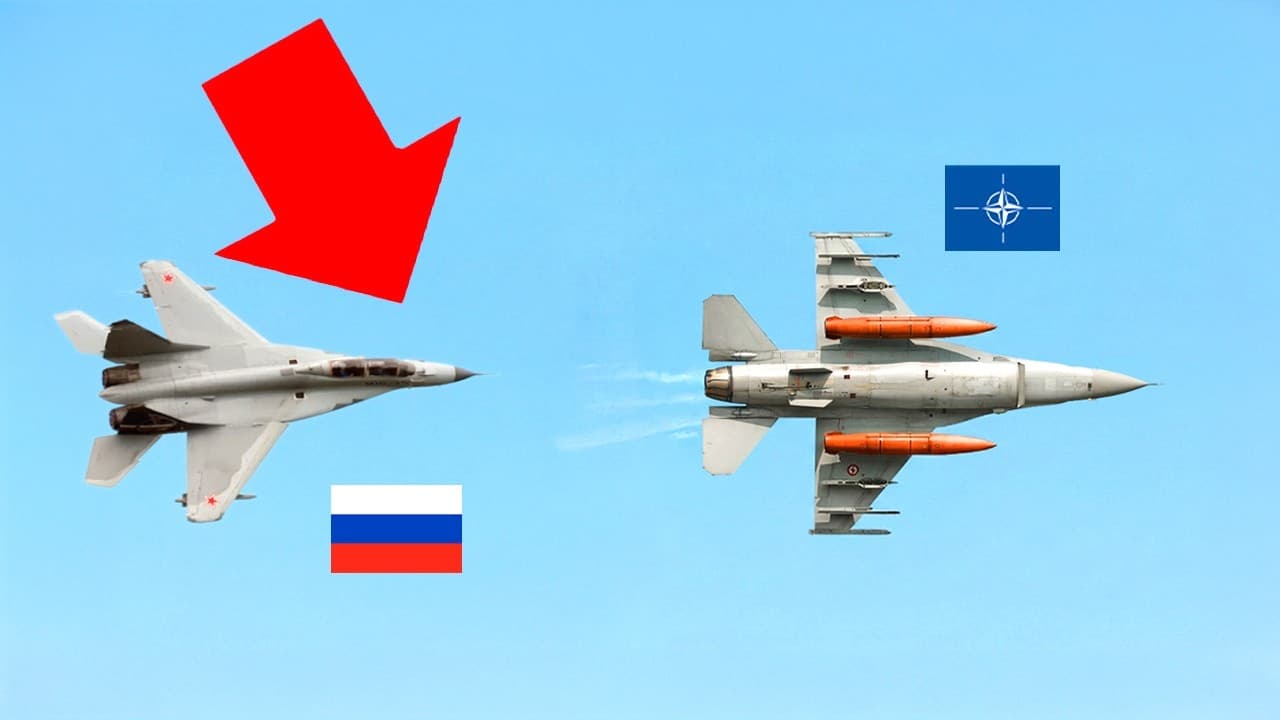
NATO rapidly coordinated a multinational intercept to escort three MiG-31s out of Baltic airspace without firing. Italian F-35As used passive sensing and the Barracuda EW system to track and mislead the Russians, while other NATO aircraft closed in to form a defensive box and deter further aggression.
Transcript
At 0900 hours on September 19th, Estonian radar operators were tracking routine Baltic traffic when their screens lit up with something that would make this anything but a routine morning. Three Russian MiG 31s turned south and crossed into Estonian airspace near Vandaloo Island. Transponders off, radio silent. Unknown to the Russians, they'd alrea... Read More
Key Insights
- Three MiG-31s crossed into Estonian airspace near Vaindloo Island testing NATO escalation, prompting a coordinated multinational response.
- Italian F-35As used passive sensing and the Barracuda electronic warfare suite to locate and misdirect the MiG aircraft without emitting radar themselves.
- The Barracuda system records incoming radar pulses and replays them with delays and frequency shifts to create fake targets, complicating the MiGs defense.
- Link-16 data sharing fused sensor data from F-35s, Gripens, Finns, Poles, Swedes, and Germans into a common picture for coordinated interception.
- NATO forces included Italian F-35As, Finnish F/A-18s, Swedish Gripens, Polish F-16s, and German Typhoons, illustrating broad allied integration.
- The MiG-31s could not outpace the combined surveillance and reaction times of the alliance, moving toward a boxed interception rather than international airspace violation.
- This operation relied on a honey trap tactic: visible threats forced the MiGs toward hidden or more capable defenders.
- The incident emphasized deterrence by denial and alliance interoperability, using sensors, data links, and tactical aircraft to prevent escalation without firing a shot.
- More videos from this channel:
- More from this channel: Beyond Military
Install to Summarize YouTube Videos and Get Transcripts
Explore YouTube Video Summarizer or Get YouTube Transcript Extractor
Questions & Answers
Q: What triggered NATO to scramble forces in the Baltic region during the incident?
NATO scrambled because three MiG-31s crossed into Estonian airspace near Vaindloo Island, penetrating about 10 kilometers and operating at 30,000 feet. The mission aimed to test whether Article 5 deterrence would be invoked, prompting quick, coordinated responses from Italian F-35As, Finnish F/A-18s, and Swedish Gripens to establish control of the airspace without engaging in combat.
Q: How did the Italian F-35As track the MiGs without emitting radar signals?
The Italian F-35As used passive sensing through their AN/APG-81 radar in a mode that does not emit, relying on the DAS and Barracuda electronic warfare system to identify threats. Barracuda records incoming radar pulses and transmits altered echoes to create ghost targets, allowing the F-35s to determine the MiGs’ position and intent without revealing their own emissions.
Q: What role did the Barracuda EW system play in the interception?
Barracuda EW injected false targets into the Russian radar, manipulating the radar picture by replaying radar pulses with slight delays and frequency shifts. This caused the MiGs to perceive multiple, shifting contacts, complicating tracking, and making it harder for them to maintain an accurate firing solution while the F-35s maneuvered for advantage.
Q: Which NATO assets formed the interception box around the MiGs?
Polish F-16s and German Typhoons joined Finnish and Swedish forces to form a broad defensive line. Swedish Griffon jets also contributed with radar coverage while the Italian F-35s managed the core tracking. The combined power of multiple nations created a containment ring that prevented the MiGs from entering international airspace.
Q: How did Link-16 contribute to the interception?
Link-16 provided real time data sharing across participating aircraft and ground assets, allowing a single common operating picture. This enabled synchronized movements, informed targeting decisions, and rapid handoffs between radars and fighters, ensuring all players were aligned on the MiGs’ position, speed, and heading, and coordinating pursuit from multiple angles.
Q: What tactical advantage did the F-35s gain with DAS when engaging the MiGs?
DAS gave the F-35s 360 degree situational awareness and the ability to track targets through their emissions or absence thereof. By using passive sensing and the Barracuda system, they could detect the MiGs, maintain a stealthy profile, and coordinate with other NATO aircraft to constrain and guide the engagement without alerting the MiGs to their own presence.
Q: What was the MiGs’ apparent objective before being boxed in by NATO?
The MiG-31s appeared to be testing NATO resolve and possibly entering international airspace while attempting to avoid engagement. They focused on maintaining altitude and speed, staying under radar visibility, and delaying the decision to request airfield vectors, a move that ultimately exposed them to a superior, coordinated defense.
Q: Why is this incident described as a deterrence by denial exercise?
It demonstrated how a coalition can rapidly assemble a robust air defense network that makes violating airspace risky and unprofitable for an aggressor. The combination of passive sensors, advanced EW, data fusion, and multinational aircraft created an effective defensive posture that discouraged further incursion without firing a shot, reinforcing alliance credibility.
Summary & Key Takeaways
-
The intercept demonstrated how passive sensors and data fusion can detect and track enemy aircraft without emissions, enabling a safe and controlled interception.
-
The scenario showcased the Internet of weapons in real time, with Link-16 data sharing, airborne fighters, and surface assets forming a single operational picture to deter without gunfire.
-
The operation highlighted deterrence by denial, where a coalition of air forces surrounded the threat to prevent overflight of Tallinn while keeping civilian risk low.
Read in Other Languages (beta)
Share This Summary 📚
Summarize YouTube Videos and Get Video Transcripts with 1-Click
Try YouTube Summary with ChatGPT & Claude or YouTube Transcript Generator
Explore More Summaries from Beyond Military 📚
Summarize YouTube Videos and Get Video Transcripts with 1-Click
Try YouTube Summary with ChatGPT & Claude or YouTube Transcript Generator