How Do Ukrainian Drone Boats Strike Deep Targets?
TL;DR
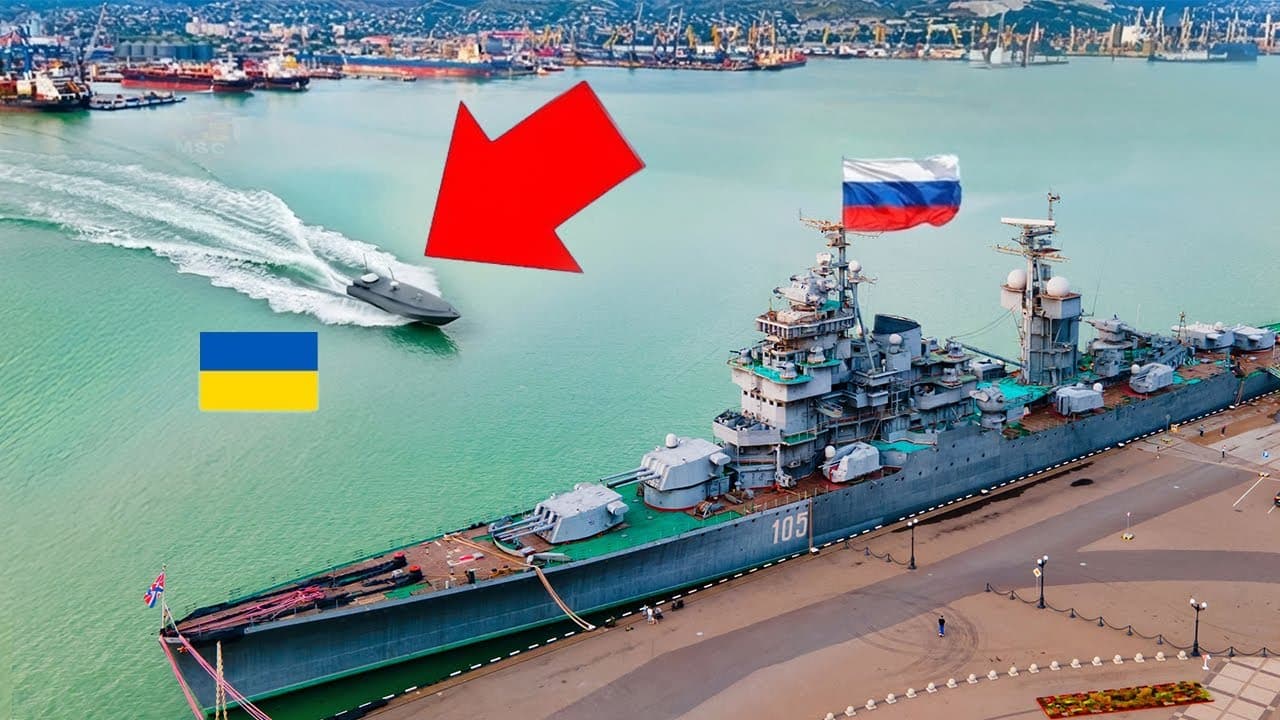
A Ukrainian Barracuda drone boat can attack distant Russian positions by combining autonomous navigation, an airborne communications relay, thermal surveillance, and electronic warfare support. Friendly forces identify it through a designated corridor, coded infrared strobe, and predictable movement, while a modified DJI Matrice 300 relays commands across two radio bands and helps guide the boat around obstacles and hostile jamming.
Transcript
At 0617 local time, a Ukrainian Barracuda drone boat slipped into the Nepro River outside Croissant, heading toward a Russian smallboat forward operating base packed with fuel drums, ammunition crates, and engine parts. But before the Barracuda could reach its target, it had to survive something even more dangerous than Russian defenses. The Barrac... Read More
Key Insights
- Friendly identification is based on three confirmations: the Barracuda must use the correct corridor, display the correct infrared strobe pattern, and move with the slow, predictable behavior described during the Ukrainian gunners’ watch-turnover briefing.
- The Barracuda is an 18-foot fiberglass-composite drone boat carrying a 35 kg shaped-charge warhead. Its electric propulsion provides four hours of endurance at patrol speed, reaches 38 knots at full sprint, and remains nearly silent at 8 knots until it is within 200 feet.
- Autonomous navigation is a backup for a complete control-link failure. The Barracuda’s onboard GPS autopilot can execute a final waypoint attack without further operator commands, allowing the boat to continue toward its target if communications are permanently severed.
- Long-range control is enabled by an airborne relay rather than a direct connection from the operator’s bunker. Terrain along the river would reduce a direct signal to roughly three miles, so commands pass through a hidden transmitter and a modified DJI Matrice 300.
- The relay network uses two radio bands and two transmission paths. The ground transmitter sends commands to the quadcopter on 5.8 GHz, and the aircraft rebroadcasts them to the Barracuda on 2.4 GHz, preventing interference with one band from automatically breaking both links.
- The Barracuda’s low antenna makes radio reception especially difficult. Positioned only 10 inches above the waterline, it receives signals distorted by water reflections, vegetation absorption, and overlapping echoes, while Ukrainian electronic warfare adds more noise to an already cluttered environment.
- Thermal overwatch is essential inside flooded forests where the boat’s forward camera becomes ineffective. The Matrice’s 640 by 512 thermal imager, refreshing at 60 frames per second, helps distinguish obstacles such as waterlogged wood, sandbars, submerged debris, and partially sunken wrecks.
- Electronic warfare support protects the Barracuda from Russian FPV attack drones. According to the mission description, a Bukovel-AD vehicle uses phased-array jamming from 10 kilometers away to sever Russian control links, while the relay pilot also searches for gaps around Russian Silok-01 interference.
Install to Summarize YouTube Videos and Get Transcripts
Explore YouTube Video Summarizer or Get YouTube Transcript Extractor
Questions & Answers
Q: How does a Ukrainian Barracuda drone boat reach distant Russian positions?
The Barracuda reaches distant positions through a coordinated network rather than a single direct control link. Operator commands travel by fiber-optic cable to a hidden transmitter eight miles behind the front line. A narrow radio beam then reaches a modified DJI Matrice 300 overhead, which rebroadcasts commands to the boat while providing thermal surveillance and adjusting its position when interference weakens communications.
Q: How do Ukrainian troops identify a friendly drone boat at night?
Ukrainian troops use three complementary checks before deciding not to fire. The boat must appear in the corridor and time window specified during the watch-turnover briefing, display a coded infrared strobe visible through night vision goggles, and behave as expected. The Barracuda moves slowly and straight through friendly territory, unlike sabotage boats described as sprinting and zigzagging to avoid fire.
Q: What are the Barracuda drone boat’s stated capabilities?
The Barracuda has an 18-foot fiberglass-composite hull riding 16 inches above the waterline on a modified deep-V hull. Its electric propulsion offers four hours of endurance at patrol speed, near-silent movement at 8 knots, and a top sprint speed of 38 knots. It carries a 35 kg shaped-charge warhead and can complete a final waypoint attack using GPS autopilot.
Q: Why does the Barracuda need an airborne communications relay?
A direct radio signal from the operator’s bunker cannot reliably cover the required distance because radio waves travel in straight lines while reeds, sandbars, flooded forests, and riverbanks block, scatter, or absorb them. The transcript states that a direct signal would fade within three miles. The airborne Matrice maintains line of sight with both the hidden ground transmitter and the boat.
Q: How does the modified DJI Matrice 300 support the mission?
The modified DJI Matrice 300 acts as a battlefield relay and surveillance platform. It carries a 15-watt signal repeater, directional antenna array, and thermal imager operating at 60 frames per second. Flying between 1,000 and 2,000 feet, it receives commands from the ground station on 5.8 GHz, retransmits them to the boat on 2.4 GHz, and guides navigation from above.
Q: Why can Ukrainian electronic warfare interfere with its own drone boat?
Ukrainian electronic warfare units flood the river corridor with radio noise to disable Russian drones approaching friendly positions. The jamming cannot distinguish automatically between hostile and friendly signals, and neither side maintains clear electromagnetic corridors because an enemy drone could discover and exploit them. As a result, Barracuda operators and relay pilots must manage interference while continuing the mission through the same contested spectrum.
Q: How does the Barracuda navigate flooded forests and submerged obstacles?
The Barracuda slows to 6 knots inside flooded forests, maintaining enough speed for steering while preserving time to stop or turn. Its forward camera becomes ineffective between tall reed walls, so the operator relies on the overhead drone’s thermal imagery. That view reveals temperature differences among water, river silt, waterlogged logs, sandbars, submerged debris, and partially sunken wrecks that are invisible from water level.
Q: How is the Barracuda protected from Russian drones and jammers?
Protection comes from maneuvering the relay aircraft and using Ukrainian counter-drone electronic warfare. When interference increases latency or corrupts the video feed, the FPV pilot changes altitude and lateral position to improve the relay path and realign with the transmitter beam. The description also states that a Bukovel-AD vehicle jams Russian FPV control links from 10 kilometers away, causing two attacking drones to fall into the river.
Summary & Key Takeaways
-
The Barracuda begins its mission by passing Ukrainian defensive positions, where it could easily be mistaken for a hostile vessel. Gunners confirm its identity through three checks: the designated transit corridor, the coded infrared beacon visible through night vision goggles, and slow, straight movement consistent with the mission briefing before withholding fire.
-
Long-range control depends on a modified DJI Matrice 300 flying above the river as an airborne relay. Commands travel from a hidden transmitter to the quadcopter on 5.8 GHz, then down to the boat on 2.4 GHz. The aircraft also supplies thermal imagery when reeds, darkness, and terrain obstruct navigation.
-
Electronic warfare threatens and protects the mission simultaneously. Ukrainian jamming disrupts friendly signals as well as Russian drones, while Russian Silok-01 systems attempt to sever the relay chain. The FPV pilot changes altitude and position to restore communications, and a Bukovel-AD counter-drone vehicle later jams Russian attack drones targeting the Barracuda.
Read in Other Languages (beta)
Share This Summary 📚
Summarize YouTube Videos and Get Video Transcripts with 1-Click
Try YouTube Summary with ChatGPT & Claude or YouTube Transcript Generator
Explore More Summaries from Beyond Military 📚


Summarize YouTube Videos and Get Video Transcripts with 1-Click
Try YouTube Summary with ChatGPT & Claude or YouTube Transcript Generator