How Do Vacuum Bombs Affect Hardened Buildings?
TL;DR
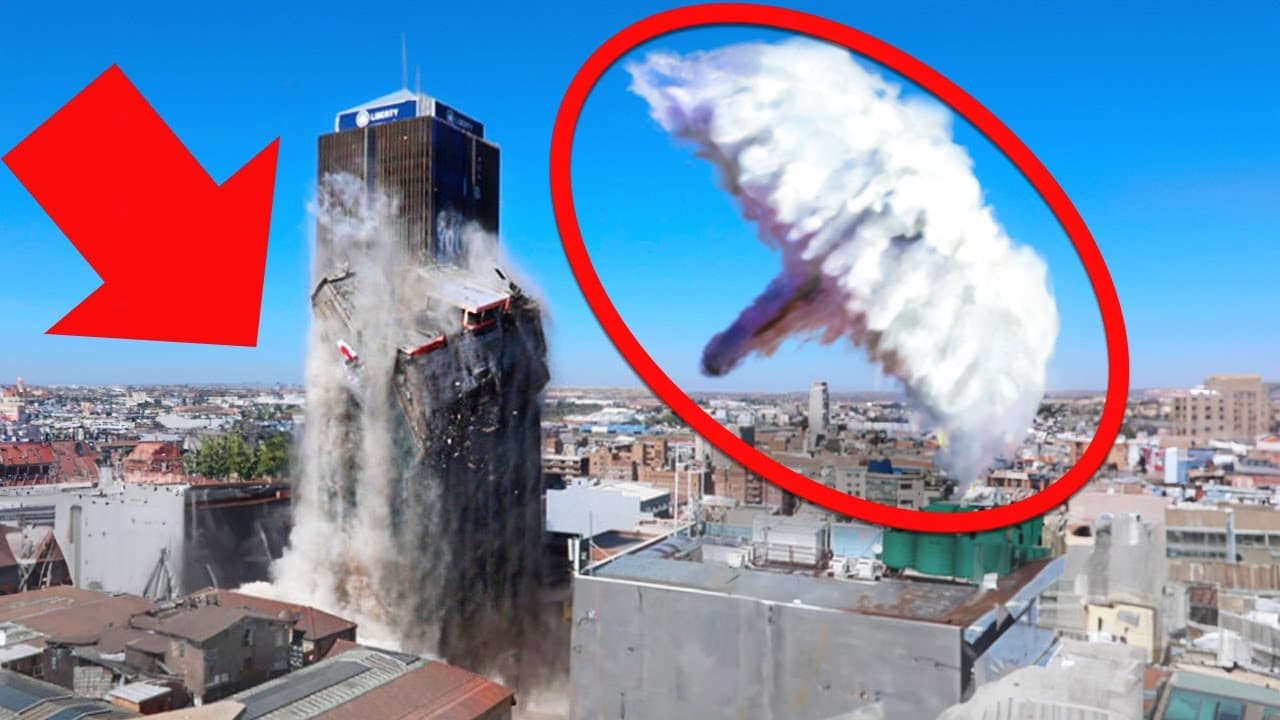
Vacuum bombs disperse flammable material, mix it with surrounding oxygen, and ignite it to create an intense pressure wave. That wave can travel through doors, hallways, tunnels, trenches, and caves, reaching people behind cover. Their broad, difficult-to-control effects make thermobaric weapons particularly destructive in enclosed spaces and contentious when civilians may be nearby.
Transcript
imagine a weapon so powerful that it can potentially kill everyone inside a hardened building or a cave without damaging the exterior this might sound like science fiction but it's actually a reality known as thermobaric Weapons these shocking Munitions are the stuff of nightmares with the ability to kill and injure people standing behind Corners i... Read More
Key Insights
- Thermobaric weapons are munitions that use a staged explosion to disperse flammable material and then ignite it after it mixes with atmospheric oxygen. This differs from conventional explosives, which carry the oxygen needed for their chemical reaction within the explosive material itself.
- The destructive effect of a vacuum bomb is driven by heat and a large pressure differential. As the dispersed fuel burns with surrounding oxygen, additional air moves toward the blast zone, while the resulting shock wave travels through openings and connected spaces.
- Enclosed environments are especially vulnerable because the pressure wave can move through doors, hallways, tunnels, trenches, and caves. This allows thermobaric effects to reach around corners and behind cover that might otherwise protect people from fragments or a direct conventional blast.
- Thermobaric weapons are difficult to control after launch because their blast effects spread through the surrounding environment. The transcript describes their consequences as indiscriminate and notes that possible harm to military personnel and civilians has generated calls for restrictions or prohibition.
- American thermobaric development has focused partly on hardened hideouts and cave complexes. One delayed-fuse munition was designed to enter a tunnel before exploding, and the transcript says it was used against an Al-Qaeda cave complex in Afghanistan after testing demonstrated its power.
- Russian forces treat thermobaric systems as a significant source of battlefield firepower. Their inventory includes vehicle-mounted rocket launchers, disposable portable weapons, and aircraft-delivered bombs, with the transcript describing their use across Afghanistan, the Chechen wars, Georgia, and Ukraine.
- Thermobaric technology has been adapted from large launch systems to weapons small enough for individual soldiers. The transcript identifies portable rockets and hand grenades, including Ukrainian grenades dropped by drones onto Russian armored vehicles, as examples of this reduction in size.
- The claimed Father of All Bombs remains unverified according to the transcript. Russian officials attributed extraordinary heat, pressure, and yield to the experimental weapon, but the account emphasizes the absence of further known tests and argues that its claimed performance is probably false.
Install to Summarize YouTube Videos and Get Transcripts
Explore YouTube Video Summarizer or Get YouTube Transcript Extractor
Questions & Answers
Q: How does a vacuum bomb work?
A vacuum bomb works through a staged explosion. The initial detonation spreads highly flammable material across an area and breaks it into particles that mix with atmospheric oxygen. The mixture then ignites, creating intense heat and a powerful pressure wave. Air from farther away moves toward the blast zone, producing the pressure effect that inspired the informal name vacuum bomb.
Q: Why are thermobaric weapons dangerous inside buildings?
Thermobaric weapons are especially dangerous inside buildings because their pressure wave can travel through connected openings and enclosed spaces. According to the transcript, the blast can move through doors, hallways, tunnels, trenches, and around corners. People may therefore be exposed even when walls or other forms of cover shield them from a direct blast or flying fragments.
Q: Are vacuum bombs and fuel-air explosives the same thing?
The transcript uses thermobaric weapon, vacuum bomb, and fuel-air explosive as names for the same general type of munition. Each relies on dispersing flammable material before ignition and using oxygen from the surrounding atmosphere. Vacuum bomb is an informal term referring to the strong pressure differential and inward movement of air associated with the resulting blast zone.
Q: How do thermobaric weapons differ from conventional bombs?
Conventional bombs derive their explosive energy from chemicals contained inside the warhead, including oxygen incorporated during manufacturing. Thermobaric weapons reverse that approach by using oxygen from the surrounding air. They first distribute a combustible material, allow it to mix with atmospheric oxygen, and then ignite it, generating a broad heat and pressure effect that can enter enclosed positions.
Q: Why are thermobaric weapons controversial?
Thermobaric weapons are controversial because their heat and pressure effects can spread through an area without distinguishing between combatants and civilians. Once launched, the blast cannot be redirected or precisely controlled. The transcript says this potential for indiscriminate harm has led some people to argue that these munitions should be banned, particularly when used near populated or sheltered areas.
Q: How has the United States used thermobaric weapons?
The United States developed thermobaric munitions to attack difficult targets such as tunnels, caves, and hardened hideouts. The transcript describes a delayed-fuse bomb that could travel into a cave tunnel before detonating and says it was used against an Al-Qaeda cave complex in Afghanistan. It also states that American thermobaric inventories are limited and may require high-level authorization.
Q: Why has Russia developed many thermobaric weapons?
The transcript says Soviet and Russian forces adopted thermobaric weapons as a way to apply overwhelming firepower against fortified enemy positions. This approach was intended to destroy hardpoints before infantry moved in. Russia consequently developed vehicle-mounted launchers, portable rocket weapons, and aerial bombs, then used or exported these systems across several conflicts and partner countries.
Q: Is Russia's Father of All Bombs claim credible?
The transcript presents the Father of All Bombs as an experimental thermobaric weapon whose claimed performance is not independently demonstrated. Although released footage showed a large fireball and a device dropped from a modified heavy bomber, the account notes that no further known tests followed. It argues that battlefield nonuse despite Russia's need for stronger weapons makes the official claims doubtful.
Summary & Key Takeaways
-
Thermobaric weapons, also called vacuum bombs or fuel-air explosives, use a staged process. An initial blast disperses highly flammable material, which becomes combustible after mixing with atmospheric oxygen. Ignition then produces heat and a powerful pressure wave that can propagate through enclosed spaces, passages, fortifications, trenches, caves, and other protected positions.
-
The United States developed thermobaric munitions for attacking tunnels and cave complexes, including a delayed-fuse bomb designed to travel inside a cave before detonating. The transcript says American forces possess several air-launched and ground-launched options, but keep limited quantities and require high-level authorization when their use could endanger civilians.
-
Russia adopted thermobaric weapons extensively after Soviet operations in Afghanistan, developing vehicle-mounted launchers, portable rockets, and aerial bombs. These systems later appeared in several conflicts and were exported to other countries. Ukraine also uses thermobaric grenades, including drone-dropped attacks against Russian armored vehicles, showing how the technology has been adapted into smaller weapons.
Read in Other Languages (beta)
Share This Summary 📚
Summarize YouTube Videos and Get Video Transcripts with 1-Click
Try YouTube Summary with ChatGPT & Claude or YouTube Transcript Generator
Explore More Summaries from Beyond Military 📚
Summarize YouTube Videos and Get Video Transcripts with 1-Click
Try YouTube Summary with ChatGPT & Claude or YouTube Transcript Generator