How Does US Navy Handle Close Encounters?
TL;DR
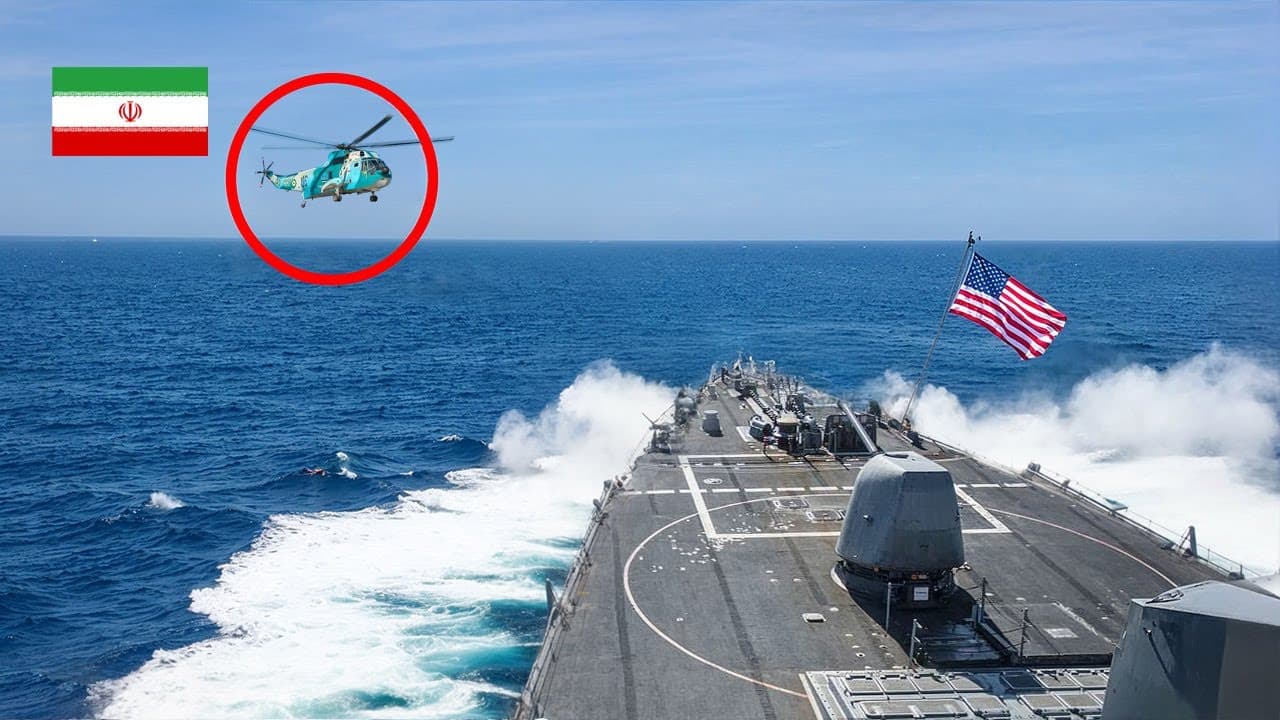
An Iranian helicopter attempted to intimidate the USS Fitzgerald, a US Navy destroyer, using outdated technology. Despite the helicopter's aggressive maneuvers, the advanced systems of the Fitzgerald easily monitored and cataloged the encounter, turning it into a valuable intelligence-gathering opportunity. The Iranian effort was more about propaganda than actual threat, showcasing the stark technological mismatch between the two forces.
Transcript
At 10:50 local time, an Iranian Navy helicopter approached the USS Fitzgerald with a mission to force the American destroyer to change course and proved Iran still controls these waters. What happened next showed that Iran could do more damage with harsh language than 1960s military hardware. Inside the destroyer's combat information center, Americ... Read More
Key Insights
- The USS Fitzgerald is equipped with the Aegis combat system, capable of tracking and engaging multiple targets simultaneously.
- Iranian helicopters use outdated technology, making them easy targets for advanced US naval systems.
- The encounter was an intelligence-gathering opportunity for the US, allowing them to catalog Iranian electronic emissions.
- Iranian tactics involve using small assets to provoke larger vessels, aiming for propaganda victories.
- The Fitzgerald's defensive capabilities include multiple layers of missile defense, rendering the helicopter's threat negligible.
- Iranian communications during the encounter were unencrypted and easily intercepted by the US Navy.
- The encounter highlighted the technological gap between Iranian and US military capabilities.
- The Iranian mission aimed at creating propaganda content rather than posing a genuine threat to the US destroyer.
Install to Summarize YouTube Videos and Get Transcripts
Explore YouTube Video Summarizer or Get YouTube Transcript Extractor
Questions & Answers
Q: How does the US Navy handle close encounters with outdated military technology?
The US Navy uses advanced radar and missile systems to monitor and track outdated military technology, turning encounters into intelligence-gathering opportunities. In the case of the Iranian helicopter, the USS Fitzgerald's Aegis combat system easily cataloged the helicopter's emissions, providing valuable data for future engagements.
Q: What is the Aegis combat system used for?
The Aegis combat system is used for tracking and engaging multiple targets simultaneously. It is equipped with advanced radar and missile systems, allowing US Navy ships like the USS Fitzgerald to monitor and respond to potential threats effectively. The system provides a multi-layered defense, capable of intercepting various types of attacks.
Q: Why did the Iranian helicopter approach the USS Fitzgerald?
The Iranian helicopter approached the USS Fitzgerald with the intent to intimidate the destroyer and force a course change. This maneuver was part of a broader strategy to claim control over the waters and create propaganda content. However, the helicopter's outdated technology was no match for the Fitzgerald's advanced systems.
Q: What technological advantages does the USS Fitzgerald have over the Iranian helicopter?
The USS Fitzgerald has significant technological advantages, including the Aegis combat system, which can track and engage multiple targets. Its radar and missile systems are far superior to the outdated technology of the Iranian helicopter, allowing the Fitzgerald to monitor and respond to threats effectively without engaging in combat.
Q: How does the US Navy use encounters with enemy forces for intelligence gathering?
The US Navy uses encounters with enemy forces to catalog electronic emissions, building a database for future engagements. During the encounter with the Iranian helicopter, the USS Fitzgerald recorded frequencies and signals, allowing US forces to develop countermeasures and improve their electronic warfare capabilities.
Q: What role does propaganda play in military encounters like the one with the Iranian helicopter?
Propaganda plays a significant role in military encounters, as seen with the Iranian helicopter. Despite the technological mismatch, Iran aimed to create content showing their forces confronting the US Navy. This content is used to boost morale and project power, even if the actual encounter posed no real threat to the US.
Q: How do outdated military technologies affect the outcome of encounters with advanced forces?
Outdated military technologies, like the Iranian helicopter, are at a severe disadvantage when facing advanced forces. These technologies are easily tracked and monitored by modern systems, turning encounters into intelligence-gathering opportunities for the more advanced force. The technological gap often results in a lack of real threat and a focus on propaganda.
Q: What is the significance of electronic emissions in military encounters?
Electronic emissions are crucial in military encounters as they provide valuable data for intelligence gathering. During the encounter with the Iranian helicopter, the USS Fitzgerald cataloged emissions, allowing the US Navy to develop countermeasures and improve electronic warfare capabilities. This data helps prepare for future engagements with similar technology.
Summary & Key Takeaways
-
An Iranian helicopter approached the USS Fitzgerald, attempting to force a course change. The US Navy destroyer, equipped with advanced radar and missile systems, easily tracked the outdated helicopter. The encounter was used as an intelligence-gathering opportunity, highlighting the technological mismatch between the two forces.
-
The Iranian helicopter's mission was to gather intelligence and create propaganda. However, its outdated technology was no match for the Fitzgerald's advanced systems. The US Navy used the encounter to catalog electronic emissions, gaining valuable intelligence for future encounters.
-
Despite aggressive maneuvers, the Iranian helicopter posed no real threat to the USS Fitzgerald. The encounter demonstrated the superior capabilities of US naval technology and turned into a propaganda opportunity for Iran, showcasing their attempts to challenge US naval dominance.
Read in Other Languages (beta)
Share This Summary 📚
Summarize YouTube Videos and Get Video Transcripts with 1-Click
Try YouTube Summary with ChatGPT & Claude or YouTube Transcript Generator
Explore More Summaries from Beyond Military 📚

Summarize YouTube Videos and Get Video Transcripts with 1-Click
Try YouTube Summary with ChatGPT & Claude or YouTube Transcript Generator