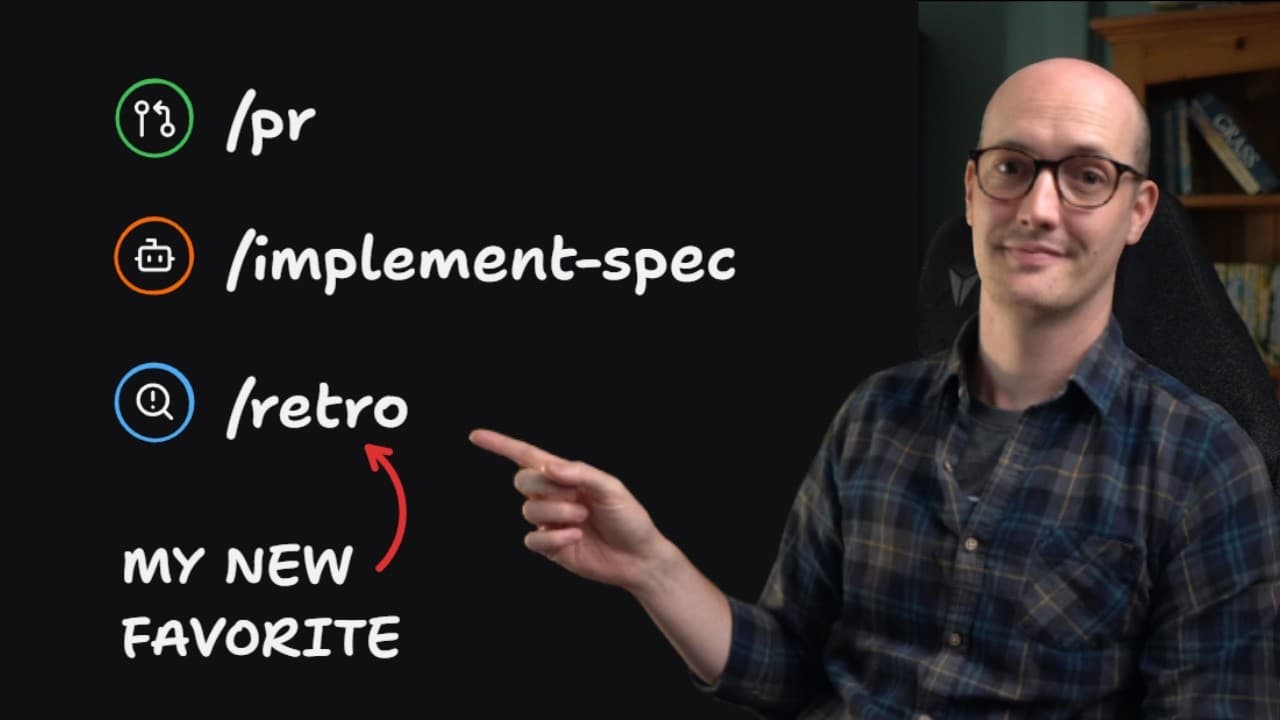
How to use implement spec, PR, and retro in workflows
TL;DR
Implement spec automates ticket orchestration and parallelizes work with sub agents, reducing manual looping and making AFK workflows feasible. The PR skill improves review quality with evidence and merge danger assessment, while retro bundles workflow improvements and refactors. These three skills together streamline large feature work and ongoing repo hygiene.
Transcript
Hello folks, version 1.3 of my skills repo is out and it brings three very important skills that have become central to my workflow. Today I'm going to show you about implement spec. I'm going to show you about PR and I'm going to show you about retro. And retro I think is the one that I've just seen absolutely go nuts on socials. People going craz... Read More
Key Insights
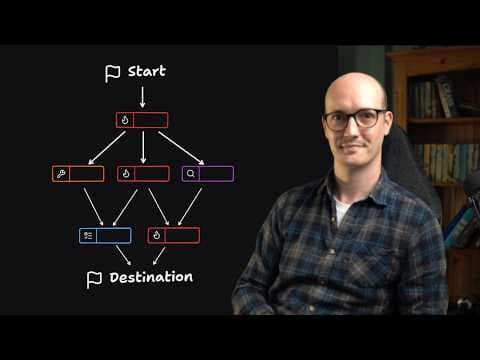
- Implement spec coordinates tickets using a spec as the destination and tickets as sessions, enabling a clean breakdown of work into smaller units.
- Deterministic loops improve reliability by letting scripts run through tickets without manual intervention, making AFK workflows more practical for beginners.
- Sub agents can spawn other sub agents, enabling scalable orchestration and turning complex specs into manageable parallel tasks.
- A frontier of ready tickets exists due to task graph blocking relationships, allowing parallel work without deadlock.
- PR skill provides a PR body template with a concise summary, before-and-after evidence, and merge danger assessment to improve trust and review efficiency.
- Evidence in PRs helps verify that the agent changes align with expectations and maintains accountability in the review process.
- Merge danger is assessed as one-way or two-way, guiding how careful reviewers should be about potential rollbacks and risk.
- Retro focuses on reducing user burden by moving governance tasks like environment setup and glossaries into a dedicated skill, improving overall token efficiency and workflow reliability.
Install to Summarize YouTube Videos and Get Transcripts
Explore YouTube Video Summarizer or Get YouTube Transcript Extractor
Questions & Answers
Q: What is implement spec and how does it work?
Implement spec is a skill that orchestrates tickets for a spec by using sub agents to implement each ticket. It reads the spec, explores via sub agents, creates an integration branch, and then uses implement sub agents to complete tickets with TDD and work trees. After all tickets are implemented, it merges to the integration branch, pings more sub agents if needed, and finally performs code review and PR readiness steps. This enables AFK workflow while maintaining a coherent, testable flow.
Q: Why would you use a deterministic loop over manual looping?
A deterministic loop reads each ticket and runs implementations automatically, making the process reliable and cheap because it avoids repeated human intervention. It provides consistency across runs and reduces manual waiting, allowing work to progress without the user actively steering every ticket. Beginners can benefit once they have a basic setup, as the loop becomes predictable and scalable.
Q: What is the role of sub agents in implement spec?
Sub agents act as babysitters for the loop, handling the implementation of tickets under orchestration by the main agent. They can spawn further sub agents, expanding the capability to manage parallel work. This allows a scalable, layered approach where the outer agent coordinates and the inner agents perform concrete changes across tickets.
Q: How does the PR skill improve code reviews?
The PR skill provides a template for PR bodies with a summary based on a show me style, evidence including before and after, and a merge danger assessment. It helps reviewers quickly understand what changed, why it changed, and whether the change is risky, thereby making human review faster and more reliable.
Q: What is meant by merge danger and blast radius in PRs?
Merge danger asks whether a change is a one-way door or a two-way door, indicating how reversible the change is. A two-way door is easily revertible, while a one-way door may have lasting effects. Blast radius measures the potential impact of the change, guiding the thoroughness of the review process and risk assessment.
Q: What is retro and what problem does it solve?
Retro is short for retrospective and it bundles repository housekeeping tasks into a skill. It reduces the burden on users to manually manage agents, environments, lint rules, and token efficiency. By centralizing these tasks, retro helps improve overall workflow reliability and makes it easier to maintain high-quality agent setups.
Q: What naming change is described and why is it used?
The domain modeling skill now writes to glossary.mmd instead of context.md. This change clarifies the file naming and avoids ambiguity, as context.md had become too vague. Glossary is used to consistently store domain language and ensure skills rely on a dedicated reference for terminology.
Q: What are the three skills introduced in v1.3 and their focus?
The three skills are implement spec, which orchestrates ticket implementation via sub agents; PR skill, which provides a structured PR body with evidence and merge danger assessment; and retro, which handles repository hygiene and workflow efficiency by bundling setup and governance tasks into a single skill. These together improve large feature delivery and ongoing maintenance.
Summary & Key Takeaways
-
The video introduces three skills in v1.3: implement spec for orchestrating tickets with sub agents, PR skill for better PR bodies and evidence, and retro for repo improvements and automation. It explains when to use each and how they interact in a typical workflow.
-
Implement spec replaces manual looping with a deterministic loop or sub agents, enabling reliable, parallel ticket implementation and a clean integration branch workflow. It also discusses edge cases and how to adapt to beginners.
-
Retro consolidates deployment and coding hygiene by updating the glossary naming and improving agent environment readiness, reducing user burden while maintaining robust token efficiency and standard lint rules.
Read in Other Languages (beta)
Share This Summary 📚
Summarize YouTube Videos and Get Video Transcripts with 1-Click
Try YouTube Summary with ChatGPT & Claude or YouTube Transcript Generator
Explore More Summaries from Matt Pocock 📚
Summarize YouTube Videos and Get Video Transcripts with 1-Click
Try YouTube Summary with ChatGPT & Claude or YouTube Transcript Generator