How to Stop Taking Other People's Words Personally
TL;DR
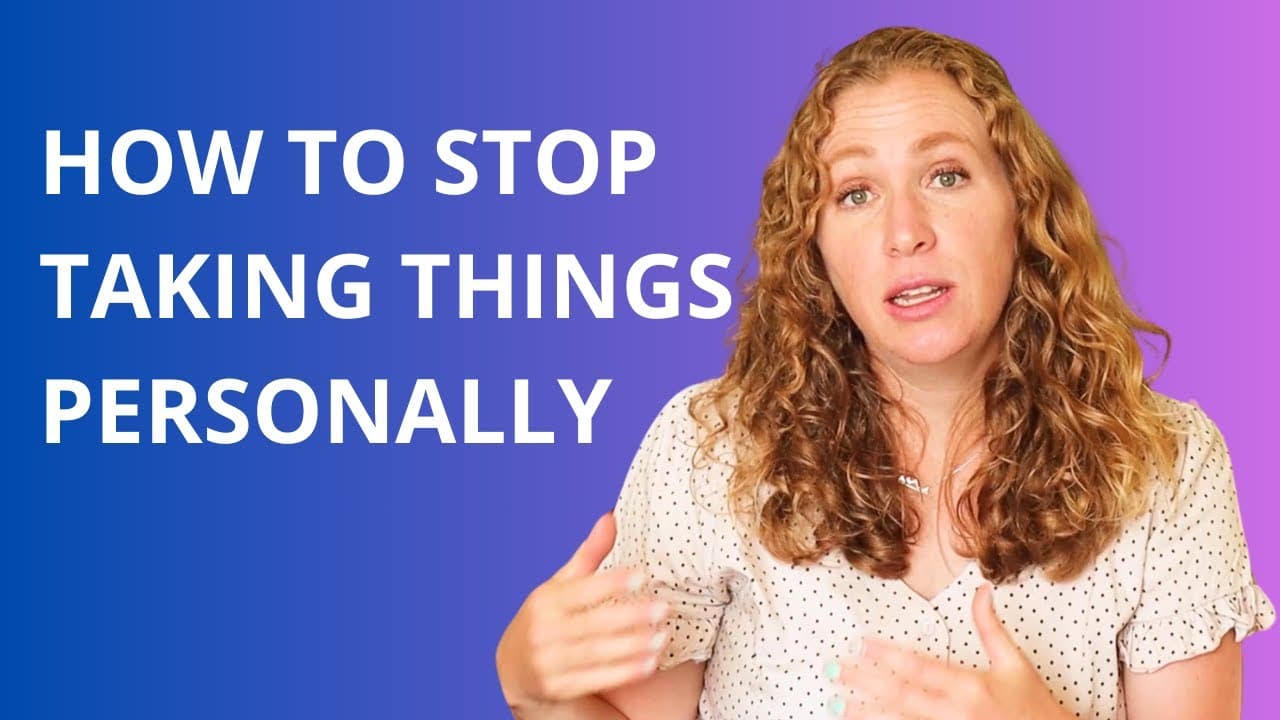
Taking something personally often begins with an unverified story that another person is attacking your worth, character, or abilities. Slow down, separate facts from assumptions, ask for clarification, and recognize which feelings and actions belong to you versus the other person. This replaces reactive offense and passive aggression with curiosity, assertive communication, healthier boundaries, and greater emotional security.
Transcript
There's a reason your brain likes to take things personally, and I'm going to show you why - and three steps to stop taking things personally. And I would say the third one is what really makes you feel secure. But first, story from my life. So full disclosure: Sometimes I write uh videos for everyone else, sometimes I write videos for a client... Read More
Key Insights
- Taking offense is a defensive strategy that can feel vindicating in the short term but ultimately contributes to insecurity, isolation, overthinking, and relational drama. It attempts to create safety through anger and blame, yet the resulting fragile shell makes successful friendships and honest communication more difficult.
- Personalizing a comment begins when a person interprets someone else's words as an attack on self-worth, goodness, character, appearance, or ability. This interpretation often relies on mind reading, because the person assumes hostile intent without first obtaining evidence or asking what the speaker actually meant.
- Passive aggression is a way of protecting a vulnerable ego while avoiding direct communication. Silent treatment, moping, moodiness, conspicuously loud cleaning, and complaining to someone else can reinforce a self-righteous victim role without clearly stating the underlying feeling, concern, or need.
- Emotional reactions are shaped largely by the stories attached to events. A comment about appearance may feel insulting within one cultural interpretation and affectionate within another, so separating observable facts from personal meaning can reveal that an initial conclusion was incomplete or mistaken.
- Clarity is created by slowing down before reacting. Closing the mouth, taking a breath, questioning automatic thoughts, becoming curious about the other person's circumstances, and asking, "Can you clarify what you're saying?" can replace defensive assumptions with evidence and assertive communication.
- Sensitivity is strongest in areas where a person already feels insecure. A clearly absurd label is easy to dismiss, while a suggestion that touches an existing doubt, such as being a poor friend, can feel threatening and trigger a much stronger defensive response.
- Boundaries are the ability to distinguish what belongs to you from what belongs to another person. Other people's stress, sleep deprivation, overwhelm, insecurity, insensitivity, or poor communication may explain their behavior, while your interpretations, responses, and requests remain on your side of the boundary.
- Constructive criticism becomes difficult to receive when every negative observation is treated as a threat. Developing self-awareness through reflection, a therapist, or a wise friend can expose recurring stories and sensitivities, making it easier to evaluate feedback without collapsing into blame or self-condemnation.
Install to Summarize YouTube Videos and Get Transcripts
Explore YouTube Video Summarizer or Get YouTube Transcript Extractor
Questions & Answers
Q: Why do people take comments personally?
People take comments personally when they rapidly interpret another person's words or behavior as an attack on their worth, character, goodness, appearance, or abilities. The reaction functions as a fight-based defense mechanism intended to create safety. It is especially likely when the comment touches an existing insecurity or when past hurt makes hostile interpretations feel believable.
Q: How can I stop reacting when I feel offended?
Pause before speaking or acting, close your mouth, and take a breath. Then separate the observable facts from the story your mind created about the other person's intentions. Do not automatically believe the assumption that you are being attacked. Become curious about what may be happening for the other person and ask directly for clarification before responding.
Q: What is the difference between facts and stories when taking offense?
Facts are the observable words or actions that occurred, while stories are the meanings and motives you assign to them. A remark about appearance, for example, may be interpreted as an insult even when the speaker intended honesty or closeness. Because the story drives much of the emotional response, checking that interpretation can substantially change how the situation feels.
Q: How does insecurity make someone take things personally?
Insecurity makes certain comments feel threatening because they appear to confirm an existing fear about the self. A ridiculous accusation that clearly feels untrue is easy to dismiss, but a criticism involving friendship, appearance, or another uncertain area may provoke defensiveness. The intensity of the reaction can therefore reveal where greater self-awareness and internal security are needed.
Q: What does passive aggression look like after taking offense?
Passive aggression can include giving the silent treatment, moping, acting moody, cleaning loudly as a form of punishment, or calling another person to complain. These behaviors allow someone to feel like the innocent and righteous victim while indirectly blaming or controlling the other person. They avoid the more vulnerable task of naming the concern and communicating assertively.
Q: How do boundaries help you stop taking things personally?
Boundaries clarify where another person's behavior ends and your responsibility begins. Someone else's irritability, stress, insecurity, poor communication, or lack of awareness belongs to that person. Your interpretation, emotional regulation, and decision about how to respond belong to you. This distinction reduces futile attempts to control whether everyone likes you, agrees with you, or behaves correctly.
Q: What should I do if another person is actually being mean?
Recognize that mean, irrational, or insensitive behavior often reflects what is happening within the other person, such as stress, overwhelm, insecurity, trauma, or limited communication skills. Their behavior does not automatically define your value. Instead of trying to manipulate them into acting differently, maintain your boundaries, let go of what you cannot control, and choose your own response.
Q: How can I become more open to constructive criticism?
Start by noticing the personal stories and sensitive areas that turn feedback into a perceived attack. Slow down, seek clarification, and evaluate what was actually said instead of immediately labeling the speaker as a jerk. Feedback from a therapist or wise friend can also reveal recurring assumptions, helping you distinguish useful criticism from another person's unrelated emotional reaction.
Summary & Key Takeaways
-
Taking offense is presented as a fast fight response that attempts to protect a vulnerable sense of self. A person may interpret an ambiguous comment as an attack, label the speaker as a jerk, adopt the role of innocent victim, and respond with passive aggression, silent treatment, moodiness, or private complaints.
-
Clarity begins by separating observable facts from the story attached to them. Because assumptions and cultural interpretations strongly shape emotional reactions, the recommended response is to pause, breathe, question mind reading, become curious about the other person's perspective, and ask directly for clarification instead of reacting immediately.
-
Healthy boundaries require knowing where another person's behavior ends and your responsibility begins. Insensitive behavior may reflect the other person's stress, insecurity, trauma, communication habits, or lack of awareness. Letting go of attempts to control others creates more security, while honest feedback can reveal genuine opportunities for personal growth.
Read in Other Languages (beta)
Share This Summary 📚
Summarize YouTube Videos and Get Video Transcripts with 1-Click
Try YouTube Summary with ChatGPT & Claude or YouTube Transcript Generator
Explore More Summaries from Therapy in a Nutshell 📚

Summarize YouTube Videos and Get Video Transcripts with 1-Click
Try YouTube Summary with ChatGPT & Claude or YouTube Transcript Generator